
How to Cleanse Tarot Cards: Simple Rituals for a Fresh Start
Cleansing a deck is optional. Done with care, it becomes a small ritual of attention that marks a fresh start.
If you want to cleanse your tarot cards, here is the simplest honest answer: choose a short ritual that feels meaningful to you, such as knocking on the deck, putting the cards back in order, or giving them a long, slow shuffle, and do it with your full attention. That is enough. No method is required, and none of them changes what a card means. A deck that has never been cleansed reads exactly as well as one that has.
Many readers still love cleansing, and it is easy to see why. A small ritual draws a line between what came before and what comes next. It gives your hands something to do while your mind settles. Below are the common practices, the moments people tend to use them, and how to keep your cards (and yourself) safe along the way.
What cleansing can mean
People describe cleansing in different ways. Some speak of clearing energy left behind by an earlier reading or by another person's hands. Others think of it as closer to tidying a desk before starting work. Both often do the same things with the deck.
At Emberlune we treat tarot as a mirror for reflection, not a tool for prediction, so we approach cleansing as a ritual of attention. We cannot tell you that a deck holds energy, and we will not claim that any method removes it. What we can say is that a deliberate pause changes how you arrive at the next reading. You may come to the cards a little calmer, a little more curious, and less tangled up in the last question you asked. That shift is real, and it belongs to you.
When people feel like cleansing a deck
There is no schedule. Readers tend to reach for a cleansing ritual at moments that feel like thresholds.
- A new deck. Opening a fresh deck is a natural time to begin with care. A common approach is to look at every card, sort them into order, shuffle slowly, and say an intention. Our deck interview spread is a playful next step.
- After a heavy reading. If a reading stirred up grief, fear, or an old argument, a small ritual can help you set it down before you pick the cards up again.
- A deck someone else used. A secondhand deck, or one a friend borrowed, can feel as if it still belongs partly to someone else. Some people simply want to make it feel like theirs again.
- After a long break. Coming back to tarot after months away can call for a fresh beginning.
- Whenever it helps. Some readers cleanse every week, and some never do. Both are fine.
Common ways to cleanse tarot cards
These are the practices you will hear about most often. Choose one, combine a few, or skip them all.
Knocking on the deck
Hold the deck in one hand and knock on it once or a few times with your knuckles, the way you might knock on a door. It takes seconds, which makes it a favorite between readings. Many people treat the knock as a signal to themselves: that question is finished, and the next one can begin.
Putting the cards back in order
Sort the deck into its traditional sequence: the Major Arcana from The Fool (0) to The World (21), then each suit from Ace to King. This is the slowest and most thorough way to reset tarot cards, and it doubles as study. You see every card, notice any that are bent or missing, and often spot details you had overlooked. The tarot glossary explains the Major and Minor Arcana if those terms are new.
A full reshuffle
Spread the cards face down and mix them slowly across a clean table, then gather them and shuffle by hand until the deck feels thoroughly mixed. If you usually give the deck a quick shuffle before a reading, a long and unhurried one can feel like a deliberate reset. Our guide to shuffling covers methods that are gentle on your hands and on the cards.
Resting the deck in moonlight
Some readers leave their deck near a window overnight, often around the full moon, so the cards sit in moonlight. For many people the moon is linked with cycles and fresh starts, and the ritual of setting the deck out at night and collecting it in the morning can be lovely. Keep it practical: bring the deck in before strong morning sun reaches it, and keep it away from cold glass where condensation can collect.
Smoke from herbs or incense
Passing the deck through the smoke of dried herbs or a stick of incense is another common practice. Many smoke rituals come from specific cultural and religious traditions, so it is worth learning where a practice comes from before you borrow it. If you use smoke, read the safety notes below first.
A crystal on top
Some people rest a crystal or a favorite stone on the deck between readings. It can act as a small visual reminder that the deck is set aside for reflection. Choose a smooth stone, or set it on the box or a cloth over the cards, so rough edges do not scratch the top card.
A short spoken intention
You can also cleanse with words alone. Hold the deck, take a breath, and say one sentence aloud or quietly to yourself. An intention tends to work best when it is about how you want to read, rather than about what the cards will do.
None of this is required
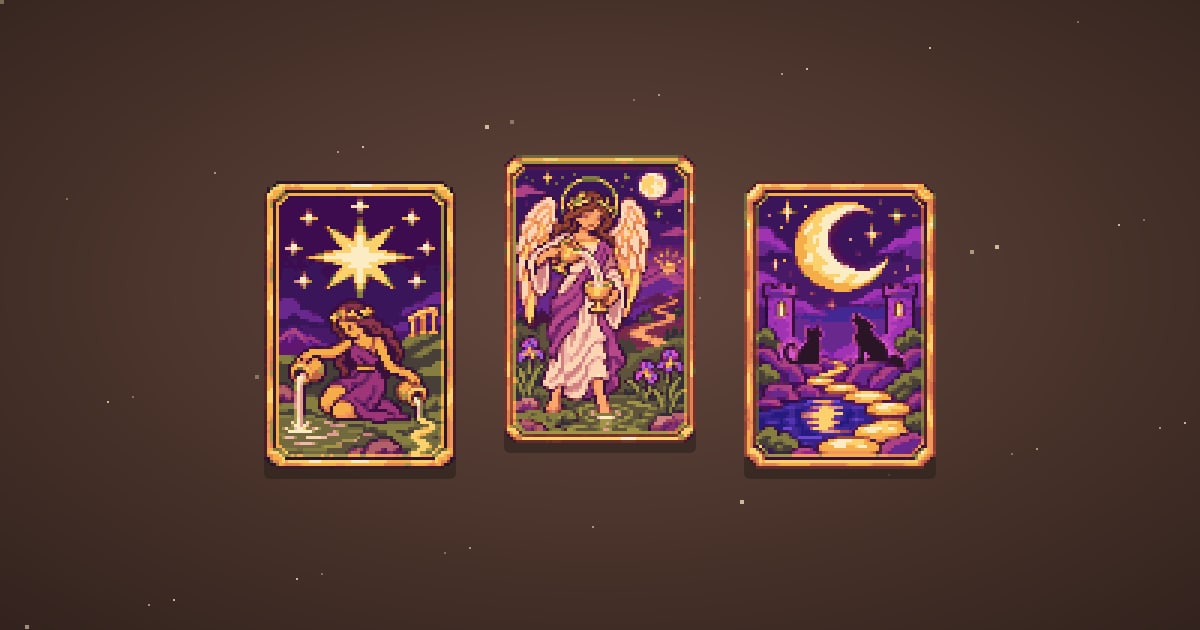
Cleansing is a choice, not a rule. Skipping it will not make a reading wrong, unlucky, or less meaningful. A card means the same thing whether your deck has rested under the full moon or been carried around in a bag for a year. The Star still shows a figure pouring water beneath a bright sky, and Temperance still shows an angel patiently pouring between two cups. What you bring to those pictures is your attention, your question, and your honesty about your own life.
If cleansing has turned into something you feel you must do before you are allowed to read, or something you repeat because a reading frightened you, that is worth pausing over. A ritual should make reading easier to begin, not harder. If tarot has started to feel anxious rather than reflective, our safety page has gentle guidance, and a card for a hard day is a softer place to start.
Keeping your cards, and yourself, safe
A little practical care keeps the ritual pleasant.
- Open flames. If you use a candle, incense, or a bundle of herbs, set it on a heatproof dish, keep it away from curtains, paper, and the deck itself, and never leave it burning unattended. Make sure it is fully out when you finish.
- Smoke and ventilation. Smoke can irritate eyes and lungs, especially for people with asthma or other breathing conditions, and it can bother pets too. Open a window, keep the smoke light, and choose another method if anyone in your home is sensitive to it.
- Water. Tarot cards are usually printed card stock, and most will warp, stick, or stain if they get wet. Do not spray, wash, or dip your deck. If a ritual you love involves water, keep the bowl beside the cards rather than letting water touch them.
- Sunlight. Strong sunlight can fade printed colors over time. A night by the window is fine if you bring the deck in before morning, but a sunny windowsill is not a good place to store it.
- Heavy objects. Rough or heavy stones can scratch or dent the top card. A cloth or the deck's box between stone and card solves this.
Try a five-minute reset
A fresh start you can come back to
The best cleansing ritual is the one you will actually enjoy. For some people that means a candle and a spoken intention once a month. For others it is a quick knock between readings, or nothing at all. You can change your mind whenever you like.
If you are new to tarot, the first-week guide is a gentle place to begin. If you read on your phone, the Emberlune app keeps a journal of your readings and your talks with Luna, so starting fresh can be as simple as turning to a blank page.
Keep reading
-
 Learn TarotHow to Shuffle Tarot Cards (and Draw Them): A Calm Beginner's GuideA comfortable shuffle, a clear question, and a simple way to draw are enough to begin.
-
 Tarot SpreadsThe Tarot Deck Interview Spread: Getting to Know a New DeckSix playful questions can help you study a new deck and choose how you want to practice with it.
-
 Learn TarotHow Does Tarot Work? An Honest AnswerTarot has no proven power to predict events, and it can still help you think. Here is how pictures, chance, structure and a pen do the work.