
How to Read Tarot Cards for Beginners: A Practical Guide
What the 78 cards are, how to ask a question the cards can work with, and how to read a card in context instead of memorizing a list.
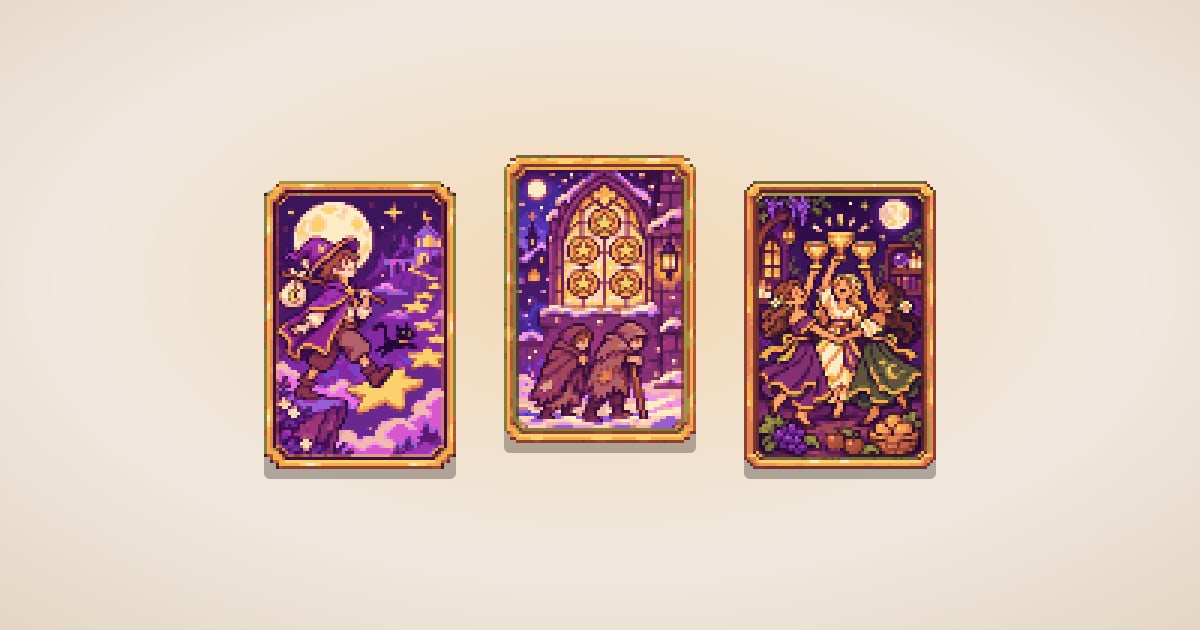
Most people who buy a first deck hit the same wall within a week. There are seventy-eight cards, each with an upright and a reversed meaning, and the little booklet seems to want all of them memorized before you are allowed to begin. You don't need to do that. Reading tarot is closer to reading a picture book than to learning a vocabulary list, and the structure of the deck does a lot of the work for you.
This guide covers what you actually need for a first reading: how the deck is organized, how to prepare, how to ask a question the cards can work with, and how to read a card in its context. It ends with a short first reading and the mistakes nearly everyone makes at the start.
What tarot is, and where it came from
Tarot began as a card game. The earliest surviving decks were painted in northern Italy in the fifteenth century, including the famous hand-painted cards made for the Visconti and Sforza families of Milan, and the game, called tarocchi, is still played in parts of Europe. Using the cards for divination became widespread much later, in late eighteenth-century France, when writers such as Antoine Court de Gébelin claimed (without evidence) that the cards preserved ancient Egyptian wisdom.
The deck most English-language readers learn from today was designed by the artist Pamela Colman Smith under the direction of Arthur Edward Waite and published in London by William Rider & Son in December 1909. It is usually called the Rider-Waite or Rider-Waite-Smith deck, and most modern English-language decks, including Emberlune's, follow its pictures and meanings.
People read tarot for different reasons. Some see it as a spiritual practice, others as a structured way to think. On this site we treat it as a mirror: the cards offer a set of images and themes, and you decide what they mean for your situation.
How the 78 cards are organized
The deck has two parts, and once you know them, no card is a complete stranger.
| Part | Cards | What they tend to describe |
|---|---|---|
| Major Arcana | 22 cards, numbered 0 (The Fool) to 21 (The World) | Big themes and turning points: beginnings, endings, choices, faith, change |
| Minor Arcana | 56 cards in four suits of 14 | Everyday life: work, feelings, thoughts, money, relationships |
The 22 Major cards are often read as a journey. The Fool sets out with nothing but curiosity, meets teachers and trials along the way (The Magician, The Hermit, Death, The Tower), and arrives at The World, a picture of wholeness. When several Major cards turn up in one reading, many readers take it as a sign that the question touches something larger than the day-to-day.
The 56 Minor cards work like an ordinary deck of playing cards. Each suit runs from Ace to Ten, followed by four court cards: Page, Knight, Queen and King. Each suit belongs to an element and an area of life:
| Suit | Element | Area of life |
|---|---|---|
| Wands | Fire | Energy, ambition, creativity, the work you love |
| Cups | Water | Feelings, love, friendship, intuition |
| Swords | Air | Thoughts, words, decisions, conflict |
| Pentacles | Earth | Money, work, the body, home |
The numbers follow a loose story too. Aces are beginnings, the middle numbers are the work and the wobbles, and Tens are the full weight of a cycle, for better or worse. So even if you have never seen the Seven of Pentacles before, you already know it is about practical life (Pentacles) at a stage of waiting and assessing (seven, past the middle). The picture, a young man leaning on his staff and looking at the pentacles growing on a bush, confirms it.
Preparing for a reading
There is no required ritual, but a few small habits help.
Find ten quiet minutes. A reading done between notifications tends to be shallow. You don't need candles, only enough calm to look at a picture properly.
Shuffle in any way that feels comfortable. Overhand, riffle, or spreading the cards face down on the table and swirling them. Stop when it feels done. If cards jump out of the deck, some readers take them as part of the reading; others put them back. Pick a rule and keep it.
Write the question down. This sounds minor and makes a large difference. A question in your head drifts while you read; a question on paper keeps you honest about what you asked.
Asking a question the cards can work with
The question shapes the reading more than any single card does. Compare these two:
| Instead of | Try |
|---|---|
| Will I get the job? | What should I keep in mind going into this interview? |
| Does he still love me? | What do I need to understand about how I feel in this relationship? |
| Will this year be good? | What deserves my attention this year? |
| Should I quit? (with nothing else) | What is really behind my wish to leave this job? |
The questions on the right have three things in common. They are about you rather than someone else's private thoughts. They are open, so the card has room to say something unexpected. And they lead to something you can do. "Will I get the job?" leaves you waiting for a yes or a no; "What should I keep in mind going into this interview?" gives you something to carry into the room.
Yes-or-no questions are not forbidden. They simply give the card less room. If you want one, our yes or no tarot page draws a single card and explains why it leans the way it does.
Reading a card in context
Here is the most useful habit you can build: look at the picture before you read the meaning. What is happening? Who is in the card, which way are they facing, what is the weather like? Your first impression is often more relevant to your question than the textbook keyword.
Then let the question shape the meaning. Take the Five of Pentacles, which shows two ragged figures walking through snow past a lit church window.

Asked about money, it can point to a lean time or the fear of one. Asked about a friendship, the same picture might describe feeling left out in the cold. Asked "what am I not seeing?", many readers would point to the window: help is close, and the figures are walking past it. Same card, three honest readings, and the question decides which one fits.
Neighbors change a card too. The Three of Cups, three friends raising their cups at harvest time, is a cheerful card on its own. Next to the Five of Pentacles, it may suggest that the way out of a hard stretch runs through other people. Next to the Seven of Cups, a cloud full of tempting visions, it might be asking whether the celebrations have turned into a way to avoid a decision.
Your first reading: one card, then three
Start smaller than you think you should.
If you don't have a deck yet, the free reading on this site draws from the full 78 cards in your browser and shows each card's meaning in its place.
Common beginner mistakes
Memorizing before reading. Keyword lists are useful later. At the start, they pull your eyes away from the picture, which is where most of the meaning lives.
Asking the same question until the answer changes. If you keep drawing until you get the card you hoped for, the reading has stopped being a reflection and become a search for permission. The first draw is usually the one worth thinking about.
Reading every card as a prediction. Death rarely means a death, and The Tower is not a guarantee of disaster. Even readers who believe the cards can foresee events tend to read them as tendencies, not fixed outcomes. We look at this question in depth in Can tarot predict the future?
Pulling too many cards. A ten-card spread is hard to hold in your head. Three cards read well are worth more than ten read in a hurry.
Forgetting what you read. Readings often make more sense a few days later, but only if you wrote them down. A small notebook is the best study tool there is; here is how to start a tarot journal you will actually keep.
Where to go from here
If you would like a step-by-step path, our free course Learn tarot in 10 lessons picks up where this guide leaves off, with exercises and a short quiz in each lesson.
Read one card page a day, beginning with whatever you draw. Try the one-card spread every morning for a week. When the suits start to feel familiar, move on to the three-card spread. You will be reading for yourself sooner than the booklet suggests.
Sources
- Michael Dummett, The Game of Tarot: From Ferrara to Salt Lake City (Duckworth, 1980), on the card game's Italian origins.
- Ronald Decker, Thierry Depaulis and Michael Dummett, A Wicked Pack of Cards: The Origins of the Occult Tarot (Duckworth, 1996), on Court de Gébelin and the rise of divinatory tarot in eighteenth-century France.
- Arthur Edward Waite, The Pictorial Key to the Tarot (William Rider & Son; published in 1910, dated 1911), the companion book to the Rider-Waite-Smith deck.
Keep reading
-
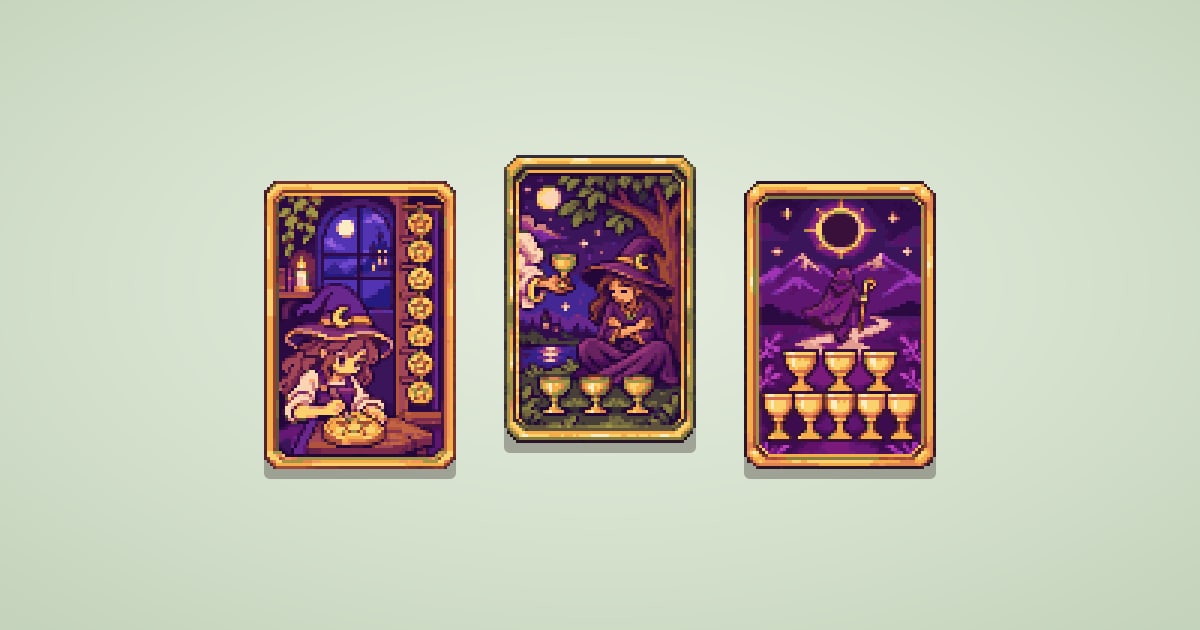 Tarot SpreadsThe Three-Card Tarot Spread: How to Read Past, Present, and FutureThree cards, read as one sentence instead of three definitions, with a full worked example.
-
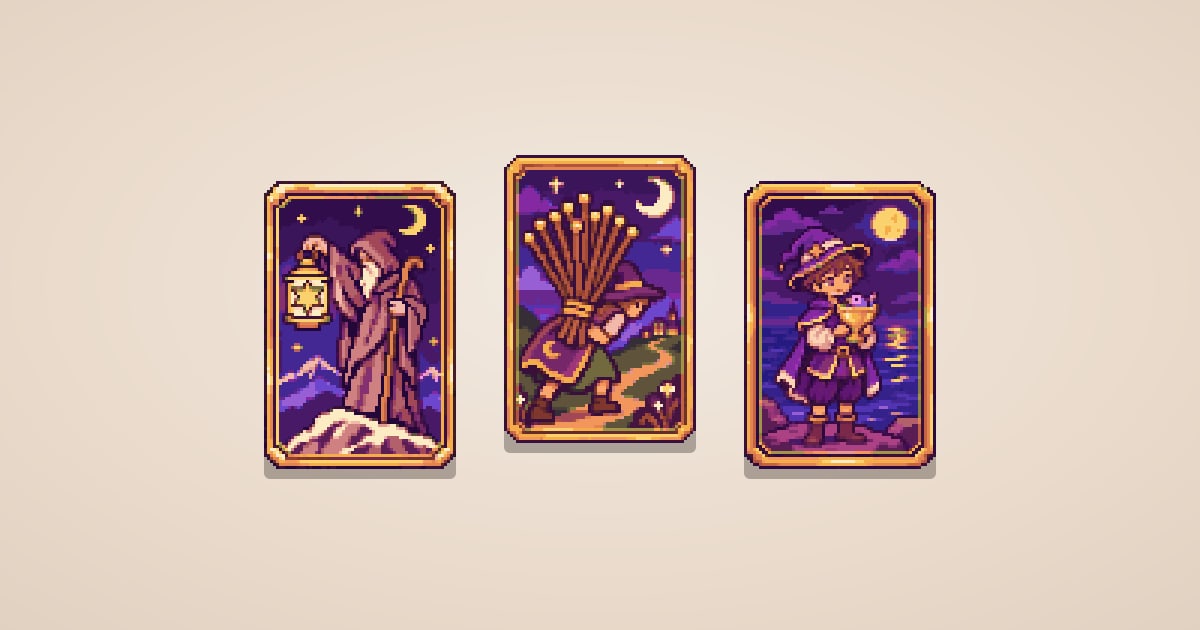 Self-DiscoveryHow to Start a Tarot Journal You'll Actually Want to KeepA five-line entry you can write in two minutes, how to spot the cards that keep coming back, and what to do when you read old pages.
-
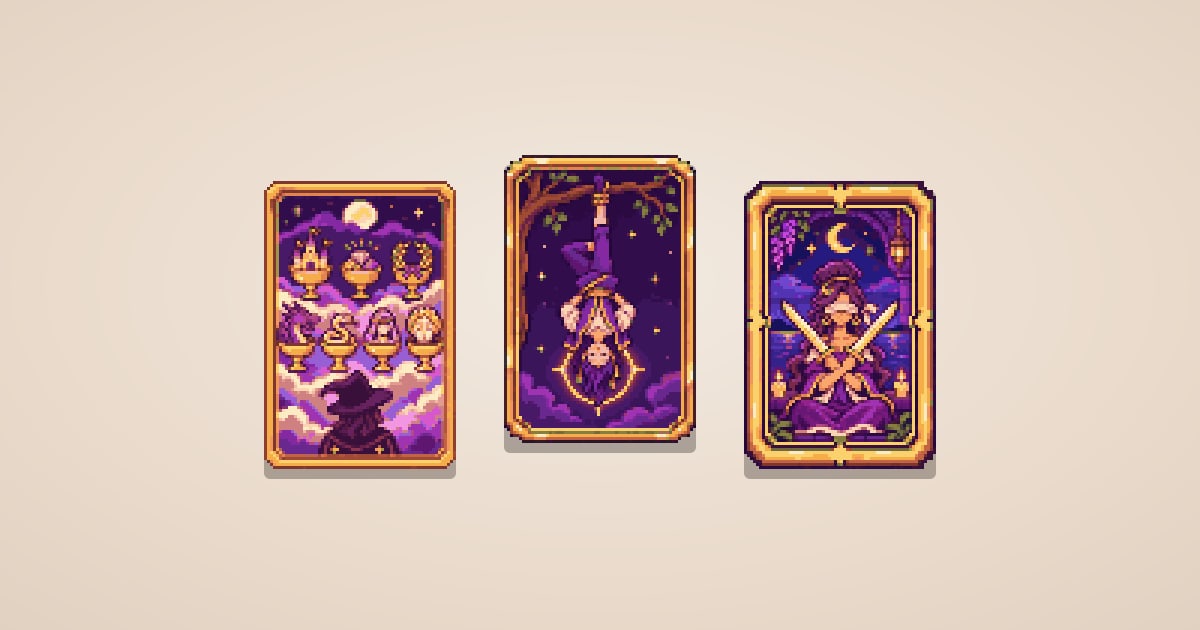 Learn TarotHow Does Tarot Work? An Honest AnswerTarot has no proven power to predict events, and it can still help you think. Here is how pictures, chance, structure and a pen do the work.