
Judgement and Second Chances: Waking Up to Your Own Life
On the card many people fear will condemn them, and why its picture looks less like a courtroom and more like a morning.
 Judgement · full meaning →
It can happen anywhere. You are waiting for the kettle, or stopped at a red light, or folding a towel you have folded a hundred times, and a thought arrives that is not loud but very clear. I don't want to keep living like this. Or: I used to love drawing. When did I stop? Or simply: I could still make that call. For a second you see your own life from slightly outside it, the way a familiar room looks strange when you come home from a long trip. Then the kettle clicks, the light turns green, and the day closes over the thought again.
Many of us have had that second, sometimes about the same thing, again and again. The tarot has a card for the moment the thought arrives, and its name, a little unfortunately, is Judgement.
The angel and the rising
Pamela Colman Smith drew it this way for the 1909 Rider-Waite-Smith deck: a great angel leans out of a bank of cloud at the top of the picture, wings spread, blowing a long golden trumpet. From the trumpet hangs a white banner marked with a red cross. Below, on what looks like gray water, open coffins drift, and people are rising out of them. In front are a man, a woman and a child, the child seen from behind. Farther back, other figures are doing the same. Their skin is pale gray, the color of people who have been somewhere cold and dim for a long time. Their arms are lifted and spread toward the sound. Pale mountains stand behind it all.
A. E. Waite kept his description of the picture brief:
The great angel is here encompassed by clouds, but he blows his bannered trumpet, and the cross as usual is displayed on the banner.
He also noted that this was one of the designs that barely changed from deck to deck, "essentially invariable in all Tarot sets."
Look closely and notice what the picture leaves out. There is no scale. No ledger. No judge on a throne. Nobody is cowering. The only thing in the sky is a call, and the only thing happening on the ground is people answering it.
A verdict, or a wake-up call
The word judgement carries a courtroom with it, and plenty of people turn this card over and brace. Some readers do lean on the older, sterner sense of a final reckoning. But the picture itself, and much of the reading tradition, points somewhere softer. Waite's own list of meanings for the upright card begins with "Change of position, renewal, outcome." The word "sentence" does appear in his notes, but only for the card reversed, sitting next to "deliberation" and "decision."
Read that way, Judgement is less a verdict handed down than a moment of waking. If there is any judging in it, it is the kind you do when you open your eyes in the morning and look around: this I want to keep, this I am done with, this I had forgotten I loved.
It matters, too, where the card sits. Judgement is number twenty, the second to last card of the Major Arcana, just before The World. It is not the bright first step of The Fool at the edge of the cliff. It is a second beginning, made by someone who has already lived a good deal of the road, losses and all, and is asked to get up anyway. The first kind of beginning has its own essay, The Fool and starting over. This card is about the later kind.
Arms open, hands empty
Look again at those lifted arms. You cannot rise like that while holding on to something. To answer the call, the figures have had to put down whatever they were clutching in the dark.
For many of us, what we clutch is an old case against ourselves. I'm the one who ruined that. I wasted those years. I'm someone who never finishes anything. Rehearsed long enough, the verdict starts to feel like a fact. The card does not pretend the past was nothing. The coffins are real; these people have been lying down a long while. But the trumpet sounds for all of them, the man, the woman and the child, and no one in the picture is asked to prove they deserve to stand up first.
That is the quiet heart of forgiving yourself: not deciding that what happened didn't matter, only that it doesn't get the last word. You can be sorry and rise at the same time. In the card, the two seem to happen together.
If you need to sit with what was lost before any of this feels possible, the Five of Cups and regret stays with that slower work, and there is no rush to leave it.
Small second chances
Films show second chances as grand moments. In ordinary life they are usually smaller, and they arrive on a Tuesday. The trumpet in the picture is loud, but in a life the call is often so quiet that most of the work is simply hearing it. Three small ways to listen this week:
Let the thought finish. When the kettle thought comes back, and it often does, don't wave it off this time. Let it say its whole sentence. You don't have to act on it yet. Only notice what it asks for, and how often it has asked before.
Answer in the smallest way possible. Not the whole new life. One email to the old friend. One evening looking up the class. Twenty minutes with the guitar that has been in the closet. In the card, the arms come up before the rest of the body is free; a first small movement is still a rising.
Change the ending of the old sentence. When you catch yourself repeating the verdict, I always or I never, try finishing it another way: I did that, and I am still allowed to begin. It may feel false at first. Say it anyway, in the tone you would use with someone you love who had made the same mistake.
If the voice judging you has grown cruel, or you've begun to feel you don't deserve to be here at all, please don't wait for a clearer morning. Reach out to someone today. There are free, confidential crisis lines on our safety page.
The sound, and the rising
The angel in the card never comes down to lift anyone out. It sounds the note and leaves the rising to them. There is a gentleness in that. A second chance, in this picture, is not forced on you and not taken away. It is offered, and the offer keeps sounding.
You don't have to be finished being sorry to stand up. You only have to hear your own life calling, and lift your arms a little toward it.
Keep reading
-
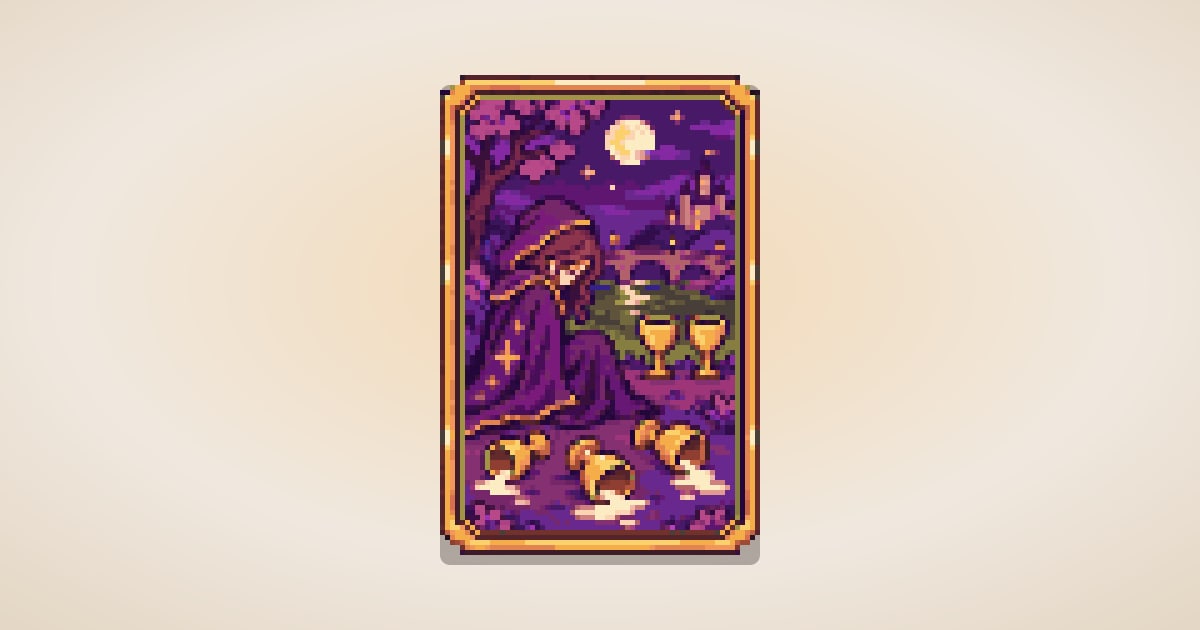 ReflectionsThe Five of Cups and Regret: Looking at What Still StandsOn the card of spilled cups, how regret narrows what we can see, and why nobody has to be hurried into turning around.
-
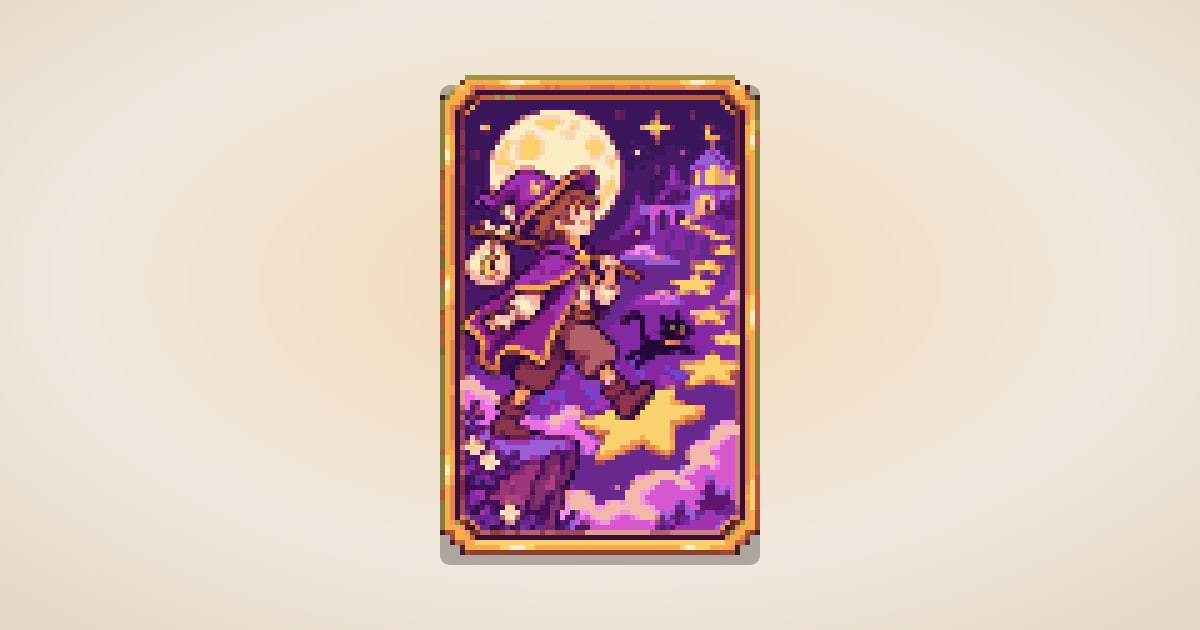 ReflectionsWhat The Fool Knows About Starting OverOn beginning again when you didn't choose to, and the card that steps toward the edge anyway.
-
 ReflectionsStrength and Gentle CourageOn card VIII, a lion that is calmed rather than beaten, and the kind of courage that rarely looks brave from the outside.