Two cards can be harder to read than one. You recognize both pictures, look up both meanings, and still have two separate answers sitting on the table. The missing piece is usually a relationship: does one card support the other, complicate it, or suggest a way to respond?
Reading tarot card combinations means making that connection. You do not need a dictionary of every possible pair. You need a small method you can repeat, with enough room for the question in front of you.
Here, tarot is a reflective practice. A combination offers a possibility to consider, not evidence of future events or access to another person's thoughts. The twelve examples below are invented teaching situations, not formulas to memorize.
A four-step method for connecting cards
1. Name each card's core
Choose one short phrase for each card before combining them. Stay close to the picture and the question. A card might suggest rest, shared attention, too many possibilities, or steady practice. Avoid copying an entire list of keywords into your interpretation.
Try saying, For this question, I am reading this card as... That small qualification leaves space for other meanings. You are selecting a useful angle, not defining the card forever. If individual meanings still feel unfamiliar, the beginner's reading guide can help you start with the image.
2. Find a shared thread or tension
Ask what connects the two cores. Perhaps both concern effort, but one picture looks patient while the other looks exhausted. Perhaps one suggests connection and the other suggests uncertainty. Agreement and disagreement can both give you something useful.
Use these lenses as prompts rather than rules:
Suit and element: Cups can focus attention on feelings and relationships; Pentacles on practical resources. The familiar water and earth associations can suggest feelings needing practical care. Wands/fire and Swords/air can prompt questions about action and thought. You do not need to calculate which element wins.
Number: Matching numbers invite comparison. Two cards numbered Two might concern different kinds of coordination, without sharing an identical meaning.
Major and Minor: Try reading a Major as a broad theme and a Minor as its everyday expression. The Major does not automatically cancel the Minor.
Picture and mood: Compare stillness with movement, openness with enclosure, or ease with strain. Name what you actually see before explaining it.
One clear connection is enough. You do not have to use every lens in every reading.
3. Let the position and question set the relationship
The positions give the cards jobs. A card in what helps needs a different reading from that same card in what gets in the way. Choose those jobs before drawing so you do not rearrange the reading to suit an appealing answer.
For a simple two-card practice, use this arrangement. Deal left to right and write your question above it.
1Notice2Response
Position
Name
A reflective question
1
Notice
What aspect of my situation deserves attention?
2
Response
What response could I consider?
The question supplies the subject. Rest beside effort could concern your study schedule, your role in a friendship, or a hobby you have turned into another obligation. Keep your interpretation within what you asked and what you know.
4. Say it as one sentence
Use a connecting word: and, but, while, through, or so. A useful starting frame is: I notice ___, so I could consider ___. The sentence should connect the cards rather than simply list their meanings.
Read it aloud. Can you explain which part comes from each card? Does it address your question? If it requires guessing someone's motives or inventing an event, narrow it. A modest observation you can check is more helpful than an impressive claim.
Twelve worked pairs
Each example uses upright cards and the Notice/Response positions above. Card pages are linked at their first appearance. Each pair includes its core meanings, a thread, and one possible reflective sentence. Your own circumstances may support a different interpretation.
Compare the relationship, not just the keywords
These examples show why a combination dictionary can only take you so far. Keep the cards visible while comparing what changed.
Pair
Question or context
Relationship to explore
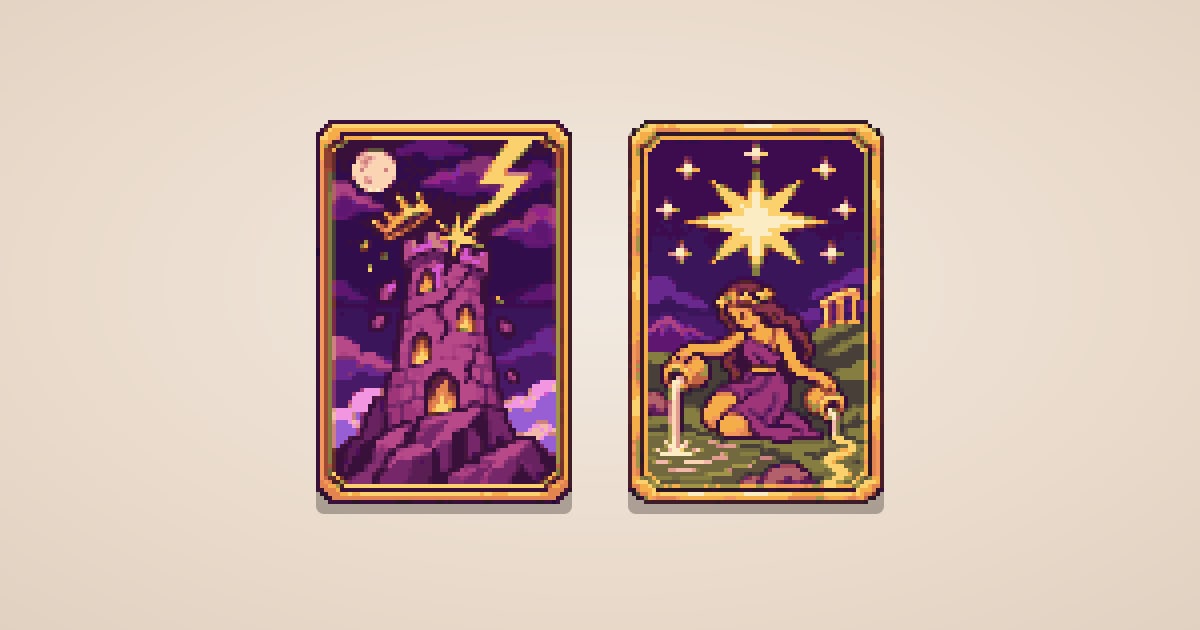
Tower + Star
A canceled project
Acknowledge disruption and make room for replenishment
Tower + Star
Revising an essay
Question a weak structure and return to an inspiring idea
Two of Cups + Seven of Cups
Early dating
Distinguish experienced connection from imagined possibilities
Two of Cups + Seven of Cups
Planning with a friend
Use shared imagination to develop an activity together
Add a third card without losing the thread
Keep your first sentence, then give the third card a defined job, such as one practical experiment. Write that position before drawing. You are extending a thought, not asking another card to certify it.

 1Notice
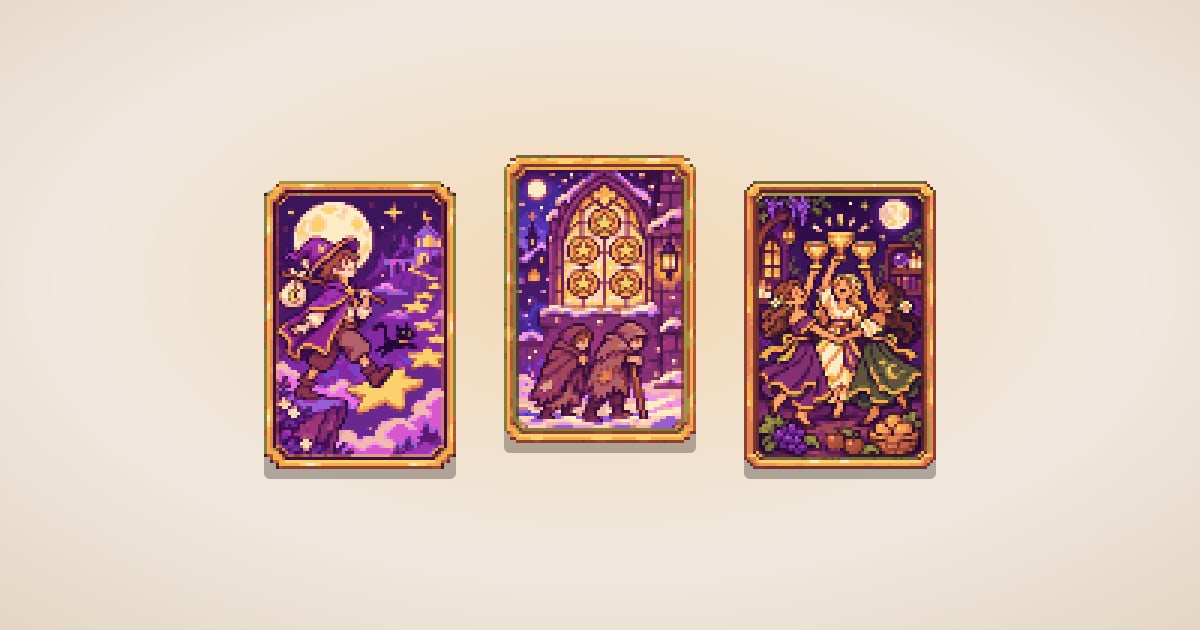 Learn TarotHow to Read Tarot Cards for Beginners: A Practical GuideWhat the 78 cards are, how to ask a question the cards can work with, and how to read a card in context instead of memorizing a list.
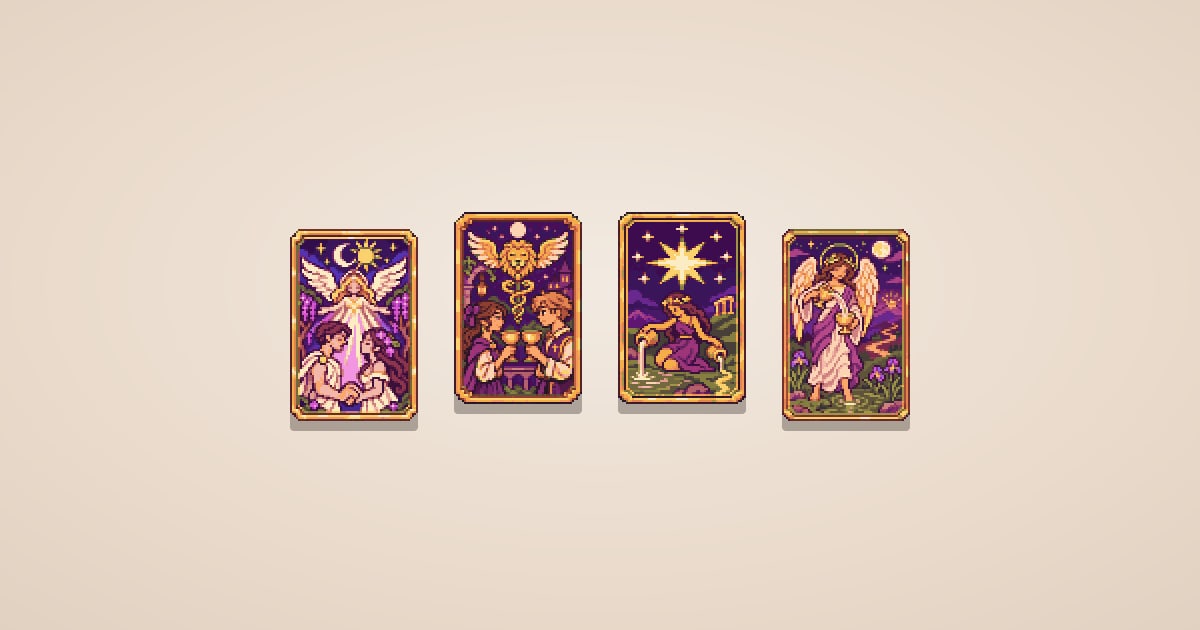 Learn TarotTarot Cards That Are Easy to Mix Up, and How to Tell Them ApartA picture-led study guide to seven tarot pairs whose shared themes can make their differences hard to remember.
 Learn TarotHow Does Tarot Work? An Honest AnswerTarot has no proven power to predict events, and it can still help you think. Here is how pictures, chance, structure and a pen do the work.