
The Moon Tarot Card: Intuition, Illusion and the Path in Between
The card of half-light: how to tell intuition from anxiety, what the animals on the card are doing, and how The Moon behaves in a reading.
 The Moon · full meaning →
The card pictures on this page are Emberlune’s own art, which follows the 1909 Rider-Waite-Smith designs loosely. Descriptions in the article refer to the original 1909 cards.
The Moon is the card people describe with the vaguest words: mystery, illusion, the subconscious, dreams. All of them are fair, and none of them help much when the card lands in front of you and you need to know what to do with it. The picture itself is more practical than its reputation. It shows a path, a pair of animals, a creature climbing out of the water, and a light that is just bright enough to walk by.
Below, we go through the picture detail by detail, look at the surprisingly calm reading Waite gave it, and offer a way to work with the card when a question feels uncertain. The Moon card page has the short reference meanings.
What the card shows
The moon. A large moon with a face, drawn in profile within a full disc, sheds drops of light toward the ground. Waite was careful about its phase: the moon is "increasing on what is called the side of mercy", and it has "sixteen chief and sixteen secondary rays".
The two towers. They stand on either side of the path like a gate. Compare them with the two pillars of The High Priestess: another threshold, but this time it opens onto open country rather than a temple.
The dog and the wolf. Two animals howl at the sky, one tame and one wild. They are the detail most people notice first, and the most useful.
The crayfish. A small creature crawls out of a pool in the foreground, halfway between water and land.
The path. It winds from the water's edge, between the towers, toward distant hills. It is clearly a path, and it clearly goes somewhere. You simply can't see the end of it.
What Waite saw in it
Waite's own reading of the card is unusually inward for a book of its time. He describes the path as "the issue into the unknown", and the two animals as the fears of the natural mind facing it, when there is "only reflected light to guide it". The crayfish, for him, is something lower still: a nameless tendency from the depths that "strives to attain manifestation" and, as a rule, sinks back again. At the center of his reading is a three-word message:
The face of the mind directs a calm gaze upon the unrest below; the dew of thought falls; the message is: Peace, be still; and it may be that there shall come a calm upon the animal nature, while the abyss beneath shall cease from giving up a form.
Peace, be still. It is a striking thing to find at the heart of a card usually read as confusion. The Moon doesn't ask you to banish what rises from the water. It asks you to look at it calmly until it settles.
His short divinatory meanings are much darker ("hidden enemies, danger, calumny, darkness, terror, deception"), and most modern readers soften them.
Intuition or anxiety?
The question The Moon raises most often is whether to trust a feeling. Moonlight is real light, but it is reflected, and it changes the shape of things. A coat on a chair becomes a figure; a quiet phone becomes a sign that something is wrong. Intuition and anxiety can feel identical in that light.
One way to work with the card is to separate the two on paper.
This is not a way of dismissing intuition. Some feelings in the second column will turn out to be right. But it puts them in proportion, which is what Waite's "Peace, be still" asks for.
Upright and reversed
Upright, The Moon describes uncertainty: a situation you can't see clearly yet, feelings that are louder than facts, or a stretch of road you have to walk without a map. It can also point to dreams and imagination at their richest. The advice is usually to go slowly, keep your eyes open, and avoid big decisions based only on fear.
Reversed, readers often take it as the fog beginning to lift: a confusion clearing, a fear losing its hold, or a deception coming to light. Some read it the other way, as anxiety turned inward and harder to name. Your question and the cards around it usually tell you which.
In love and in work
In love, The Moon often shows up around insecurity: not knowing where you stand, reading meaning into small things, or feeling that something is unsaid. It is a card that warns gently against acting on suspicion alone. It cannot tell you what someone else is thinking. It can tell you that you are uncertain, and that the next step is probably a calm, honest conversation rather than more guessing. For questions that help in that situation, see 15 thoughtful questions to ask tarot about love.
In work, The Moon can describe unclear expectations, shifting plans or a project whose shape you can't see yet. Ask for what you need in writing, check your assumptions, and give the situation time to show itself.
The Moon in a spread
- In the past, it can name a time of confusion that still colors how you see things now.
- In the present, it describes the half-light itself: a moment for patience, not verdicts.
- In the future position, it suggests that, on the current path, things may stay unclear for a while.
- Beside the Seven of Cups, with its cups of visions rising from a cloud, it can point to fantasy or wishful thinking.
- After The Star, which comes just before it in the deck, it reads as the long walk that follows a moment of clarity: hope is real, and the road is still dark. Our deep dives on The Star and The Tower look at the cards on either side of it.
Questions to write about
- What do I know for certain here, and what am I filling in?
- Which feeling keeps coming back, even when I'm calm?
- What would "peace, be still" look like for me this week?
- Where does the path go if I just take the next step?
The Moon is not a warning that everything is an illusion. It is a picture of walking at night: slower, more alert, and guided by a light you have to trust without seeing its source.
Sources
- Arthur Edward Waite, The Pictorial Key to the Tarot (William Rider & Son; published in 1910, dated 1911): the description of the card, its divinatory meanings and the passage quoted above, from the public-domain text.
Keep reading
-
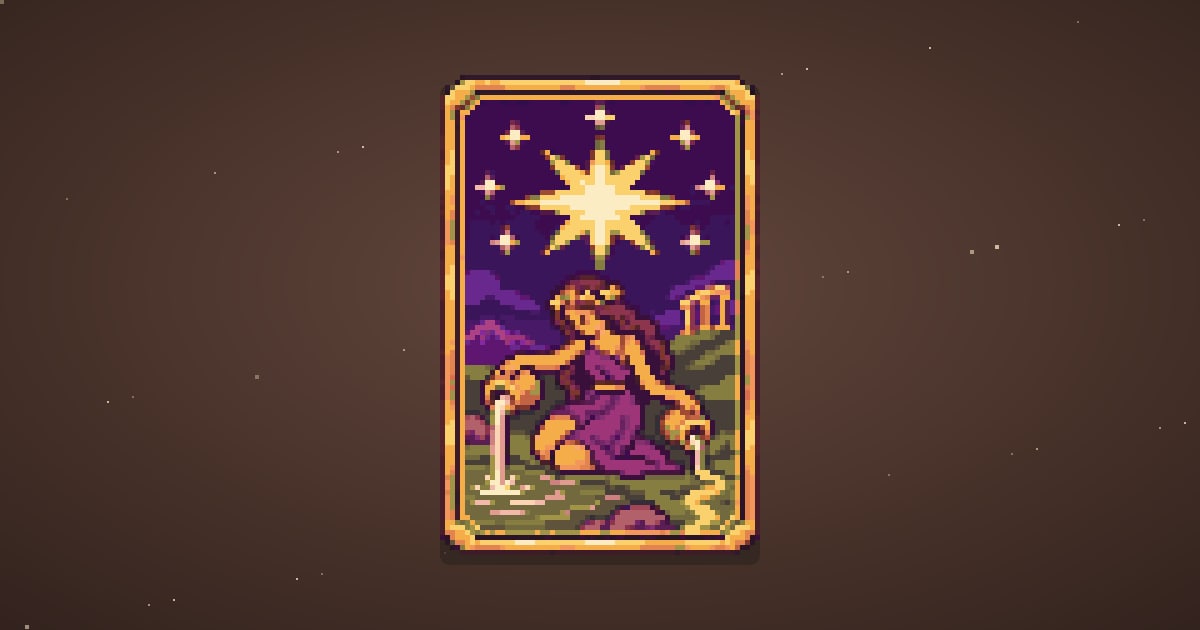 Card Deep DivesThe Star Tarot Card: Meaning, Symbolism, and InterpretationA close look at the card of hope: what is in the picture, what Waite actually wrote about it, and why it comes straight after The Tower.
-
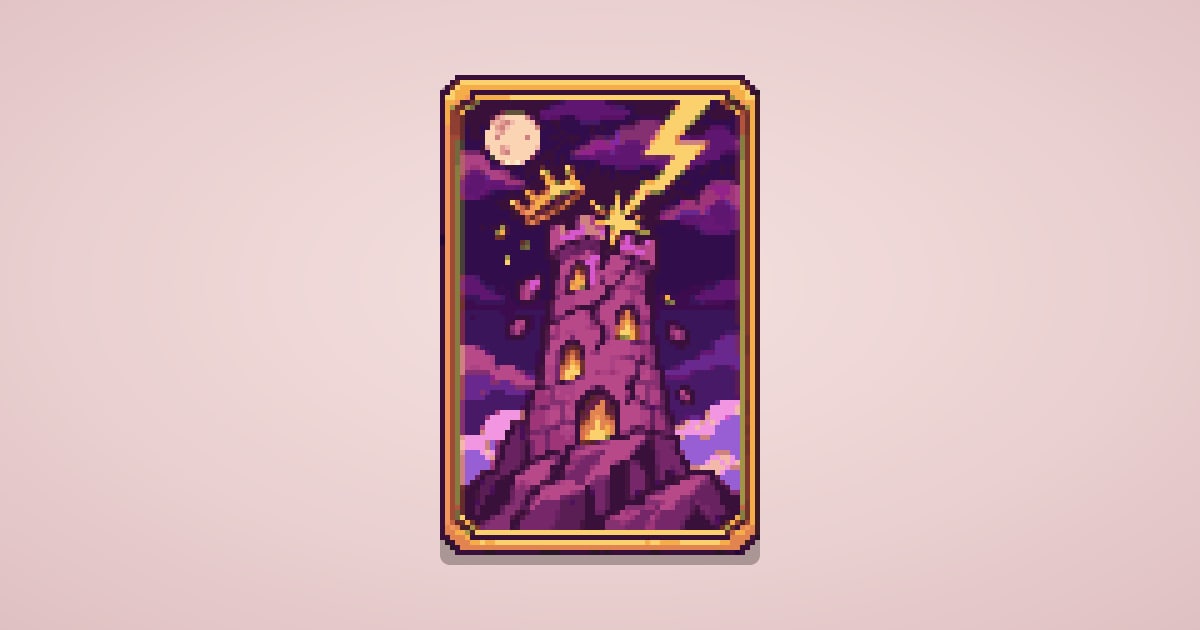 Card Deep DivesThe Tower Tarot Card: What It Means When Everything ShakesOne of the most feared cards in the deck, read slowly: what it shows, what it was once called, and why so many readers end up grateful for it.
-
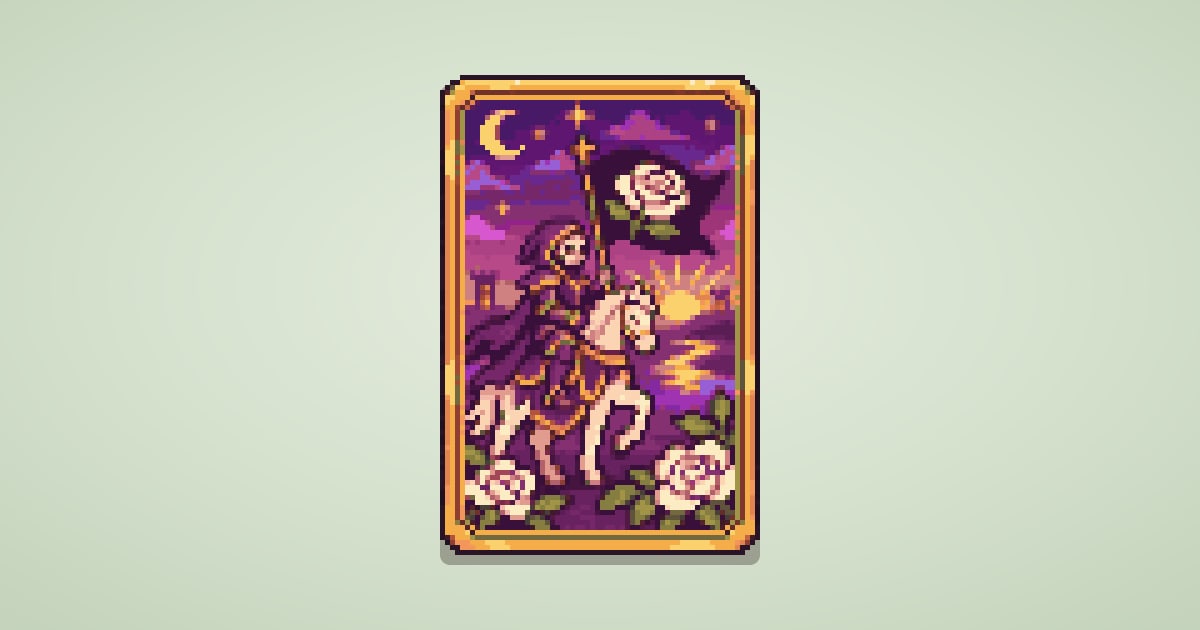 Card Deep DivesThe Death Tarot Card: Why It Almost Never Means DeathA frightening picture, explained plainly: what is drawn on it, how it changed over the centuries, and how to read an ending without dread.