
The Death Tarot Card: Why It Almost Never Means Death
A frightening picture, explained plainly: what is drawn on it, how it changed over the centuries, and how to read an ending without dread.
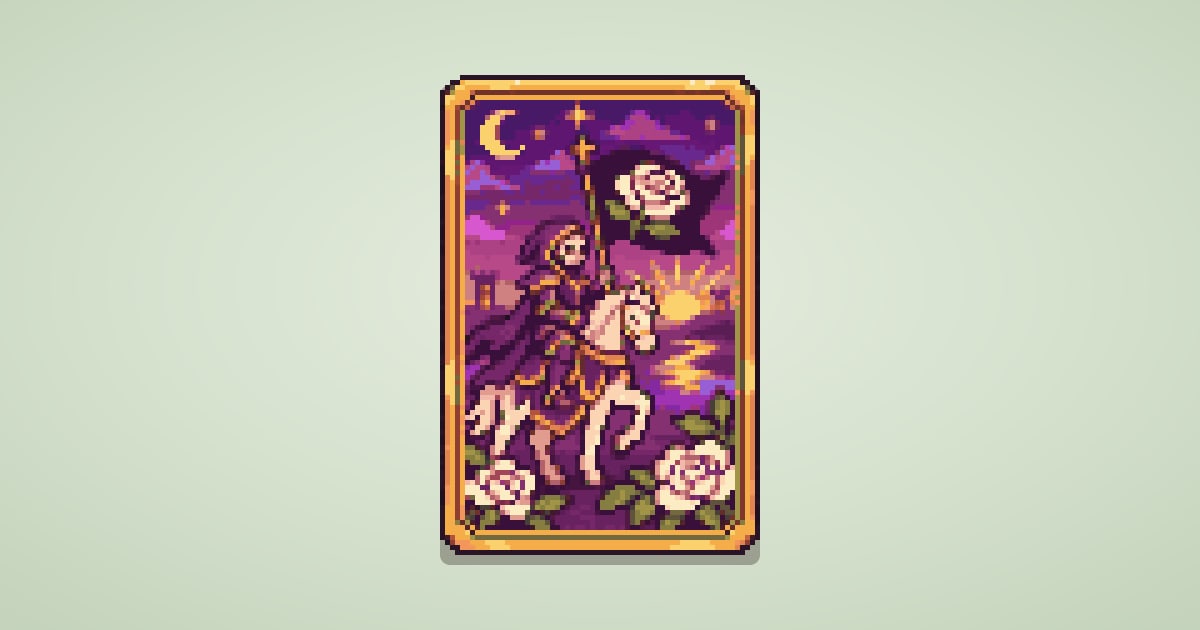
The card pictures on this page are Emberlune’s own art, which follows the 1909 Rider-Waite-Smith designs loosely. Descriptions in the article refer to the original 1909 cards.
Ask anyone who has never touched a tarot deck which card they know, and many will name Death. It is the card of horror films and nervous jokes, the one people hope won't come up. Tarot readers, meanwhile, will tell you almost in chorus that it doesn't mean someone will die. Both reactions make sense. The card does show a skeleton on horseback, and it is about something final. What it is about, in almost every reading, is the end of a chapter rather than the end of a life.
This guide explains why, starting with the picture itself. If you only need a quick answer for a reading, the Death card page has the short version, including a yes-or-no answer.
The picture, figure by figure
Across a field comes a white horse, ridden by a skeleton in black armor. His black flag bears a single white rose. In front of him, four figures react in four different ways. Behind them, a river runs toward the horizon, and a sun comes up between two towers.
A. E. Waite describes the scene briefly:
The mysterious horseman moves slowly, bearing a black banner emblazoned with the Mystic Rose, which signifies life. Between two pillars on the verge of the horizon there shines the sun of immortality. The horseman carries no visible weapon, but king and child and maiden fall before him, while a prelate with clasped hands awaits his end.
Three details in that passage do most of the work.
He moves slowly. This is not a sudden strike. It is a steady, unhurried arrival, the way most real endings come: a relationship that has been fading, a job that has been finished for a while before it officially ends.
The rose signifies life. The emblem on Death's own flag is a symbol of life. The card holds both at once.
He carries no weapon. Older Death cards showed a reaper with a scythe, cutting people down. Smith's rider doesn't need to do anything. Change arrives, and people respond to it.
Four ways to meet an ending
The four figures in front of the horse are, to our minds, the most useful part of the card, because they show four different responses to the same event. Waite gives the outline (a king, a child and a maiden fall, a prelate waits); Smith draws each reaction.
| Figure | What they do | A way to read it |
|---|---|---|
| The king | Has fallen, his crown on the ground | Power and status don't stop change; resisting it costs the most |
| The prelate | Stands with hands clasped, facing the rider | Meeting the ending openly, with faith or acceptance |
| The maiden | Kneels and turns her face away | Not wanting to look; grief, or the wish that it weren't happening |
| The child | Kneels and looks up at the rider | Meeting change with curiosity, before learning to fear it |
When Death turns up, it can be worth asking which of the four you are closest to right now. None of them is wrong. Each is a real part of how people live through endings.
From reaper to knight
The Rider-Waite-Smith card was a deliberate change. Waite explains that in the older decks "the method of presentation is almost invariable": living arms and heads rising from a field, and a skeleton with a great scythe mowing them down, starting with a crowned head. On many cards of the French Tarot de Marseille tradition, card thirteen carries no name at all, which is why it is sometimes called "the nameless arcanum".
Waite thought the old image too crude for what the card meant. In his description of the new card he writes that its meaning is "more fitly represented in the rectified Tarot by one of the apocalyptic visions than by the crude notion of the reaping skeleton". He also noted, approvingly, that the usual occult explanations of the thirteenth card were "on the whole, better than usual, rebirth, creation, destination, renewal, and the rest". Even in 1910, occult writers already read it as a card of transformation.
His short divinatory meaning is more literal: "end, mortality, destruction, corruption".
Upright and reversed
Upright, Death usually points to an ending that has already begun or can no longer be avoided: a phase of life closing, a role you have outgrown, a relationship or habit that has run its course. It often comes with a sense of relief underneath the sadness. Something is clearing space.
Reversed, it is most often read as resistance to that ending: holding on to something that is already over, or living in the long, gray stretch between "this is finished" and "I'm ready to admit it". Waite's reversed meanings capture this well: "inertia, sleep, lethargy, petrifaction".
In love and in work
In love, Death can mark the end of a relationship, but it just as often marks the end of a stage of one: the honeymoon period giving way to something steadier, an old pattern finally being dropped, or one way of being together making room for another.
In work, it tends to show transitions: a role ending, a project wrapping up, a career direction you have quietly left behind. It favors closing things properly, with a real goodbye, over letting them drag on.
The card in a spread
- In the past, it names an ending that shaped the present, and often asks whether you have fully let it go.
- In the present, it describes a transition that is underway right now.
- In the future position, it suggests that the current path leads to a natural close. It is also a good moment to decide how you want that ending to go.
- Next to The Tower, the difference is worth noticing. The Tower is sudden; Death is gradual. Our deep dive on The Tower explores that card on its own.
- Next to the Wheel of Fortune, it emphasizes the cyclical side of the card: this ending is part of a turn, not a full stop.
Reading Death for someone else
If you read for friends, this card deserves a little care. Say plainly that it is about change, not mortality, before you say anything else; people often freeze when they see the skeleton and stop listening. Then ask what in their life feels like it is ending. They usually know.
And if a question is genuinely about health or illness, tarot is the wrong tool. No card can tell anyone whether they or someone they love will be well, and it isn't fair to pretend otherwise. We say more about this in Can tarot predict the future?
Writing prompts for an ending
Death is the card of the ending you can see coming, met slowly. Its banner carries a rose, and its horizon has a sunrise on it. That is the part people tend to miss when they only look at the skeleton.
Sources
- Arthur Edward Waite, The Pictorial Key to the Tarot (William Rider & Son; published in 1910, dated 1911): the description of the card, its account of the older Death cards and the divinatory meanings, quoted from the public-domain text.
Keep reading
-
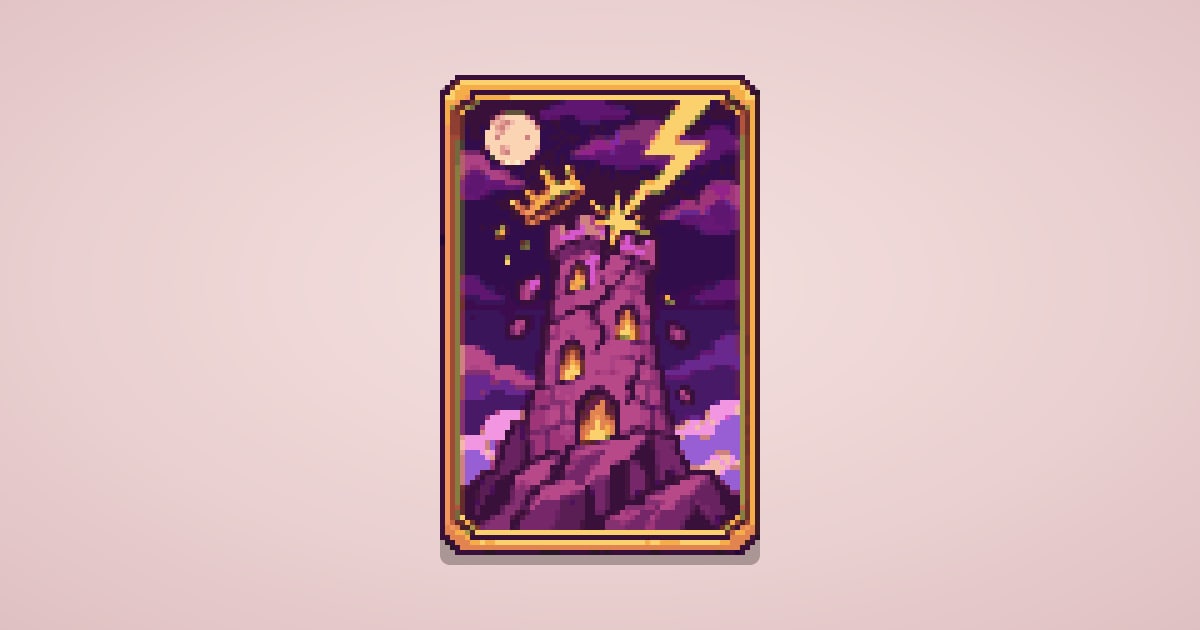 Card Deep DivesThe Tower Tarot Card: What It Means When Everything ShakesOne of the most feared cards in the deck, read slowly: what it shows, what it was once called, and why so many readers end up grateful for it.
-
 Learn TarotCan Tarot Predict the Future? A Thoughtful Look at What Tarot Can and Cannot DoWhere the idea came from, what readers actually believe, why readings can feel uncannily accurate, and how to use the cards without handing them your choices.
-
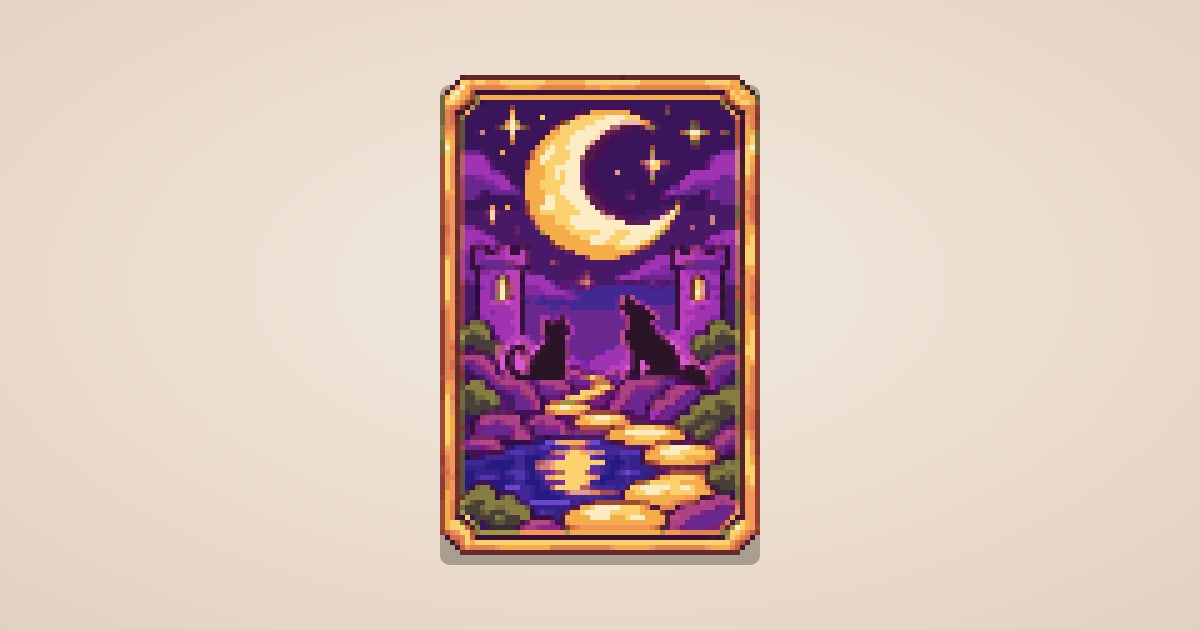 Card Deep DivesThe Moon Tarot Card: Intuition, Illusion and the Path in BetweenThe card of half-light: how to tell intuition from anxiety, what the animals on the card are doing, and how The Moon behaves in a reading.