
The Two of Cups and Being Met
On the card of two people meeting at the same height, the strange winged sign between them, and the quiet wish to be heard all the way through.
 Two of Cups · full meaning →
Most of us know both kinds of conversation. In the first, you say something that matters to you, and you can see the other person waiting for you to finish so they can begin. They nod in the right places. Their eyes drift toward a screen. You end the sentence early, and the thing you meant to say stays where it was.
In the second, someone asks you another question. Not the polite first one, but the one after it, the one that shows they heard your answer. They wait while you look for the words. And for a while afterward you feel lighter, as if something you had been carrying alone has been set down between two people.
The tarot has a card for that second conversation. It is the Two of Cups.
Two people, two cups
On the 1909 Rider-Waite-Smith card, two young people stand facing each other, each holding a cup. They are close enough to touch, and one of them reaches a free hand toward the other. Neither cup is lifted higher than the other. Nobody kneels and nobody looms. They meet at the same height, on the same ground, looking at each other rather than at the cups.
Between them and above them rises a strange, lovely sign: a staff with two snakes wound around it, a pair of wide wings near the top, and a lion's head set between the wings. Waite describes it this way:
A youth and maiden are pledging one another, and above their cups rises the Caduceus of Hermes, between the great wings of which there appears a lion's head. It is a variant of a sign which is found in a few old examples of this card.
He uses the same word, pledging, for the next card in the suit, where three friends dance with their cups raised in a garden. That card is a celebration with company. This one is quieter. Two people, face to face, offering something only the two of them can hold.
The sign between them
Waite names the staff the Caduceus of Hermes. In Greek myth Hermes was the messenger, the one who carried words across distances, and it is a fitting thing to place between two people. Every real meeting is a message passed across a gap. Something leaves one heart and arrives, more or less intact, in another.
Look at how the emblem is built. Two snakes wind around one staff without becoming one snake. Two lives can twine around a shared thing, a friendship, a home, a long conversation, and still stay two. Above them, the lion brings heat into a gentle picture. Many readers take the lion as passion and the snakes as healing, and see the whole sign as the two joined: a warmth that does not burn the people it touches.
Waite's list of meanings for the card begins "Love, passion, friendship, affinity, union, concord, sympathy". Friendship sits right there beside love. The Two of Cups has never belonged only to romance. It belongs to any bond where two people are equally present.
He ends that list with a mysterious phrase, offered, he says, apart from any fortune telling: "that desire which is not in Nature, but by which Nature is sanctified." Readers differ about what he meant. One gentle way to hear it is as the longing underneath ordinary wanting: not only to be liked or desired, but to be known.
Mutual is not the same as matching
What makes the card feel so steady is that each person holds a cup of their own. Neither is pouring into the other. Neither is an empty vessel waiting to be filled. The meeting happens because both arrive with something.
That is a useful picture to keep near when a bond feels lopsided. Being met does not mean being agreed with, or rescued, or completed. It means that what you bring is received, and that you receive what the other brings. Listening, seen this way, is a way of holding your own cup still while someone else offers theirs.
It helps to set the card beside The Lovers. There, a great winged figure hovers over the couple, blessing them from above. In the Two of Cups there is no one overhead, only a sign rising from the space between them. Whatever happens here depends on the two people and the small daily choice to turn toward each other.
What no card can tell you
Many people draw this card while thinking of someone in particular, hoping it means that person feels the same. It is a tender hope, and the card cannot answer it. No picture on a piece of card can see into another person's heart, and Emberlune will never pretend otherwise.
What the Two of Cups can show is your own side of the meeting: the kind of connection you long for, and the kind you are able to offer. If it keeps turning up while one person is on your mind, it may simply be showing you how much you want to be met. That is worth knowing, even when it aches. A kinder question than "do they love me?" might be "what kind of meeting am I hoping for, and am I offering it too?" There are more gentle love questions for tarot in that spirit.
Three small things for this week
Notice how you leave. After your conversations this week, pay attention to whether you walk away feeling more like yourself or a little less. You don't have to judge anyone for it. Just notice where you come away lighter.
Ask the second question. Once, with someone you care about, ask the question after the polite one. Then wait through the pause while they look for the words. Let the silence be part of the listening instead of something to fill.
Hold out your own cup. Being met takes two cups. If you are usually the steady one, the listener, the person others lean on, tell one person one true thing about how you are. It can be small. The point is to let someone receive you, too.
Cups still full
Look once more at the picture. The two people have not drunk yet. The card holds the moment just before: cups full, faces turned toward each other, a hand reaching out. Nothing has been promised about what comes next.
Maybe that is the most honest thing about it. No one can make the other cup appear. You can only hold out yours, and notice, gratefully, who holds theirs out to you.
To be met is not to be completed. It is two whole people, each bringing what they have, meeting at the same height.
Read the full meaning of the Two of Cups, or, if friendship is the bond on your mind, spend a while with the Three of Cups.
Keep reading
-
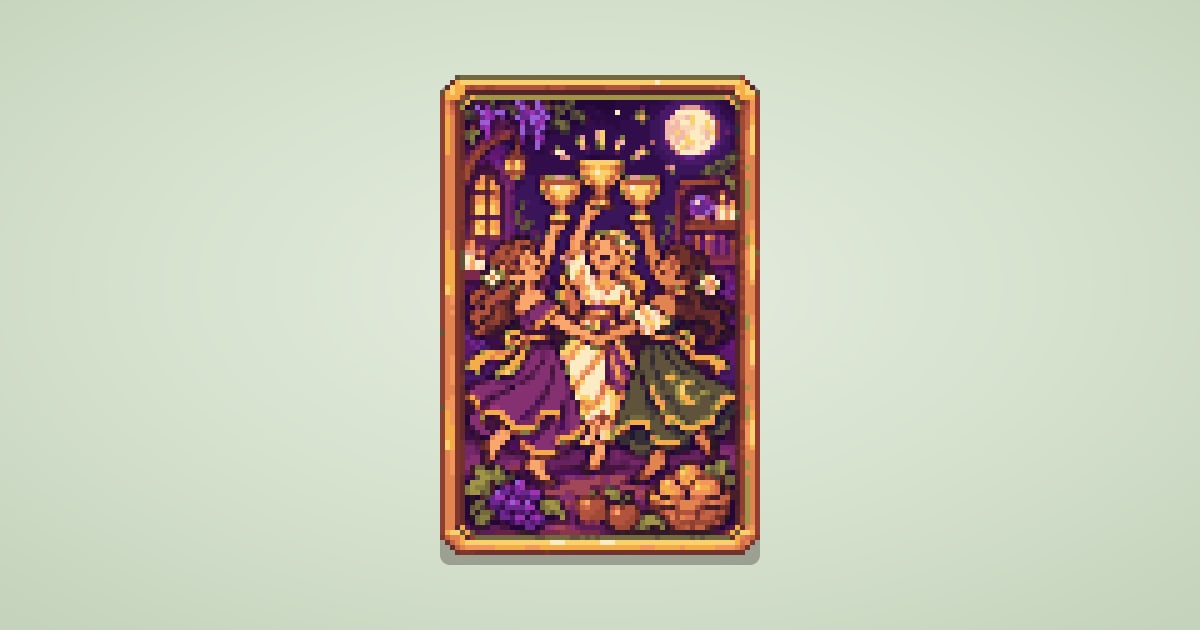 ReflectionsThe Three of Cups and the People Who Raise a Cup With YouOn the card of friendship, why Waite listed healing among its meanings, and the people who raise a cup with you.
-
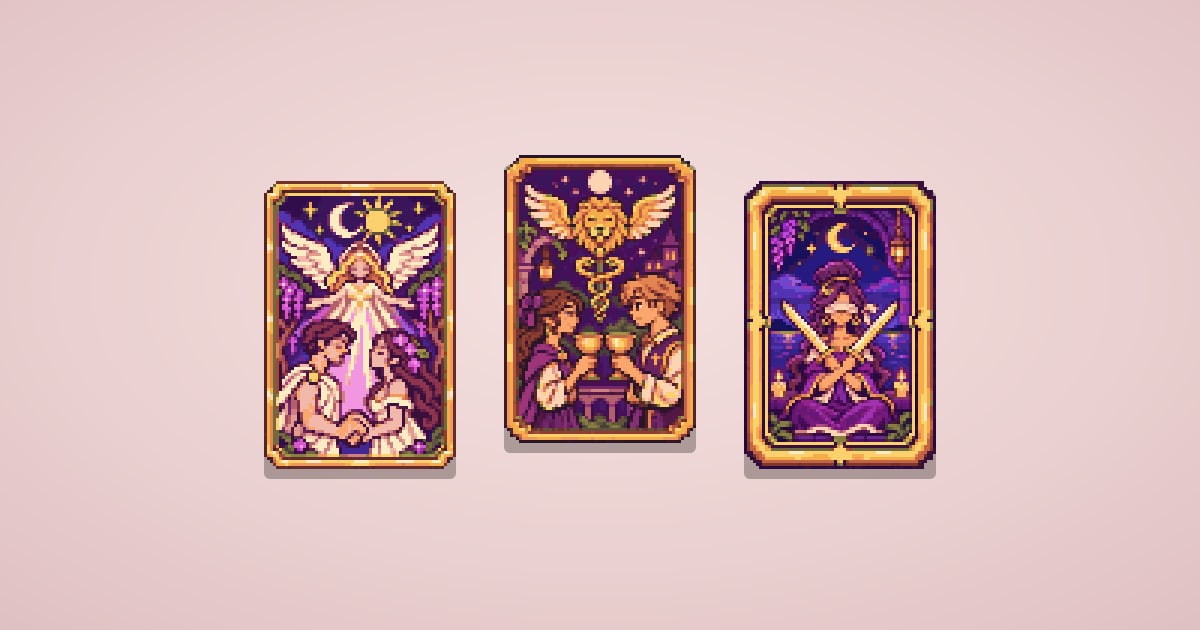 Love & Relationships15 Thoughtful Questions to Ask Tarot Cards About LoveQuestions that leave you clearer instead of more anxious, for when you're single, partnered, or picking up the pieces.
-
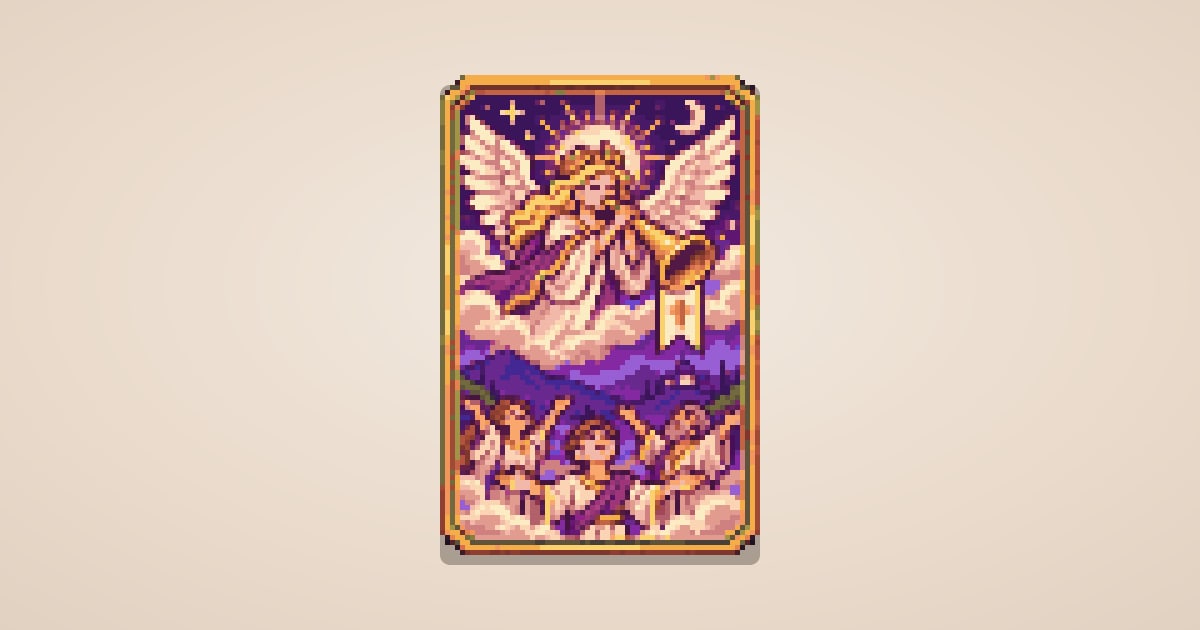 ReflectionsJudgement and Second Chances: Waking Up to Your Own LifeOn the card many people fear will condemn them, and why its picture looks less like a courtroom and more like a morning.