
A Full Moon Tarot Spread for Review and Release
Look at what has changed, keep what helps, and set down one expectation with care.
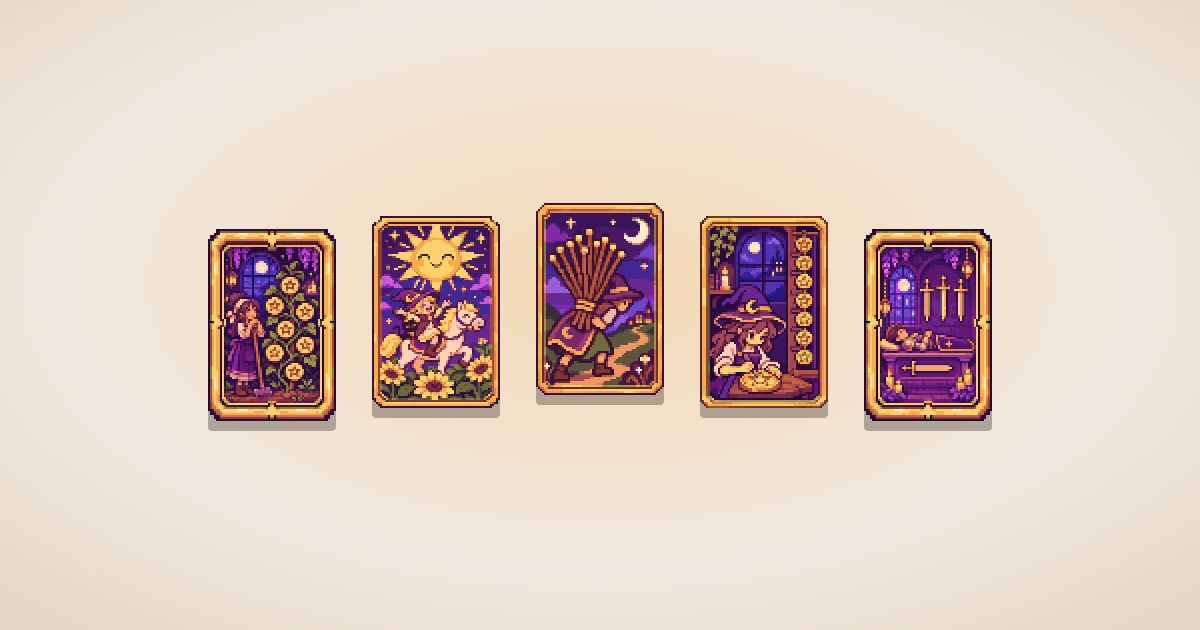
A full moon tarot spread offers a pause for looking back without turning the past few weeks into a performance review. You may have followed an intention, forgotten it, or discovered that it did not suit your circumstances. Each gives you something worth considering.
These five cards explore growth, visibility, release, continuity, and kindness. They do not measure whether you have used the lunar cycle correctly. The aim is to leave with a clearer sense of what deserves your attention and what you can stop demanding of yourself.
A bright phase, a useful pause
At full moon, Earth lies roughly between the Sun and the Moon, so the Moon's sunlit side faces us and appears as a bright disk. The phases repeat in a cycle averaging about 29.5 days, with full moon roughly halfway between successive new moons. NASA's guide to moon phases explains the astronomy behind that changing view.
Working with moon phases is a tradition of rhythm and reflection, not a force that changes outcomes. Here, the bright disk is a symbol for taking a clearer look. You do not have to believe that moonlight reveals personal truths or makes release happen.
The cards are also reflective tools. They cannot certify that something is complete, expose a secret, or tell you what another person thinks. Use what you notice as a question to investigate in your own experience.
Reading on a nearby day is fine. You can stay indoors, keep the lights on, and use an ordinary table. The care you bring to the review matters more than making the setting look ceremonial.
Bring an intention or a recent experience
If you used the new moon tarot spread, open that entry first. Read what you actually wrote, including the proposed first step and any limits you named. Do this before drawing new cards so the new interpretation does not replace your earlier record.
If you did not set a new moon intention, choose one recent experience to review. That might be a demanding project, an attempt to rest more, or an adjustment to your routine. This spread works without a previous reading.
Write a short account of what happened in plain language. Include actions, available resources, and interruptions. Keep explanations tentative when you do not have evidence. A difficult conversation, for instance, tells you what was said, but may not tell you why someone said it.
Arrange your review in five positions
Shuffle after choosing your focus. Decide how to handle reversed cards before you see them; using only upright meanings is a reasonable option. Deal five cards in a row from left to right, leaving room to see each picture.
These positions are not stages you must finish in order. You might know what to keep before you understand what to release. Read through once, then return to the relationship between the cards.
 1Growth2Seeing clearly3Release4Keep5Kindness
| Position | Name | A reflective question |
|---|---|---|
| 1 | What has grown | What change can I recognize in the experience I am reviewing? |
| 2 | What is ready to be seen | What deserves a more honest look now? |
| 3 | What I can release | What expectation, habit, or extra demand could I loosen? |
| 4 | What I want to keep | What remains useful, meaningful, or worth tending? |
| 5 | A kindness for the next weeks | What considerate action could support me from here? |
Read with evidence and compassion
Growth can be modest. In position 1, look for something you can describe rather than something you think you should have achieved. You may have learned that a plan needs more time. You may have noticed your limits sooner. Neither requires calling a hard experience a gift.
Visibility means paying attention. Position 2 does not uncover hidden facts. Let the picture raise a possibility, then ask what supports it. If a card makes you think you need help, consider the actual tasks and resources involved before deciding what request to make.
Release should stay within your control. Position 3 can concern an unnecessary rule, a comparison, or a task you can renegotiate. It cannot make you stop feeling grief, remove a real obligation, or authorize deciding for someone else. Feelings do not have to disappear for the reading to help.
Keep something on purpose. Position 4 prevents release from becoming a demand to discard everything. A method may need adjustment while its underlying value remains sound. Ask which part helped and how you know.
Let kindness become an action. Position 5 concerns care you can arrange, rather than a prediction about the coming weeks. Rest, a clearer boundary, or a smaller commitment may be worth considering. Match the suggestion to your circumstances instead of obeying the card literally.
Revisiting a new moon intention
A release practice using paper
Release can be quiet. For this practice, use writing rather than fire or candles. Safety comes first: do not burn the paper, and if you like a candle nearby, keep it away from the page and never leave it unattended. You need only a pen, a small piece of paper, and somewhere to put it when you finish.
Save the review without grading yourself
Keep the date, card names, your observations, and the practical adjustment together. Our guide to starting a tarot journal can help you make a record that takes only a few minutes. Leave the original intention visible beside the review.
In later notes, distinguish what you tried from what happened around you. Changed schedules, other people's choices, and chance all matter. A helpful reading gives you language for reflection; it does not deserve credit for every improvement or blame for every difficulty.
Before the next new moon, notice whether your adjustment helped. You can keep it, refine it, or choose a different focus. If you prefer a check-in without lunar timing, the self-reflection spread offers another place to begin. You are allowed to carry something forward unfinished.
Sources
- NASA Science, Moon Phases, consulted for the full moon's appearance and the timing of the phase cycle.
- A. E. Waite, The Pictorial Key to the Tarot, for the picture descriptions (the public-domain text at sacred-texts.com). Card associations in the invented follow-up are offered as questions for reflection.
Keep reading
-
 Tarot SpreadsA New Moon Tarot Spread for Gentle IntentionsMake room for one small beginning, with enough care and support to give it a fair try.
-
 Self-DiscoveryHow to Start a Tarot Journal You'll Actually Want to KeepA five-line entry you can write in two minutes, how to spot the cards that keep coming back, and what to do when you read old pages.
-
 Tarot SpreadsA Monthly Tarot Spread for the Start of a New MonthFive cards that turn the first days of a month into a quiet check-in, with a question waiting for you at the end.