
A New Moon Tarot Spread for Gentle Intentions
Make room for one small beginning, with enough care and support to give it a fair try.
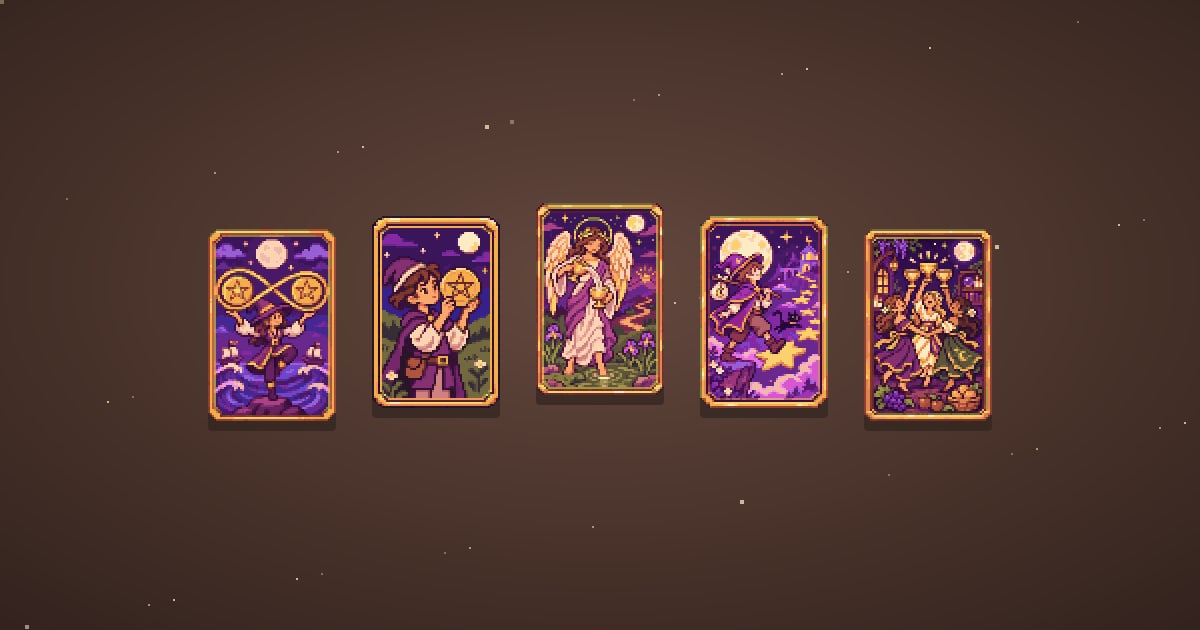
A new moon tarot spread can give a small intention somewhere to land. You do not need a dramatic reinvention or a perfectly worded wish. Perhaps you want more room to read, a kinder morning routine, or ten minutes with a neglected hobby. Five cards can help you consider what beginning would fit the life you actually have.
This reading asks about your starting point, your interest, the conditions it needs, a first action, and support. Nothing here promises an outcome. The useful result is an intention you can try, notice, and revise.
What the new moon means here
The new moon is the Moon's dark phase. The Moon passes roughly between Earth and the Sun, so its sunlit half faces away from us and the Moon is not visible in the night sky. The cycle from one new moon to the next takes about 29.5 days. NASA explains the phases through the changing positions of the Sun, Earth, and Moon.
Moon-phase practice offers a traditional rhythm for reflection. Here, darkness offers an image for something not yet developed. It is not a force that changes your outcomes, and drawing cards on this date does not make an intention more likely to succeed.
You can use the symbolism spiritually or simply appreciate a recurring calendar cue. Neither approach requires staying awake for an exact astronomical moment. Choose a nearby evening when you have time to pay attention. Missing the date does not invalidate your beginning.
Choose an intention with room to breathe
Before shuffling, name one area you would like to tend. Keep it about your own choices. An intention to listen more carefully is workable; an intention to make someone agree with you reaches beyond what you control. Tarot cannot reveal that person's private feelings or secure their cooperation.
Distinguish an intention from a deadline. You can value creativity without requiring a finished painting by the full moon. Think in terms of an experiment small enough to attempt during an ordinary week.
Write your focus at the top of a page. Leave space beneath it for changes. If choosing the question feels harder than reading the cards, the beginner tarot course offers practice with questions and interpretation. You can pause here to refine your focus before drawing.
Lay out the five cards
Set aside about twenty quiet minutes, a deck, and something to write with. No special objects are necessary. Shuffle comfortably and decide before drawing whether you will use reversals. All upright is fine.
Deal a horizontal row, numbered left to right. Keep the positions fixed even when a card surprises you. This layout is an invitation to think through a beginning, not a test of whether you deserve one.
 1Where I am2Beginning3Conditions4First step5Support
| Position | Name | A reflective question |
|---|---|---|
| 1 | Where I am | What about my present circumstances needs acknowledgment? |
| 2 | What wants to begin | What interest or possibility would I like to explore? |
| 3 | What I need to let it grow | What conditions would help me sustain this intention? |
| 4 | A small first step | What manageable action could I take soon? |
| 5 | What support looks like | What help, resource, or arrangement could I seek? |
Give each position a practical job
Start with your circumstances. Position 1 makes room for tiredness, limited time, enthusiasm, or uncertainty. Avoid turning it into a judgment about your character. An overloaded week is a condition to account for, not proof that you lack commitment.
Listen for interest. Position 2 asks what you want to explore. The wording does not mean an outside power has assigned you a task. A quiet preference counts, even when it seems less impressive than what you thought you should want.
Consider the growing conditions. Position 3 concerns what the intention needs from everyday life. That might mean supplies within reach, a less ambitious schedule, or permission to work slowly. Check whether those conditions are available before building a plan around them.
Shrink the action. Position 4 should become something you could describe to another person without needing to explain your whole future. Opening a notebook is an action. Becoming confident is a broader hope that may need many experiences.
Make support specific. Position 5 can suggest asking for company, protecting a little time, or using a resource. If another person appears relevant, make a request and let them answer. A card showing companionship cannot establish that someone is willing or free.
A reading about returning to drawing
Keep a record you can actually revisit
Record the date, your focus, each card, and a visible detail before writing interpretations. Separate observation from possibility: what is in the picture belongs in one sentence; what it brings to mind belongs in another. This helps you notice when a useful association has become an unsupported certainty.
Save your initial words rather than rewriting them after events unfold. Add later notes underneath. Include ordinary context such as an unusually busy week or a helpful conversation, so the cards do not receive credit for everything that happens.
Our tarot journal guide offers more ways to keep entries manageable. A few honest lines are enough. You can also leave a card unresolved instead of drawing repeatedly until the reading sounds encouraging.
Return at the full moon
Around the full moon, roughly two weeks later, reread your original intention before drawing anything new. What did you attempt? What made room for it? What turned out to need adjustment? Count noticing an unrealistic plan as useful information.
The full moon tarot spread gives that review five different questions, including what to keep and what to release. Bring your notes rather than expecting the next reading to verify the first. If the intention no longer fits, you can revise or retire it kindly.
Sources
- NASA Science, Moon Phases, for the new moon's appearance and the approximate lunar cycle.
- A. E. Waite, The Pictorial Key to the Tarot, for the card pictures (the public-domain text at sacred-texts.com). The practical interpretations above are reflective adaptations.
Keep reading
-
 Tarot SpreadsA Full Moon Tarot Spread for Review and ReleaseLook at what has changed, keep what helps, and set down one expectation with care.
-
 Self-DiscoveryHow to Start a Tarot Journal You'll Actually Want to KeepA five-line entry you can write in two minutes, how to spot the cards that keep coming back, and what to do when you read old pages.
-
 Tarot SpreadsA Monthly Tarot Spread for the Start of a New MonthFive cards that turn the first days of a month into a quiet check-in, with a question waiting for you at the end.