
How to Read Tarot for Someone Else: A Kind, Practical Guide
Reading for a friend or relative is less about knowing every meaning and more about listening, asking good questions and leaving them free to disagree.
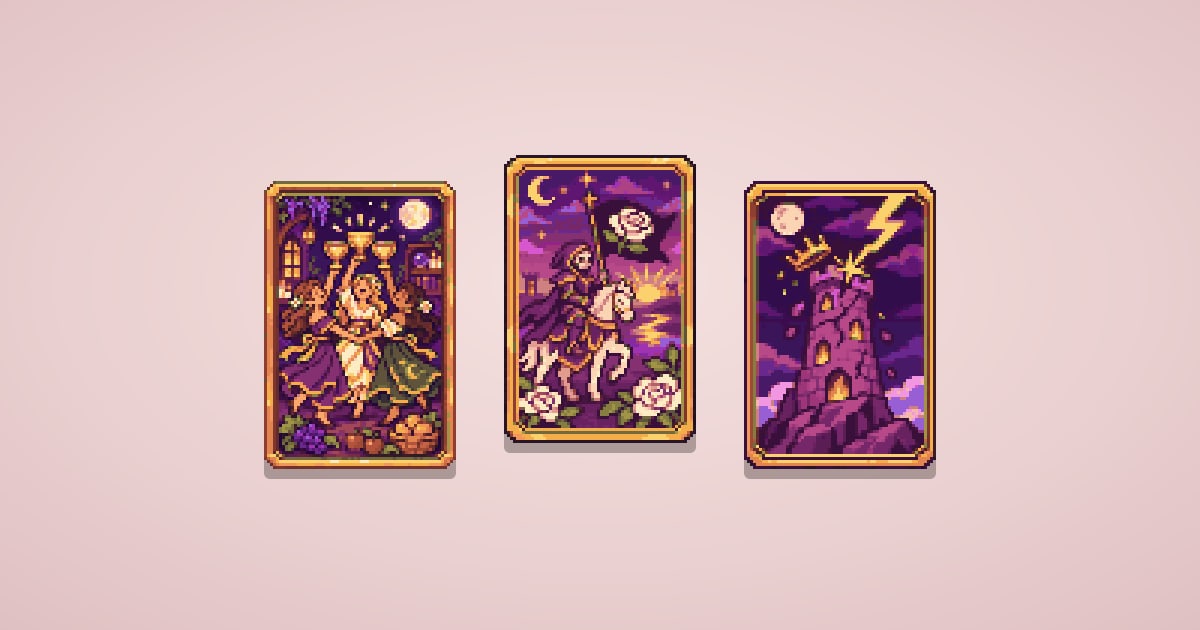
To read tarot for someone else, agree on what they want to explore, shape it into an open question together, lay out a few cards, and ask what they see before you offer your own thoughts. Speak about the cards as possibilities rather than verdicts, and let them keep the last word about their own life. That is most of it.
The rest of this guide is about doing those steps with care. A friend across the table may be carrying something you know nothing about, and may give your words more weight than you intend. Older books, Waite's among them, call the person asking the querent. Whatever you call them, reading for someone else mostly means listening well while holding a deck of cards.
Start by asking what they want
Before anyone touches the deck, ask a plain question: what would you like to look at today? Some people arrive with a clear topic. Others say "just see what comes up," which is fine, though a loose reading can drift. A gentle follow-up helps: is there an area of life on your mind, such as work, home or a decision?
Ask, too, how they feel about tarot. Some friends are curious, some skeptical, some a little afraid. Tell them honestly how you use the cards: "I don't think the cards know the future. I use them as pictures to think with." People tend to relax once they know nobody is about to announce their fate.
Frame the question together
Good questions for a friend follow the same principles as good questions for yourself. They are open, usually starting with "what" or "how," and they are about the person in front of you: their choices, their feelings, their next step.
There is one extra rule when you read for others. No questions about a third person's secret feelings. "Does my sister resent me?" asks the cards to report on someone who is not in the room and never agreed to be read about. The cards cannot see inside anyone, and a guess dressed up as a reading can do real harm between people. Turn the question back toward the person asking:
- "Does he still love me?" becomes "What would help me feel steadier with him?"
- "Will I get the job?" becomes "How can I prepare well for this interview?"
- "What is my friend hiding from me?" becomes "What would help me raise this with my friend honestly?"
Write the agreed question where you can both see it. For many more examples, see questions to ask tarot cards and, for relationships, love tarot questions.
Set the mood without making it heavy
Candles and a cloth are optional. A quiet spot matters more, with time that won't be cut short. Turn phones face down.
A small spread suits most readings for a friend: one card, or three. A past, present, future spread gives a clear shape without overwhelming anyone, and our tarot spreads page has other simple layouts. Fewer cards leave more room for talking.
Who shuffles, and why it matters less than you think
Readers disagree about this. Some like the other person to shuffle or cut the deck so it carries "their energy." Some always shuffle themselves and ask the other person to say when to stop. Others fan the cards face down and let their friend pick. No method is more "correct" than another, so choose on practical grounds: comfort, care for your cards, and what makes the moment feel shared.
Letting your friend shuffle or cut does have one real benefit. It gives them a part to play, which keeps the reading something you do together rather than something done to them. If their hands are sore or they would rather not handle the cards, you shuffle and they tell you when. Our guide to shuffling tarot cards covers methods that are easy on hands and decks.
Ask what they see before you explain
This is the most useful habit you can bring to the table. When a card turns over, don't begin with its meaning. Ask what they notice first, how the picture makes them feel, and whether anything in it touches their question.
They know their own life, so they often see what you would miss. As an illustration, picture a friend looking at the Three of Cups, three women lifting their cups together in a garden. They might suddenly mention the old group of friends they haven't called in a year. That is worth more than any keyword.
After they have spoken, offer your own thoughts as possibilities. Soft phrasing helps: "One way to read this is...", "Some readers see this card as...", "Does that fit at all?" If they say it doesn't fit, believe them. You can mention a traditional meaning without insisting on it. If you read reversed cards, keep them just as open; the course lesson on reversals explains a few approaches.
When a card frightens them
Sooner or later Death or The Tower will turn up, and you may see your friend's face change. Slow down. Say clearly what is true: no card predicts a death, an illness or a disaster. In the Rider-Waite-Smith picture, Death is an armored skeleton on a white horse, with a sun shining on the far horizon, and most readers take it as an ending that makes room for something else. The Tower shows lightning striking a tall tower, and many read it as a sudden change or a belief that gets shaken.
Then ask what they felt, and whether anything in their life already feels like an ending or a jolt. Often something does, and naming it out loud can be a relief. If nothing does, the card can simply lie there. Offer to pause or stop, and never draw again to replace a card they disliked. If your friend wants to read more later, our guide to scary tarot cards takes the hardest pictures one by one.
Health, legal and money decisions
Some questions do not belong to the cards. If your friend asks whether a symptom is serious, whether to sign a contract, take out a loan or change a medication, say kindly that the cards cannot know, and that this one is for a doctor, a lawyer or a qualified financial adviser. You can still offer a reflective reading about how they feel facing the decision, or what support would help. That leaves the decision with people qualified to help.
Consent and privacy
Treat a reading as a confidence. What your friend says at the table stays there unless they tell you otherwise. Don't post their cards or retell their story to others. Ask before you photograph a spread, even for your own notes.
Consent runs the other way as well. Don't read for someone who hasn't asked, and don't read about someone who isn't present. If a person asks for "a reading on my brother," you can offer a reading about their side of the relationship instead. Anyone can end a reading at any moment, for any reason, without explaining.
If someone is in real distress
Sometimes a reading opens a door onto something much bigger: fresh grief, panic, or thoughts of not wanting to be here. When that happens, the cards stop mattering. Put the deck aside and be a person first. Listen, stay with them, and don't try to explain their pain through a card. If they may be in danger, help them reach a crisis line or emergency services, or stay beside them while they call someone they trust. Our safety page lists helplines for many countries. Nobody expects you to be a counselor, only a kind friend who knows when to put the cards down.
Words for the beginning and the end
Some readers like having a few sentences ready. Change these until they sound like you.
After the cards are put away
Give the end of a reading a little time. Some people want to keep talking, others want tea and a change of subject. If your friend would like a record, they can jot a few lines or use our tarot journal templates. Or, on a phone, Luna in the Emberlune app can hold onto it for them in a private journal.
Reading for yourself is still the best practice ground, and its habits carry over; see can you read tarot for yourself, or start the free Learn Tarot course. The cards are only the excuse to sit together. The listening is the reading.
Keep reading
-
 Self-DiscoveryCan You Read Tarot for Yourself? Yes, and Here Is How to Do It HonestlyMost people learn the cards by reading for themselves. The hard part has nothing to do with luck. It is the part of you that wants a particular answer.
-
 Learn TarotQuestions to Ask Tarot Cards: 60 Gentle Questions That Actually WorkA question bank for the days when you want to draw a card but cannot quite find the words.
-
 Learn TarotHow Does Tarot Work? An Honest AnswerTarot has no proven power to predict events, and it can still help you think. Here is how pictures, chance, structure and a pen do the work.