
A New Year Tarot Spread: Looking Back, Looking Ahead
Give the ending year a thoughtful goodbye and the coming one a little room, with seven cards and one manageable next step.
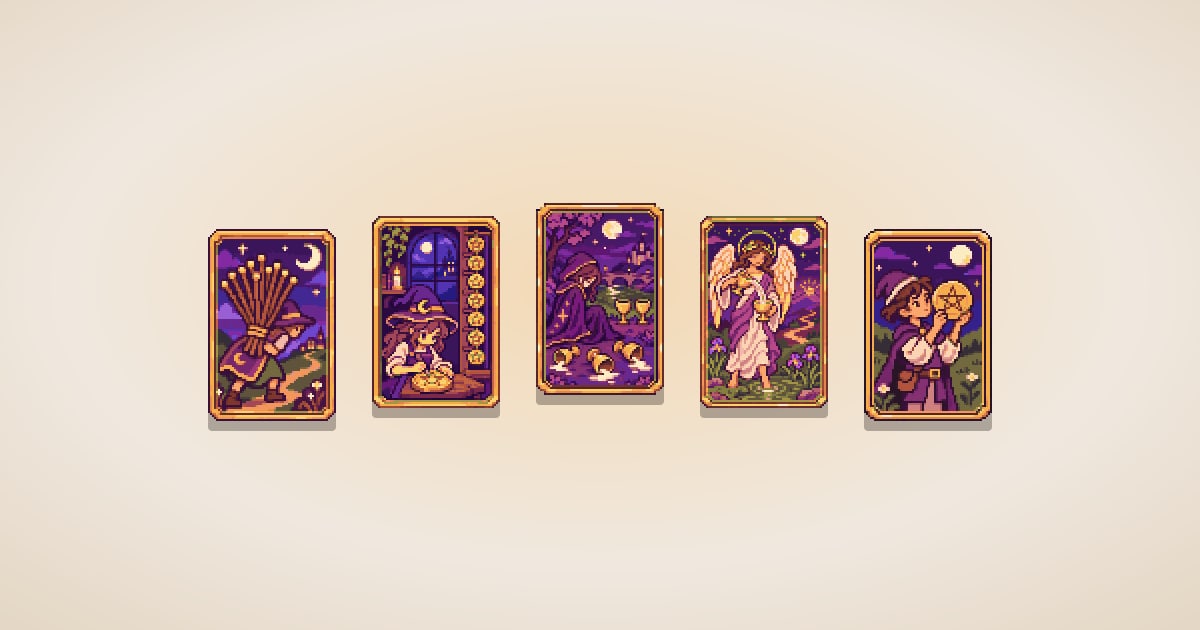
A New Year tarot spread can give you somewhere to put the mixed feelings that arrive around the calendar's turning. Perhaps you feel proud, tired, hopeful, or several things at once. You can bring all of that to the table without having a resolution ready.
This seven-card reading offers space to look back, keep something valuable, and choose how you want to begin January. Tarot is a reflective practice here. The cards supply pictures and questions, while your experience supplies the context. You can leave an interpretation unfinished and return when you have more perspective.
Before you draw
Find a surface with room for seven cards and bring a notebook. You can read in late December or during January, whenever you have a little breathing room. No particular evening or ritual is required.
Write a guiding question such as What do I want to carry forward, and how can I begin with care? Then jot down three things you remember about the ending year. Include something ordinary, perhaps a helpful routine or an enjoyable conversation, alongside any larger events.
Those notes give your interpretation something concrete to meet. Shuffle comfortably and deal seven cards, keeping the positions below. Reading everything upright is fine. If you need help recording the spread, the tarot journal guide offers a simple place to begin.
The seven-card New Year spread
Arrange four cards across the upper row and three beneath them. Read the upper row from left to right, then the lower row. The first three positions look back, the fourth names a desire, and the lower row brings attention toward care and action.
 1Year's theme2Keep a lesson3Forgive or release4More of this5Needs care6Bring a quality7January step
| Position | Name | A reflective question |
|---|---|---|
| 1 | The theme of the year that is ending | What recurring experience stands out when I look back? |
| 2 | A lesson worth keeping | What have I learned that I want to keep practicing? |
| 3 | What I can forgive or release | What expectation, regret, or burden might I loosen my hold on? |
| 4 | What I want more of | What would I like to make room for in everyday life? |
| 5 | What may need care | What part of my present life deserves gentler, more practical attention? |
| 6 | A quality to bring with me | What quality could help me meet the coming year? |
| 7 | A first small step for January | What manageable action could I try during January? |
Looking back with cards 1 through 3
Let the first card name one thread through the year. A card about effort might fit a demanding project, caregiving, or the work of keeping daily life moving. Check it against your notes. A single image can only hold part of what happened.
The second card asks what experience has taught you. Make the lesson specific enough to use. I need boundaries could become I can check my calendar before agreeing to another task. You may also find a lesson in something that went well.
For the third card, forgiveness is optional. You can release an unrealistic deadline or soften a harsh judgment of yourself. If someone hurt you, you can keep your boundaries and take the time you need. Choosing what to set down belongs to you.
Making room with cards 4 through 6
Card 4 invites an honest desire. Think about how it would feel in an ordinary week. More creativity might mean twenty minutes with your sketchbook. More connection might mean arranging a regular walk with a friend.
Card 5 asks you to notice existing needs. Look at your schedule, energy, surroundings, and available help. A difficult image can prompt a practical inventory. It cannot establish a coming crisis or tell you what another person privately thinks.
Card 6 offers a quality you can practice, such as patience, curiosity, courage, or moderation. Ask how you would recognize that quality in your own behavior. Give it a shape you can try even on a busy day.
Beginning with card 7
The last card brings the reading down to a January-sized action. Choose something within your control, with a clear occasion for doing it. On my next free Sunday, I will sort one drawer gives you somewhere to start.
These forward-looking cards concern choices and attention, not forecasts. No card can reveal how January or the rest of the year will unfold. Circumstances, other people, and chance will shape it alongside your own decisions.
An invented reading for a quieter beginning
An optional twelve-card monthly variation
For a longer reflection, you can use twelve cards instead of seven. Assign one to each month and write the month names before drawing. Each card accompanies a prompt you can revisit during that month. The sequence offers twelve opportunities to reflect. It makes no predictions about what any month will bring.
- January asks what beginning I can make manageable.
- February asks how I can show care in daily relationships.
- March asks what curiosity I want to follow.
- April asks what habit I am willing to reconsider.
- May asks where enjoyment could receive more space.
- June asks what deserves a halfway review.
- July asks how I can respect my energy.
- August asks what skill I would enjoy practicing.
- September asks which commitment I want to renew.
- October asks what boundary needs attention.
- November asks what support I can acknowledge or request.
- December asks what I want to appreciate before closing the year.
Record your first impressions, then leave room beneath each entry for later notes. If twelve cards feel crowded, use a one-card reflection with the relevant prompt when each month begins.
Revisit the reading quarterly
You can also use the full moon tarot spread for a shorter reflection between quarterly reviews. Give each reading its own question and date. By the end of the year, your notes can hold a record of choices, revisions, pleasures, and needs that became clearer with time.
Keep reading
-
 Self-DiscoveryHow to Start a Tarot Journal You'll Actually Want to KeepA five-line entry you can write in two minutes, how to spot the cards that keep coming back, and what to do when you read old pages.
-
 Tarot SpreadsA Full Moon Tarot Spread for Review and ReleaseLook at what has changed, keep what helps, and set down one expectation with care.
-
 Tarot SpreadsA Monthly Tarot Spread for the Start of a New MonthFive cards that turn the first days of a month into a quiet check-in, with a question waiting for you at the end.