
Shadow Work With Tarot: A Gentle, Practical Approach
Four careful ways to use the cards to look at the parts of yourself you'd rather not, and where the limits are.
"Shadow work" has become a popular phrase in modern tarot, and it is often presented as something dramatic: confronting your darkness, facing your demons. The real thing is quieter and more ordinary. It is the practice of noticing the parts of yourself you tend not to look at (the envy you don't admit to, the anger you call something else, the need you're embarrassed by) and getting curious about them instead of pushing them away.
Tarot can be a good companion for this, because the cards show those feelings in pictures, at a slight distance, where they are easier to look at. This guide explains where the idea comes from, offers four practical ways to use the cards, and is honest about where tarot stops being the right tool.
Where the idea comes from
The "shadow" is a term from the Swiss psychiatrist Carl Jung (the phrase "shadow work" came later, from popular psychology). He used it for the parts of the personality a person doesn't recognize as their own: traits and impulses pushed out of view because they don't fit the picture we have of ourselves. In Jung's view the shadow isn't simply bad. It often holds energy and qualities we need, such as assertiveness in a very agreeable person, or softness in someone who prides themselves on being tough.
The tarot didn't come from Jung, and he didn't design any part of it. But many modern readers find his ideas a natural fit for the cards, because the Major Arcana in particular is full of figures that look like the characters in our own inner lives: the Fool and the Hermit, the Emperor and the Empress, the Devil and the Star.
1. The card you don't like
Go through the deck face up and notice which card you most dislike. Not the scariest one: the one that irritates you, makes you uncomfortable, or that you'd rather not draw. Many people pick the obvious ones (The Tower, Death), but the interesting answers are often smaller: the smug look of the Five of Swords, the comfortable figure of the Nine of Cups sitting with a row of cups arranged behind him, the self-sufficient woman in the Nine of Pentacles.
Then ask yourself why. Strong dislike is often a sign that a card shows something we don't allow ourselves. Someone who can't stand the Nine of Cups may have a hard time letting themselves enjoy what they have. Someone who bristles at the Five of Swords may have trouble admitting that they, too, sometimes want to win.
2. The court card you resist
The sixteen court cards (Pages, Knights, Queens and Kings) are often read as personalities. Lay them out and notice which one you feel least like. Perhaps it is the Queen of Swords, seated in profile with her sword upright, clear-eyed and direct. Perhaps it is the impulsive Knight of Wands on his rearing horse.
The court card you resist often describes a way of being that you learned, at some point, was not allowed. A very gentle person might resist the Queen of Swords because directness once got them into trouble. That doesn't mean they should become her. It means there might be a little of her worth reclaiming: the ability to say a clear no, for example.
3. Reversed cards as prompts
Readers interpret reversed cards in many ways. For shadow work, one useful approach is to treat a reversed card as energy that is blocked, hidden or turned inward. When a card appears reversed, ask: where is this quality present in me but not expressed?
A reversed Strength, for instance, might point to courage you have but don't trust, or to frustration you are keeping on a very short leash. A reversed Three of Cups might be a wish for connection you have stopped admitting to.
You don't need a special spread for this. Simply pay attention to reversals in your ordinary readings, and give them one extra question in your journal.
4. Sitting with The Devil
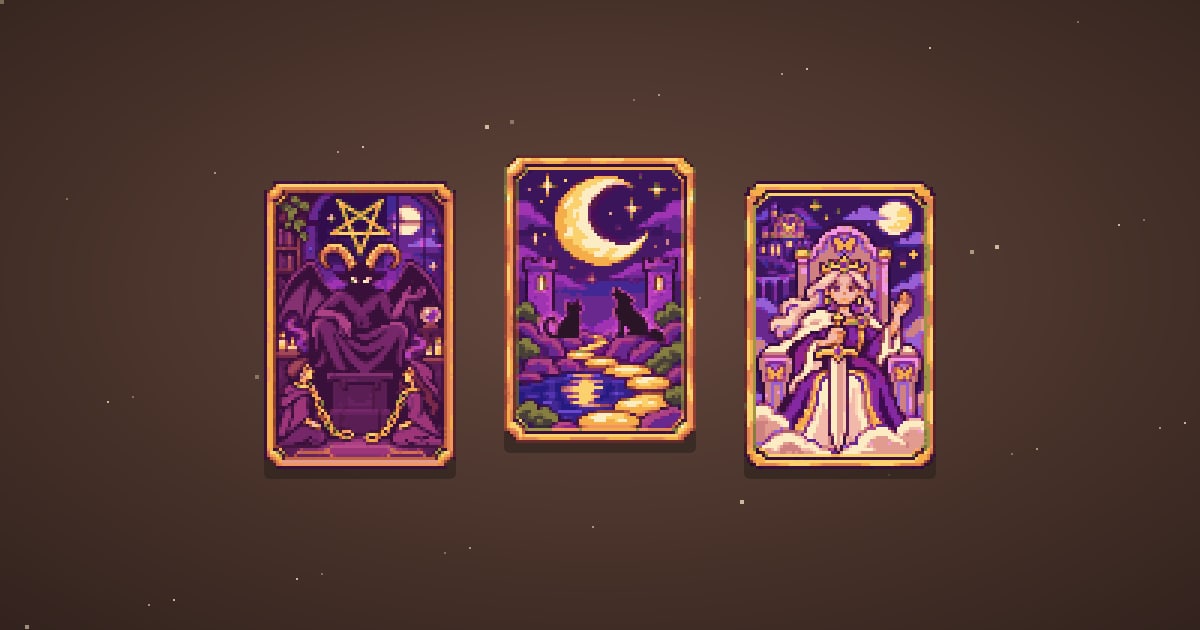
If one card in the deck is built for shadow work, it is The Devil. In the Rider-Waite-Smith picture, a horned figure perches on a dark altar-block. Two smaller figures stand chained to it, a man and a woman, with small horns of their own. The detail most readers point out is that the chains around their necks are loose. They could, it seems, lift them off.
That is a very precise picture of the shadow at work: patterns we feel trapped by, that are held in place partly by not looking at them. When The Devil appears, or when you pull it deliberately to reflect on, the question is not "what is evil in me?" It is gentler and more useful: What am I chained to, and how loose is the chain really?
The Moon is a natural second card for this work, a picture of the half-lit place where fears and imagination mix. Our deep dive on The Moon includes an exercise for separating what you know from what you fear.
A small spread for shadow work
When you want a structured reading, try three cards:
- What I show: the part of me I'm comfortable with others seeing.
- What I hide: the part I keep out of view, even from myself.
- What it offers: what that hidden part could give me if I let it in.
The third position matters most. Shadow work is not about finding faults. It is about finding what was left out and seeing whether some of it belongs back in.
Doing it kindly
A few habits keep this practice healthy.
Go slowly. One card, one question, one page of writing is plenty. There is no need to excavate your whole personality in a weekend.
Be curious, not critical. The aim is understanding, not self-judgment. If a session leaves you feeling worse about yourself, it has gone too far for one day.
Keep a record. Patterns in shadow work show up over months, not minutes. A simple tarot journal lets you see them.
Know the limits. Tarot can help you notice things. It cannot treat anything. If what comes up is heavy, bring it to a person who is trained to help.
Shadow work, done gently, rarely produces a dramatic revelation. More often it produces a small, honest sentence you hadn't let yourself say, like "I'm angrier than I admit" or "I want more than I ask for". That sentence is usually the beginning of something good.
Keep reading
-
 Self-DiscoveryHow to Start a Tarot Journal You'll Actually Want to KeepA five-line entry you can write in two minutes, how to spot the cards that keep coming back, and what to do when you read old pages.
-
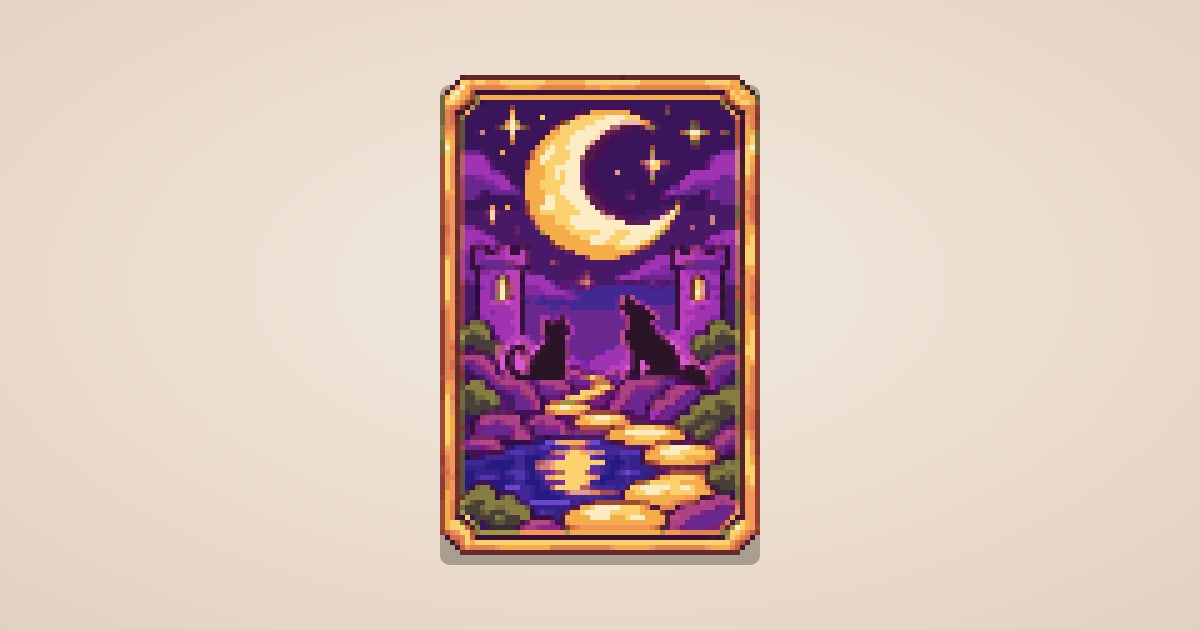 Card Deep DivesThe Moon Tarot Card: Intuition, Illusion and the Path in BetweenThe card of half-light: how to tell intuition from anxiety, what the animals on the card are doing, and how The Moon behaves in a reading.
-
 Self-DiscoveryA Morning Tarot Ritual: A Gentle Five-Minute Daily PracticeOne card with your tea or coffee, three plain questions and a line in a notebook, kept small enough that a missed morning never feels like failing.