
Tarot vs Oracle Cards: What Is the Difference?
Two kinds of illustrated cards that sit side by side on a shelf, work quite differently in the hand, and can both support honest reflection.
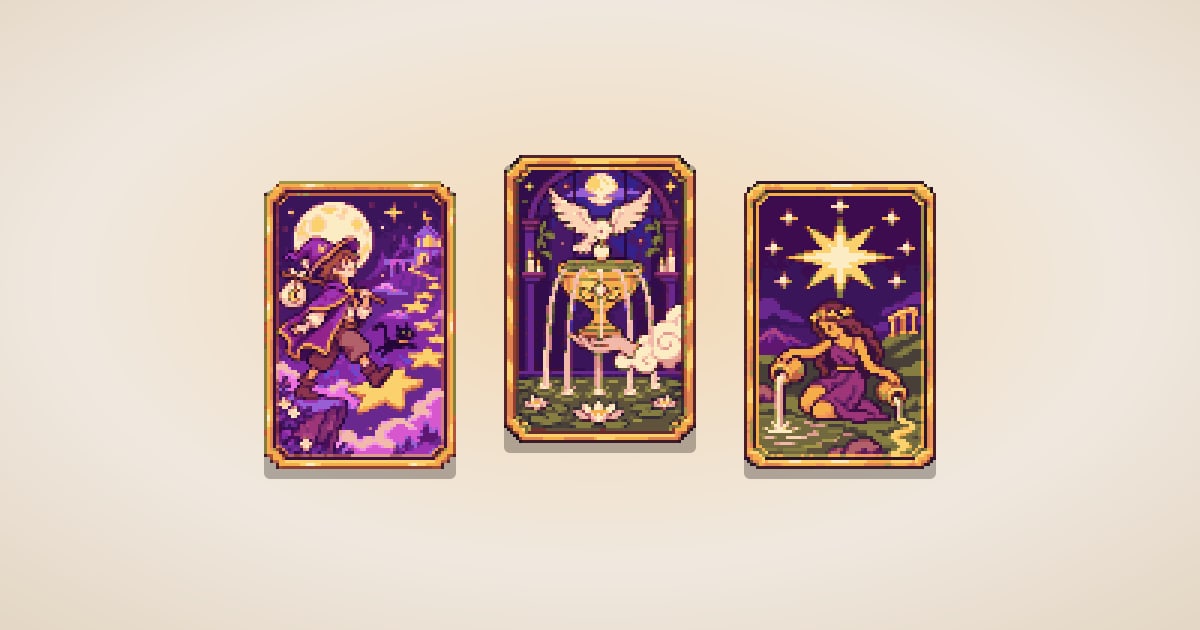
Tarot is a system, and oracle cards are a format. Every tarot deck follows the same structure of 78 cards: 22 Major Arcana and 56 Minor Arcana divided into four suits. What you learn with one tarot deck mostly carries over to the next. An oracle deck can have any number of cards, any theme and any arrangement its creator chooses, and the guidebook that comes with it is usually the main key to what the cards mean.
Neither kind of deck is more genuine, more powerful or more accurate than the other. Neither can tell you what is going to happen, and neither can show you what someone else is thinking. Both are collections of pictures you can use to slow down and look at your own situation. The real difference is how much structure you want while you do that.
What makes a deck a tarot deck
A tarot deck has two parts. The Major Arcana are 22 cards numbered from 0 to 21, starting with The Fool and ending with The World. They carry big, recognizable figures and themes: The Lovers, Death, The Star, The Sun.
The Minor Arcana are 56 cards in four suits. In the most widely used tradition the suits are Wands, Cups, Swords and Pentacles, though some decks use other names, such as Coins. Each suit runs from Ace to Ten and then has four court cards, usually called Page, Knight, Queen and King. Fourteen cards in each of four suits gives 56.
Tarot cards were first made for playing a card game in fifteenth-century Italy. Reading them for meaning came much later. Many modern decks follow the pictures of the Rider-Waite-Smith deck, drawn by Pamela Colman Smith and published in 1909, which gave every numbered Minor Arcana card a full scene instead of a simple pattern of suit symbols. That is why so many decks today show a whole scene, not just suit symbols, on cards like the Ace of Cups or the Ten of Swords.
The practical effect of a shared structure is a shared vocabulary. A book, a spread or a glossary written for one tarot deck will mostly work with another. Readers still differ, sometimes a lot, about what a given card suggests, and an artist's choices can shift the mood of a card. But the Three of Cups is recognizably the Three of Cups from one deck to the next.
What makes a deck an oracle deck
"Oracle deck" is a broad label rather than a single tradition. There is no fixed number of cards, no required suits and no shared set of names. One deck might be built around plants, another around animals, seasons, colors or short encouraging statements. Many oracle cards print a word or phrase directly on the card, so the suggested meaning is right there under the picture.
Because each deck is its own system, the guidebook matters a great deal. A card called "Rest" in one oracle deck has no relationship to a card called "Rest" in another, except whatever the two creators happened to share. When you pick up a new oracle deck, you start again with its own pictures and its own book.
That makes oracle cards quick to begin with. You can open the box, read the card and its guidebook entry, and have something to think about within minutes. It also means the depth of the experience depends heavily on the particular deck and how thoughtfully it was made.
Tarot and oracle cards side by side
| Tarot | Oracle cards | |
|---|---|---|
| Number of cards | 78 (a few decks add an extra card or two) | Varies from deck to deck |
| Structure | 22 Major Arcana, 56 Minor Arcana in four suits | Whatever the creator chooses |
| Where meanings come from | A shared tradition, the pictures, and your own reading | Mostly the deck's guidebook and any words printed on the cards |
| Changing to a new deck | Most of what you learned carries over | You learn each deck fresh |
| Words on the cards | Usually just the card's name | Often a keyword or short phrase |
| Getting started | A longer learning road, taken one card at a time | Quick to begin |
| Range of images | Includes deliberately hard scenes alongside gentle ones | Depends on the deck; many lean encouraging |
Who might enjoy which
There is no wrong choice here, and plenty of people keep both. These are tendencies, not rules.
Tarot might suit you if you enjoy learning a system gradually, like pictures with many small details to notice, or want to use spreads where each position asks its own question. Tarot also does not look away from difficulty. Cards like The Tower and the Ten of Swords show hard moments plainly, and some people find that honesty useful, because life includes hard moments too. If you would like a gentle path in, our learn tarot section and the first week guide take it slowly.
Oracle cards might suit you if you want to start today without studying, prefer a deck built around a theme that already means something to you, or are going through a stretch where a softer set of images feels kinder than a full tarot deck. That last reason is a perfectly good one.
One honest caution about oracle cards: a message printed in confident words can feel like an instruction. It is still only a suggestion. You are allowed to read a card that says "Let go" and decide that, in your situation, holding on is the wiser thing for now.
And one about tarot: 78 cards can feel like a lot. You do not have to know them all before you begin. A card you look up today is a card you will half remember next month, and that is how most people learn.
Using either deck for reflection
The same few habits make both kinds of deck more useful and less worrying.
- Ask about yourself. "What do I need to notice about how I am handling this?" gives you more to work with than a question about what another person feels or what will happen. Our list of questions to ask the cards has many to borrow.
- Look before you read. Spend a moment with the picture before turning to any guidebook or meaning. What you notice first often says something about where your attention already is.
- Treat meanings as suggestions. A guidebook entry or a card meaning offers one way in. If part of it fits and part does not, keep the part that fits.
- Write it down. A line or two in a notebook turns a passing draw into something you can return to. The journal templates can help if a blank page feels like too much.
- Stop when it stops helping. If you notice yourself pulling card after card to calm a worry, set the deck aside for the day. The safety page has more on keeping the practice gentle.
Trying tarot without buying anything
If you are curious about tarot but are not ready to choose a deck, you can try a free tarot reading or draw a card of the day online first and see whether the structure appeals to you. If you use the Emberlune app, it can save each reading, and your conversation with Luna about it, so you can look back later at what you drew and what you made of it.
Whichever cards you end up holding, the useful part happens in the same place: in the few quiet minutes when you look at a picture and ask yourself an honest question.
Keep reading
-
 Learn TarotHow to Read Tarot Cards for Beginners: A Practical GuideWhat the 78 cards are, how to ask a question the cards can work with, and how to read a card in context instead of memorizing a list.
-
 Tarot SpreadsThe Tarot Deck Interview Spread: Getting to Know a New DeckSix playful questions can help you study a new deck and choose how you want to practice with it.
-
 Learn TarotHow Does Tarot Work? An Honest AnswerTarot has no proven power to predict events, and it can still help you think. Here is how pictures, chance, structure and a pen do the work.