
The Chariot and Moving Forward When Part of You Wants to Stay
On card VII, a driver who holds no reins, two sphinxes that will never match, and a steadier way to keep going.
 The Chariot · full meaning →
Many of us know what it is to stand in a doorway with one arm in a coat. The decision has been made. The boxes are taped shut, or the new job starts on Monday. And still some part of you has sat down on the floor of the old life and does not want to get up, while another part is already halfway down the street. Neither is wrong. They simply want different things, and you have to carry them both into tomorrow.
The tarot has a card for that doorway, though at first it looks like the least likely candidate: an armored figure standing tall in a chariot, every inch a victor. Look longer and it shows someone holding together two things that would happily go separate ways.
The picture
The Chariot is card VII. The picture shows a young driver standing upright in a heavy, square chariot that looks almost as if it were carved from stone. Over his head stretches a blue canopy scattered with stars. A crescent moon sits on each of his shoulders, and a star shines at the front of his crown. In one hand he holds a short wand.
Before him, two sphinxes lie on the ground, one black and one white. Far behind stand the towers and walls of a city.
Then there is the detail people often notice only once it is pointed out: nothing connects the driver to the sphinxes. No reins, no harness, no whip. Whatever keeps this chariot together, it isn't rope.
Waite opens his description of the card with a plain phrase, "An erect and princely figure". Erect is the one worth keeping. Not straining forward, not leaning back. Upright, in the middle of everything.
Two sphinxes that won't match
Readers make many things of the two sphinxes. One way in is to let them be the two parts of you in that doorway. The white one is ready. The black one is grieving, or afraid, or loyal to something it is not finished loving.
Notice what the driver does not do. He does not paint the black sphinx white. He does not leave it behind and go on with the easier one. Both of them stay exactly what they are, and both of them come.
They are sphinxes, too, not horses, built for watching rather than pulling. They lie calm, as if either could rise and walk off in its own direction. That feels true to the inner life. The parts of us that disagree don't line up just because we would like them to. They come along because something in the middle holds steady enough for them to stay close.
Steering without reins
When we want to move forward and some part of us won't, the first instinct is often force. Set a deadline. Tell yourself to get over it. Drag the reluctant part along by the collar. It can work for a day or two. But anything yanked tends to pull back, and the progress that comes from fighting yourself is tired and jerky.
The Chariot shows another kind of will. It looks less like gripping and more like standing still in the right place: a fixed center that everything else can gather around. The driver isn't hauling anything. He is choosing a direction and staying in it, again and again, so that the whole strange team has something to follow.
Above him is that canopy of stars. Travelers once steered by the stars without ever being able to reach them, and you don't need to see the whole road either. One fixed point is enough to turn toward.
Help before triumph
Waite's list of meanings for the card holds victory, as you would expect, and some harder words. But look at where it begins:
Succor, providence also war, triumph, presumption, vengeance, trouble.
Succor is an old word for help. Providence means being looked after, provided for. Waite doesn't explain the order, and readers take it in different ways. Still, it is a gentle thing to find at the head of the list for the card of willpower. Before the triumph comes the help. The driver under all those stars is not as alone as he looks.
The city behind you
The walled city on the card is not on fire. Nothing is chasing anyone out of it. It is simply there, still standing, the place the chariot has come from.
That matters, because it's easy to believe that going forward means deciding the old life was bad. Often it wasn't. It was home for a while. It held people you loved, or was simply familiar in a way no new place can be yet. The part of you that wants to stay may be the part that remembers all of that, and it deserves kindness, not a lecture.
The card that comes next, Strength, turns this will inward and softens it further. And if your own going feels less like a chariot and more like a slow boat, the Six of Swords shows a gentler crossing, one where someone else holds the pole.
Small things for this week
Let both sphinxes speak. Say the two sentences out loud, in an empty room or on a walk: "Part of me wants to go." "Part of me wants to stay." Join them with and rather than but. It is a small change, and often it takes the fight out of the room.
Choose one star. Not a whole plan. One thing you would like to move toward, small enough to hold in a sentence: more quiet, a kinder routine, a place where you can breathe. When a choice comes up, ask only whether it turns toward that star.
Visit the city. Give the part that wants to stay a little time of its own. Look at old photos, or call someone from before. Going forward tends to be easier when the staying part isn't forced to hide.
If the part of you that wants to stay has grown so heavy that most days you can't get up, or if the pull is toward not being here at all, that is more than any card should have to hold. Please talk to someone you trust; if you are in danger, our safety page has free crisis lines for many countries.
Standing in the middle
Strangely, nothing in the picture is moving. The sphinxes lie still. The driver stands. The city stays where it is. It is the moment just before, when everything has been gathered and is facing the same way.
You can read the full meaning of The Chariot, or the card that comes before it, in The Lovers and Choosing With Your Whole Heart.
Going forward does not ask you to leave any part of yourself behind. Only to stand steady in the middle of them all, and choose a star.
Keep reading
-
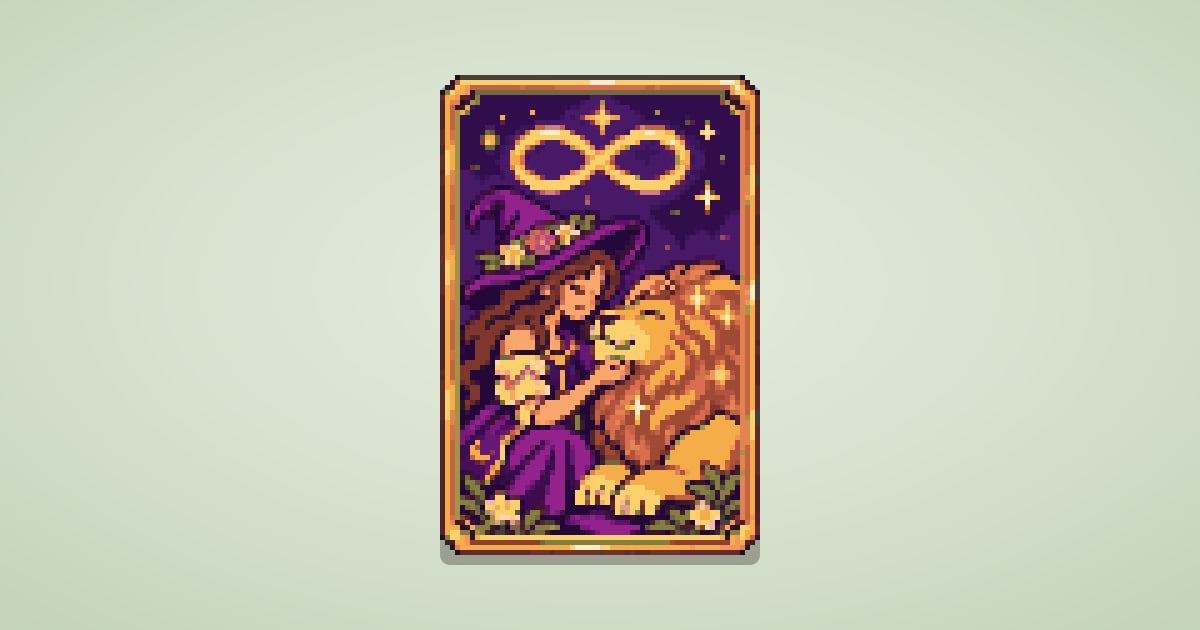 ReflectionsStrength and Gentle CourageOn card VIII, a lion that is calmed rather than beaten, and the kind of courage that rarely looks brave from the outside.
-
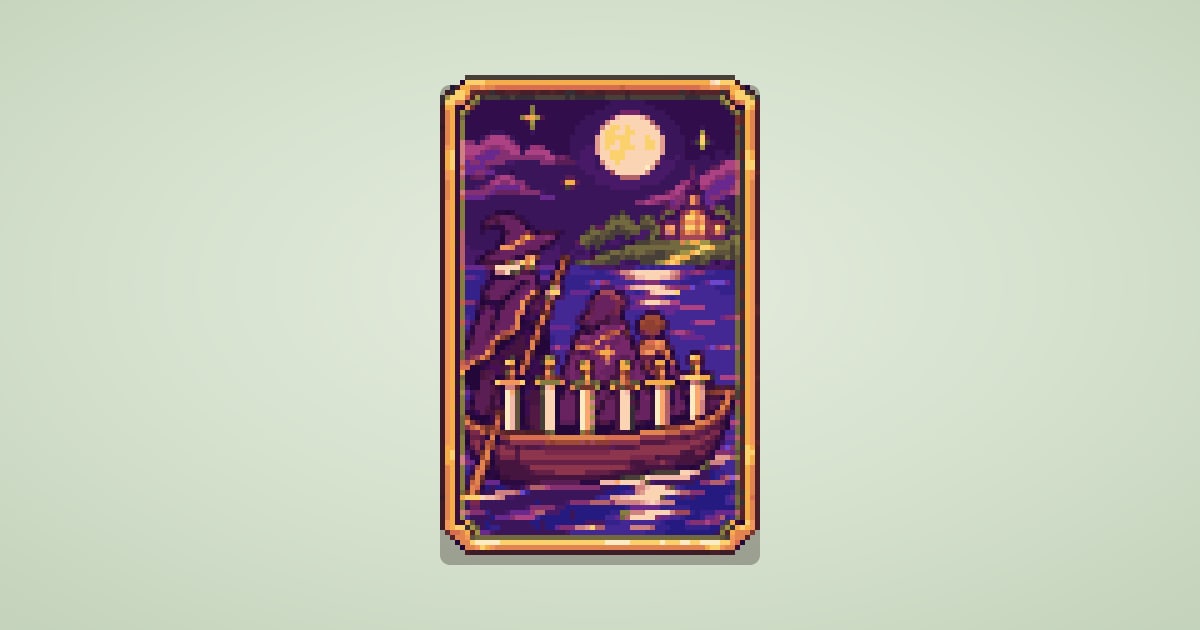 ReflectionsThe Six of Swords: Moving On SlowlyOn the card of leaving something behind, the rough water and the calm, and why the swords are still in the boat.
-
 ReflectionsJudgement and Second Chances: Waking Up to Your Own LifeOn the card many people fear will condemn them, and why its picture looks less like a courtroom and more like a morning.