
The Six of Swords: Moving On Slowly
On the card of leaving something behind, the rough water and the calm, and why the swords are still in the boat.
 Six of Swords · full meaning →
"Moving on" is one of those phrases people say kindly and hear as a demand. You need to move on. It's time to move on. Have you moved on yet? As if it were a door you could walk through in one step, leaving everything on the other side.
The tarot has a picture of moving on, and it looks nothing like a door. It looks like a slow, quiet boat.
Who is in the boat
In the 1909 design, a ferryman stands at the back of a small flat boat, pushing it across the water with a long pole. In the boat sit two passengers: a figure wrapped in a cloak, head bowed, and a small child beside them. In front of them, six swords stand upright in the boat, their points stuck into the wood. Ahead lies a far shore with gentle hills and trees.
Look at the water and you'll notice something else. On one side of the boat, the right side as you face the card, it is rippled and choppy. On the other side, it is smooth. The boat is moving from one kind of water into the other. (That contrast is something later readers point out; Waite himself simply calls the course "smooth".)
A. E. Waite's description is short, and one phrase in it is worth keeping:
A ferryman carrying passengers in his punt to the further shore. The course is smooth, and seeing that the freight is light, it may be noted that the work is not beyond his strength.
Not beyond his strength. The crossing is a real task, but it is one that can be done.
The swords come too
What makes this card honest is the swords. Whatever hurt the passengers, the swords of the suit, the thoughts and losses and sharp words, are not left behind on the near shore. They are in the boat. They come along for the whole crossing.
That is what moving on usually looks like in a real life. You don't leave the grief, the memories or the hard questions behind. You bring them with you, and over time they take up a different place: still there, but no longer in your hands. In the picture, the swords stand upright and still. Nobody is holding them. They are part of the cargo.
If you have been waiting to stop feeling the loss before you let yourself move forward, this card offers a gentler possibility. You can move with it.
Not rowing alone
The passengers aren't steering. The ferryman is. The hooded figure doesn't have to work out the crossing or push the boat. They only have to sit in it.
There are times after a loss when that is all a person can do, and it is enough. (If it is more than you can carry, help is further down this page.) Let something else carry you for a while: a routine, a job, a friend who keeps inviting you, the simple passing of days. In the language of the card, being carried is not weakness. It is how the crossing happens.
And there is a child in the boat. Readers interpret the child in different ways: as someone who depends on you, as the young and hopeful part of yourself that is making the journey too, as the future you are carrying toward the other shore. However you read it, the passenger is not traveling alone.
Slowly
Everything about this card is slow. A pole, not oars or a sail. Calm water ahead. A bowed head. No one is rushing to the far shore, and the card doesn't suggest that they should.
Moving on, in the Six of Swords, isn't a decision you make once. It is a direction you keep facing while the water does most of the work. Some days the boat barely seems to move. Some days you look back and are surprised how far the near shore has drifted.
If the water is rough
Some crossings are harder than this one looks. If grief, a breakup or a loss has left you unable to function, or if some days you no longer want to be here at all, please don't make this crossing alone. Talk to someone you trust, a doctor or a counselor. If you're in danger, call a crisis line now; there is a list of them, for many countries, on our safety page.
The far shore
The Six of Swords doesn't say how long the crossing takes, or exactly what is waiting on the other side. It only shows the direction: away from rough water, toward a quieter shore, with everything you carry still with you, and someone else's hands on the pole.
For more on the card, read the full meaning of the Six of Swords, or, for the end of the suit's story, The Ten of Swords and the Dawn Behind It. And on the heavier days, a card for a hard day is here too.
Keep reading
-
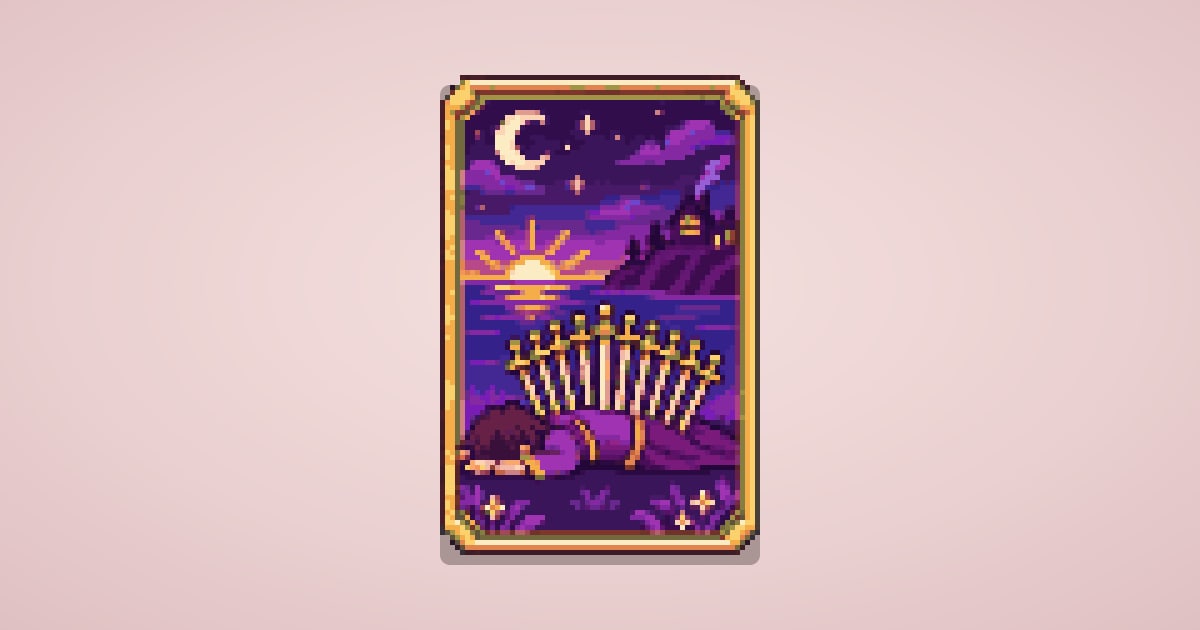 ReflectionsThe Ten of Swords and the Dawn Behind ItOn one of the most painful pictures in the deck, the calm water beside it, and the yellow line on the horizon.
-
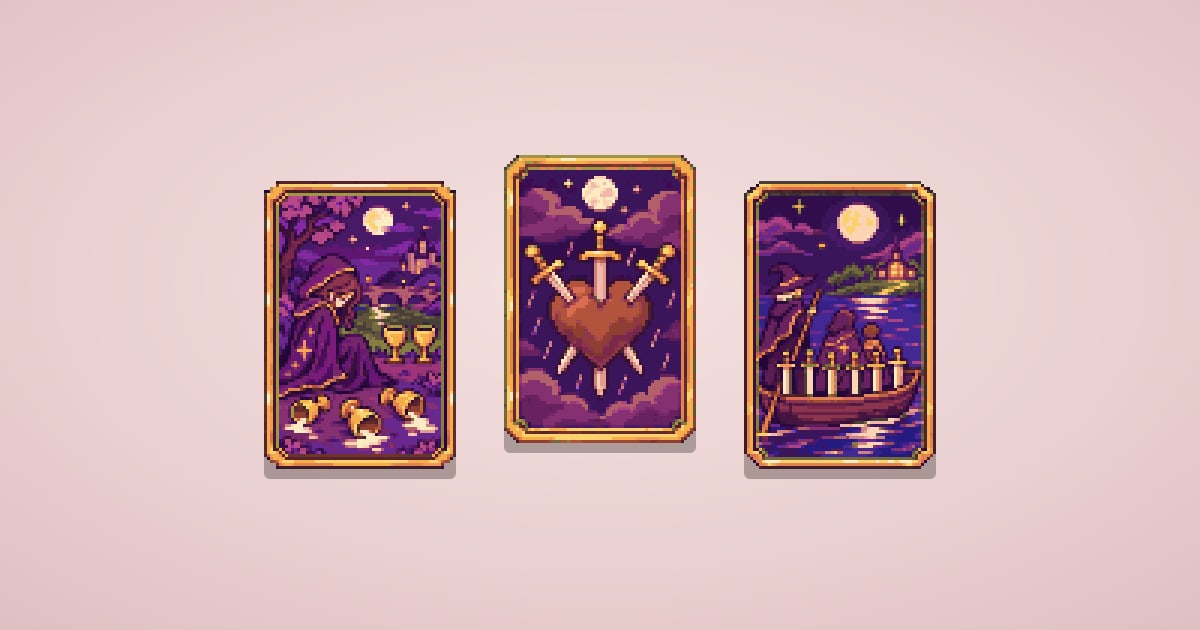 Love & RelationshipsTarot After a Breakup: A Gentle Way to Use the Cards While You HealWhen a reading helps, when it quietly makes things worse, and a three-card spread for the weeks after an ending.
-
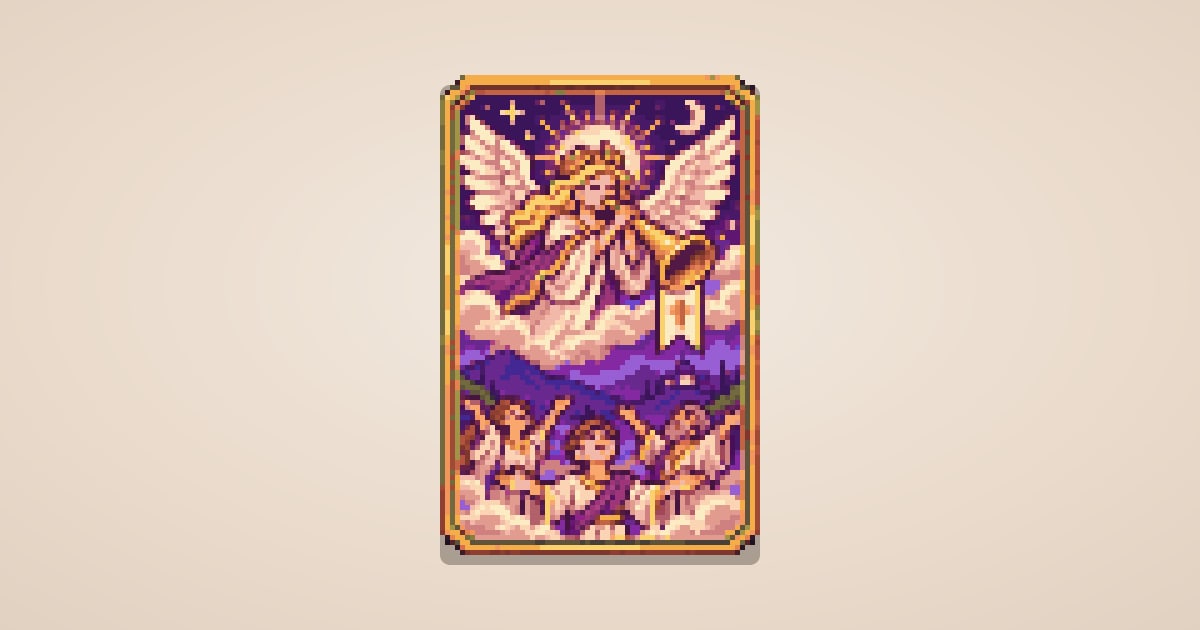 ReflectionsJudgement and Second Chances: Waking Up to Your Own LifeOn the card many people fear will condemn them, and why its picture looks less like a courtroom and more like a morning.