
The Five of Pentacles and Asking for Help
On the card of the cold street and the warm window, the shame that keeps people from knocking, and how help can be asked for one plain sentence at a time.
 Five of Pentacles · full meaning →
Maybe you have done the sums at the kitchen table: the rent, the bill that arrived early, the number in the account, the days until payday. Maybe you have sat in a waiting room with a clipboard on your knees, or lain awake inside a body that won't do what it used to. Often a second weight rests on the first. The sense that you are the only one out in it, and that saying so would make it worse.
That cold walk has a card, the Five of Pentacles. It is also one of the few cards in the deck where help is drawn right into the picture, a few steps away, unnoticed.
(If things are urgent tonight, whether it is your safety, your health or a roof over your head, our safety page lists free lines that can help right now.)
A lit window nobody looks at
Snow is falling against a dark sky. Two people are making their way through it, side by side. One leans on a pair of crutches. The other is wrapped in a ragged shawl pulled up over the head, arms held in close against the cold. Their clothes are thin and patched, and their heads are bowed.
Above them, set into a dark stone wall, is a stained glass window, and it is lit. Light glows through the colored panes, with five gold pentacles worked into the glass. Someone has kept a lamp burning in there.
A. E. Waite needed only one line for the scene:
Two mendicants in a snow-storm pass a lighted casement.
The word that matters most is pass. They have not been stopped at the wall. Nobody has sent them off. They are walking by.
Most guides read this card as poverty and exclusion, the people on the outside of the warm room. We think that misses what Pamela Colman Smith actually drew. There is no figure at the window waving them away, no sign telling them to keep moving. The light falls a few feet over their heads, and neither of them lifts their eyes to it. Whatever holds them outside, it isn't coming from the window.
Why people keep walking
The picture leaves room for several reasons. Exhaustion is one. When you are cold and hurting, attention shrinks to the next step. Another is the belief that the window is meant for other people, people in good coats who already belong. Or they have seen it and decided not to knock.
That last one is familiar to a lot of people. Money trouble brings its own embarrassment: the card that might be declined, the dinner you turn down with a vague excuse. Illness brings another kind, being the one who cancels again, the one who needs a ride. Loneliness may be hardest, because reaching out, the thing that would ease it, is exactly what it makes feel impossible. So people keep walking and tell themselves they don't want to be a burden, that others have it worse, that a capable adult should manage.
None of this is a character flaw. It is what pride and fear and exhaustion do when they share one tired body.
And the card is not a picture of one person. The figure on crutches has company, going through the same snow at the same slow pace. Even in bad seasons there is often someone walking beside you whom you have stopped counting, because they are struggling too. Help does not only come from warm rooms.
The next card in the suit, the Six of Pentacles, shows the other side: a merchant with scales, coins falling into an open palm. In the Five, people pass the light by. In the Six, someone holds out a hand and is given something. Our essay on the Six of Pentacles and giving stays with that second scene, and the full meaning of the Five of Pentacles is on its card page. If you happen to be the one inside the warm room this season, the Five has a word for you as well. Some people will never knock, and the most useful help may be the kind that steps outside to find them.
A practice for one knock
Asking for help is rarely one big brave moment. It is usually a handful of awkward ones, and the order matters, because each step makes the next one easier. Give yourself a page and about twenty minutes.
- Find the window first. Before you ask anyone for anything, write down where the light already is: two or three people who have been kind to you, and any place set up for weeks like this one, such as a food bank, a benefits office, a clinic, a helpline. Do this first because shame tends to insist there is nobody.
- Write one true sentence. Not the whole story. A single line that is honest instead of brave. "Money is really tight this month." "I'm not doing as well as I've been saying."
- Turn it into a specific request. Vague requests are hard to make and hard to answer. Add one concrete thing to your sentence: a lift to an appointment, help with a confusing form, someone to come along the first time you visit that office.
- Choose one name from step 1 and a time. One person, not the whole list, and a time in the next two days when you will send the message or make the call.
- Send it, then write down what happened. Whatever the answer, note it on the same page. If the first window is dark, the list from step 1 still has other names on it.
You don't have to be brave enough to walk inside today. If even step 1 is too much, it counts to know the light is there. When the harshest voice is the one inside your own head, our guide to tarot for self-compassion has kinder ways to speak to yourself, and The Star makes a good card to set beside this one, a figure pouring water out over land and pool with nothing to earn first. Smith put the hardship and the help in the same frame. Being caught in the snow has never meant you belong out in it, and the window is lit for the people outside.
Keep reading
-
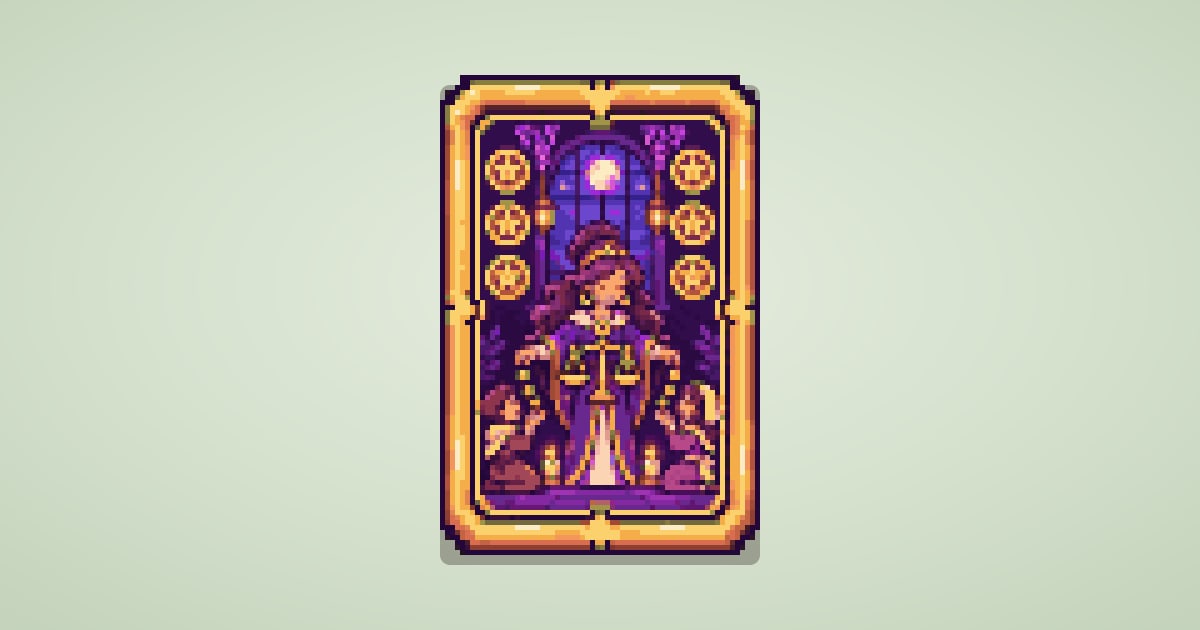 ReflectionsThe Six of Pentacles and the Art of Giving and ReceivingOn the card of the merchant and his scales, the coins that fall into one open hand, and the nerve it takes to be given to.
-
 Self-DiscoveryTarot for Self-Compassion: Cards, a Gentle Spread and PromptsThe cards cannot make you love yourself, but they can show you how you have been talking to yourself, and offer a kinder way to do it.
-
 ReflectionsJudgement and Second Chances: Waking Up to Your Own LifeOn the card many people fear will condemn them, and why its picture looks less like a courtroom and more like a morning.