
The Four of Swords and Permission to Rest
On the quietest card in the deck, the guilt that follows us into rest, and why stillness is something we need, not something we win.
 Four of Swords · full meaning →
There is a kind of tiredness that sleep doesn't seem to reach. You go to bed early, you wake up, and the weight is still there. And when you finally do stop, for an evening or a Sunday afternoon, a small voice arrives right on time: you haven't done enough to deserve this. Look at everything still waiting. So you sit on the couch and rest with one eye open, half listening for the next thing you ought to be doing.
Many of us have learned to treat rest like a prize, handed out once the inbox is empty and everyone else has been looked after. The trouble is that the end rarely comes. The list grows back overnight.
The tarot has a card for this feeling, and it is one of the quietest pictures in the whole deck.
The knight in the chapel
In the 1909 Rider-Waite-Smith deck, the Four of Swords shows a knight resting on top of a stone tomb inside a church. He is in armor, his eyes are closed, and his hands are pressed together on his chest in prayer. Above him, three swords hang on the wall, points down. A fourth lies flat along the side of the tomb beneath him, within reach but not in his hand. In the upper corner, a stained-glass window lets colored light into the room.
Nothing in the picture moves. There is no wind, no road, no second figure. It may be the stillest image in the tarot.
A. E. Waite's own description is a single line:
The effigy of a knight in the attitude of prayer, at full length upon his tomb.
Waite called him an effigy, a carved figure on a grave, and his list of meanings for the card runs from "retreat" and "solitude" all the way to "tomb and coffin". Many readers today see something gentler: not a death but a pause, a living person lying down in a quiet place until their strength comes back. The two readings agree on one thing. Whatever happens next, it isn't happening now.
The swords on the wall
In many readings, the swords stand for the work of the mind: plans, arguments, decisions, worries, all the sharp, busy thinking of a day. In the cards just before this one, a hand holds a sword up out of a cloud, a blindfolded figure crosses two over her chest, and three are driven through a heart. Here, three of them are simply hung up.
That is the whole gesture of rest, really. Not throwing the swords away. Not pretending there is nothing left to do. Hanging them up for a while, where you can still see them, and lying down anyway.
The fourth sword matters too. Rest doesn't ask you to forget your life. Some things stay close: a child who might wake, a worry that won't fully let go, the one task that truly can't wait. The knight keeps a sword at his side, and still he rests.
Five cards later, in the Nine of Swords, swords hang across a wall once more, but the figure beneath them sits bolt upright in bed, unable to sleep. The difference is whether the person below has been allowed to lie down.
Earned, or needed
The guilt about stopping usually comes from a quiet bargain: I can rest once I have proved I deserve it. But look at the card again. Nothing in the picture says the knight won a battle first. There is no victory, no finished task, no reward. There is only someone lying still in a place built for stillness.
The body keeps a different account from the to-do list. Tiredness is not a verdict on how hard you have worked. It is information, the way thirst is information. Nobody has to earn a glass of water by being thirsty enough. Rest, too, can be taken because you need it, not paid out once you qualify.
Rest is not the reward at the end of the work. It is part of what makes more work, and more life, possible at all.
A chapel and a cup
Two other cards keep this one good company. The Hermit also steps away from the busy world, and Waite's list for this card even includes the phrase "hermit's repose". But the Hermit is still walking, lantern raised, looking for something on the mountain (our essay on the Hermit and solitude follows him there). The knight has stopped looking. The Four is solitude as a place to set the search down.
Temperance suggests what rest is for. Its angel stands with one foot in a pool, pouring water from one cup into another, and Waite describes the figure as "pouring the essences of life from chalice to chalice." Nothing hurried happens on that card either. Read beside it, rest looks like a slow refilling, and a cup only fills when it is held still.
Small ways to lie down
None of this needs a retreat or a free week. A few small things to try, or simply notice, this week:
Stop before the list is finished. Choose one moment this week to rest while something is still undone. Ten minutes on the floor with your eyes closed, a cup of tea drunk sitting down, a walk with no errand at the end of it. Notice what the guilty voice says. Then notice that the undone things are still there when you come back.
Hang up three swords. Pick the three worries or tasks that are loudest right now, and decide that for one evening they belong on the wall. Keep the fourth, the one that genuinely can't wait, beside you. Everything else can hang there until morning.
Find your chapel. The knight rests in a room made for quiet. Most of us don't have one, but we have corners: a bath with the door closed, a parked car for a few minutes before going inside, a bed turned down a little early. Notice where your shoulders drop, and go back there on purpose.
Sometimes tiredness runs deeper than a hard month. If rest doesn't touch it, if it lasts for weeks, or if it comes with a flat, heavy sadness, mention it to a doctor; exhaustion sometimes has causes that lying down can't fix. If it has become not wanting to be here, please talk to someone now: the safety page has free lines in many countries.
The stillness
The knight's hands are joined, but the card never tells us what he is praying for. Perhaps nothing. Perhaps only to be left in peace a little longer. The picture doesn't hurry him, and it doesn't ask him to explain himself.
You are allowed the same. Not because you finished. Not because you suffered enough to qualify. Simply because you are tired, and tired things need rest.
Lie down for a while. The swords will keep.
Keep reading
-
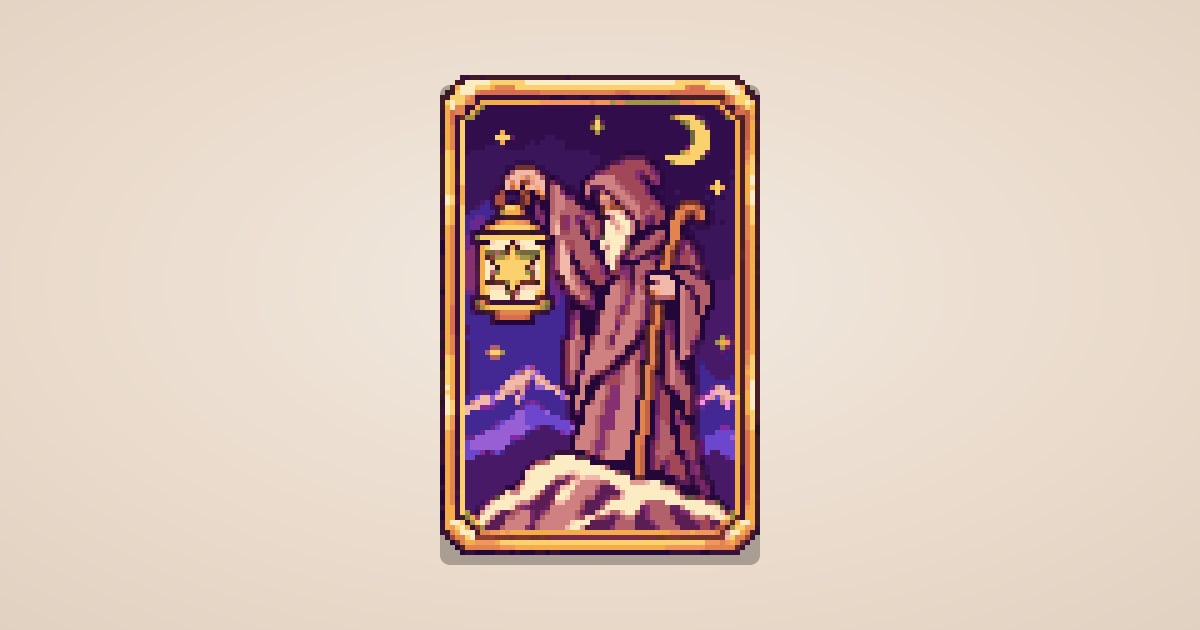 ReflectionsThe Hermit, Loneliness and SolitudeOn the card of being alone, the difference between the two kinds of alone, and the lantern that is held up for someone else.
-
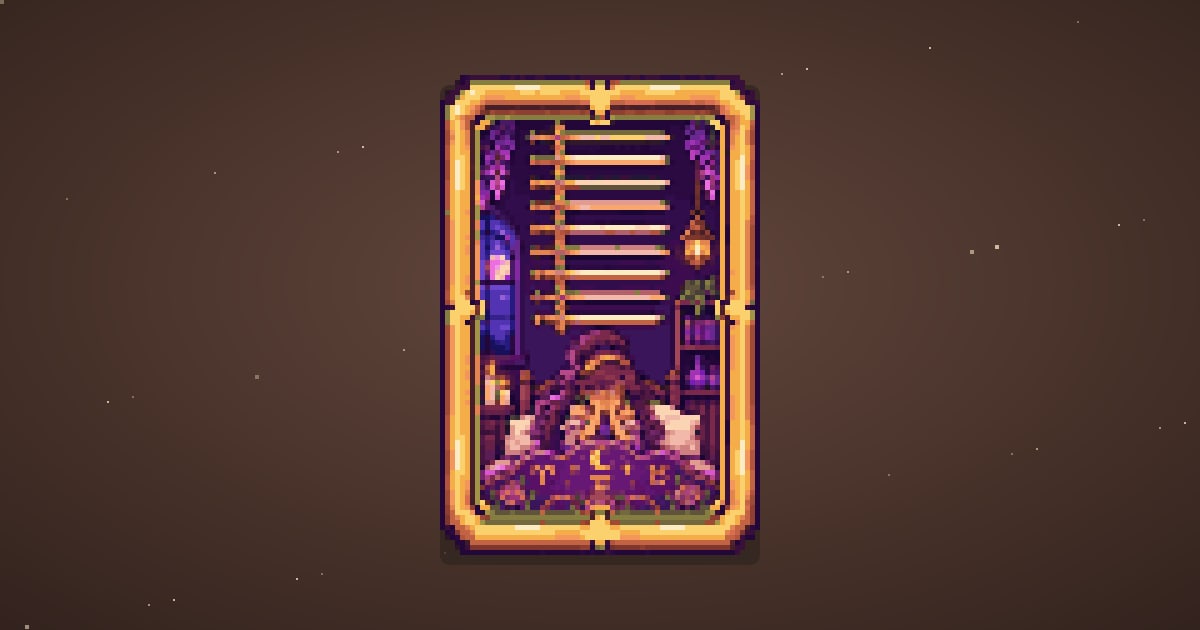 ReflectionsThe Nine of Swords and the 3 a.m. MindOn the card of sleepless nights, the swords that never touch her, and what to do with the thoughts that come in the dark.
-
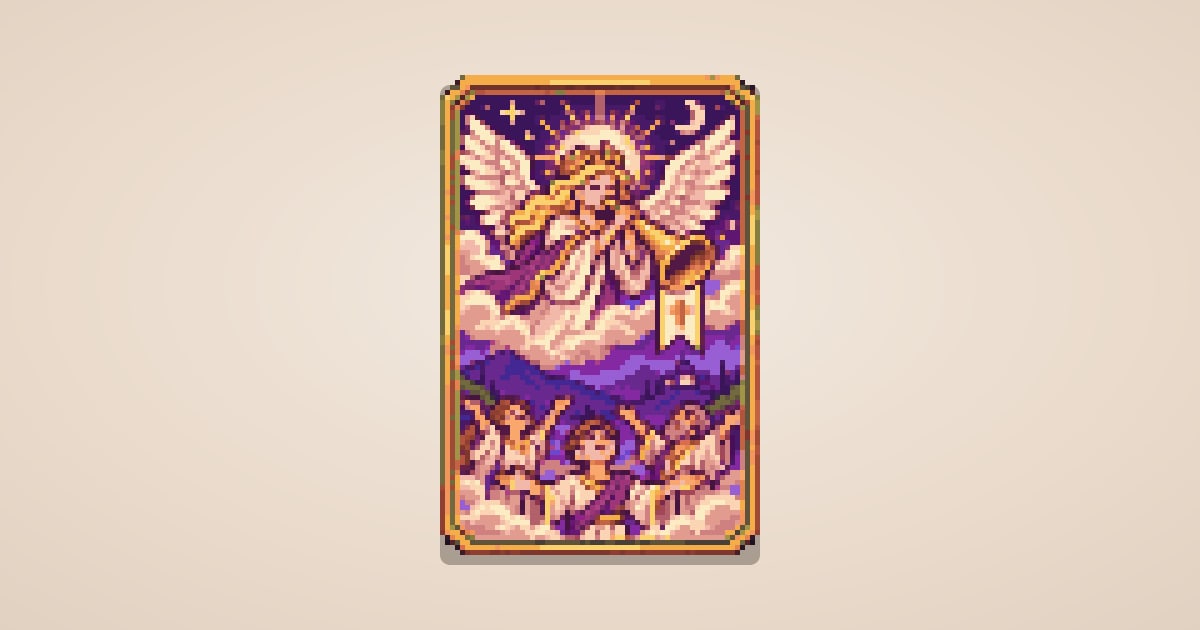 ReflectionsJudgement and Second Chances: Waking Up to Your Own LifeOn the card many people fear will condemn them, and why its picture looks less like a courtroom and more like a morning.