
The High Priestess and Inner Knowing
On the still figure between the dark pillar and the light one, the knowing that arrives slowly, and the wisdom of not deciding yet.
 The High Priestess · full meaning →
Sometimes everyone has an opinion about your life. A friend thinks you should take the job. Someone in the family thinks you should stay where you are. A stranger online is very sure about a situation much like yours. You read it all and nod along. Still, late in the evening, when the phone is face down on the counter, there is a small part of you that nobody has asked. It isn't loud. It doesn't argue. It just hasn't agreed yet.
The High Priestess is the tarot's picture of that small, unhurried part of you.
What the card shows
She is card two of the Major Arcana in the Rider-Waite-Smith deck, and she is seated. The Magician before her stands with one arm raised, busy at his table. She sits still in a long blue robe.
To one side of her rises a black pillar marked B, to the other a white pillar marked J. These are Boaz and Jachin, the two pillars of Solomon's temple, and she sits exactly between them, leaning toward neither. Behind her a veil is hung from pillar to pillar, patterned with pomegranates. A crescent moon lies at her feet. She wears a crown of moons, a full one held between two crescents, and a cross on her breast.
In her hands, partly hidden in the folds of her robe, is a scroll. Waite described it this way:
The scroll in her hands is inscribed with the word Tora, signifying the Greater Law, the Secret Law and the second sense of the Word.
The second sense of the Word. Whatever Waite meant by it, it is a lovely phrase to carry: the meaning beneath the obvious one, the thing you understand a little before you can explain it.
Not a seer, a listener
It is easy to turn The High Priestess into a card of hidden powers, the one who sees what is coming. Waite's list of meanings for her does include "the future as yet unrevealed." But look at that word: unrevealed. She is not showing anyone the future. She is sitting beside what is not yet known and letting it stay that way for now.
The knowing she points to is more ordinary than that. It is what you gather slowly by living your own life with attention. The evenings that leave you lighter and the ones that leave you drained. The plan you keep meaning to start and somehow never do. The idea that returns every time you are out walking. It simply speaks quietly, and most days there is a great deal of noise.
Further down that same list, Waite sets two words side by side: "silence, tenacity." Her silence is not emptiness or passivity. It is a quiet that holds on, that keeps its seat while everything around it hurries.
The veil of pomegranates
The veil behind her is often read as the line between what we can see and what we cannot see yet. She doesn't tear it down. She doesn't step through it. She sits in front of it, near enough to know it is there.
Pomegranates are a fitting fruit for that curtain. From the outside, a pomegranate is mostly a tough red skin. Its seeds sit hidden inside, found only by opening it carefully. Inner knowing often works like that. You find one seed of it, and then, days or weeks later, another.
Between the two pillars
Dark on one side, light on the other. Many readers see the pillars as every kind of pair: yes and no, staying and leaving, what the head says and what the heart says. Most hard decisions feel like this: a doorway, with people on both sides urging you to choose.
The Priestess sits between them, and she hasn't chosen. The card doesn't treat that as a failure. Sometimes the wise thing is to stay in the doorway a little longer, not out of fear, but because you don't know yet, and pretending to know would be its own small untruth.
Some choices really do have to be made by Friday. Many don't. Many feel urgent only because uncertainty is uncomfortable, and a fast answer makes the discomfort go away. The High Priestess offers another way to hold it: let the question rest, and keep listening.
The moon at her feet
The crescent at her feet is small and unfinished. It is the moon partway, growing or thinning. It suits a kind of knowledge that arrives in phases.
Later in the Major Arcana, The Moon spreads that same pale light over a whole landscape, and Waite wrote that the card "represents life of the imagination apart from life of the spirit." The Moon is the half-light where fears swell and every shadow looks like something. The Priestess holds that light calmly in one small curve. Worry tends to be loud and quick and full of the worst case. Quiet knowing tends to be slow and plain, and it doesn't need you to panic before it will speak.
The Hermit, card nine, carries a similar wisdom up a mountain with a lantern held high. The Priestess keeps hers close, seated at home in the temple, waiting to be asked.
A few ways to listen this week
Give one question a night. The next time someone asks you something that is not truly urgent, try saying, "Let me sleep on that." In the morning, notice what you think before the day's opinions arrive.
Take one walk with nothing in your ears. No podcast, no music, no call. Ten minutes is plenty. Pay attention to which thought keeps coming back once the noise is gone. It may be the half of the scroll you have been keeping tucked away.
Tell pressure apart from readiness. When you feel the pull to decide, ask quietly whether it is coming from the situation or from the discomfort of not knowing. Both are real. Only one of them is a reason.
If the quiet inside you feels heavy rather than still, or if what you know is that you are not safe, please don't hold that by yourself. Talk to someone you trust, or find a free, confidential line on our safety page.
For telling a true hunch from fear, our guide to tarot and intuition goes further, and the essay on the Hermit and solitude is a gentle companion read. Or read the full meaning of The High Priestess.
The second sense
The High Priestess says nothing on her card. She doesn't point the way, and she doesn't hand over the scroll. She stays where she is, between the dark pillar and the light one, until what she knows has had time to become clear.
You are allowed to do the same. Not every question needs its answer tonight. Some of what you know best is still inside the fruit, ripening.
Keep reading
-
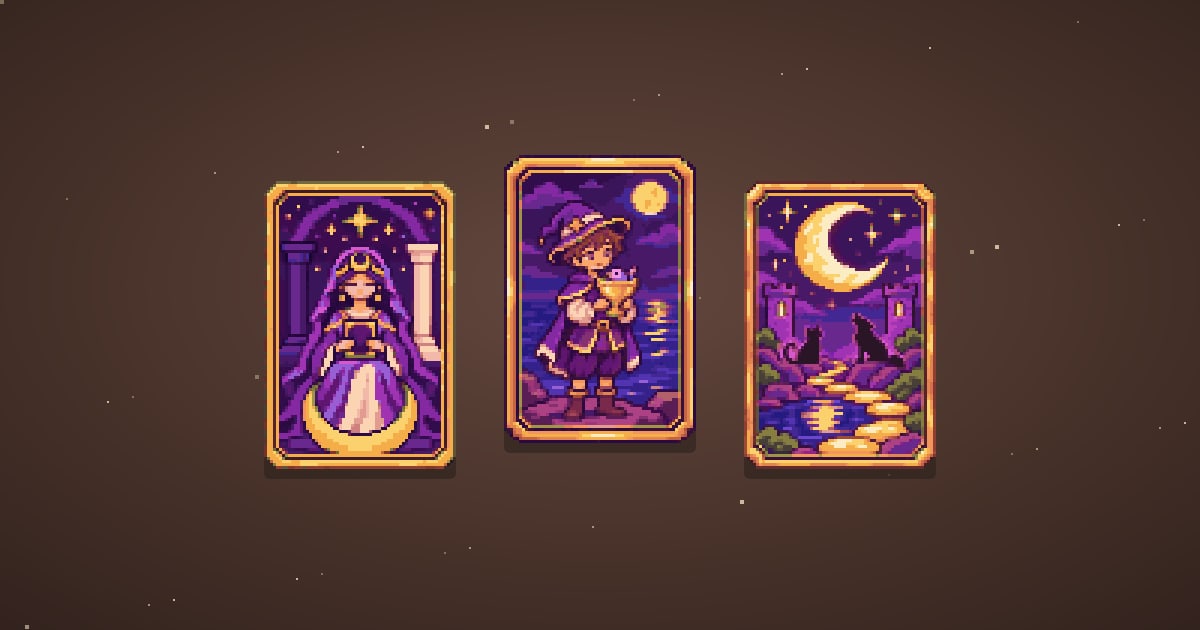 Self-DiscoveryTarot and Intuition: How to Read the Cards by What You NoticeIntuition in tarot is less a gift than a habit of attention: the first thing a picture stirs in you, written down before the book has its say.
-
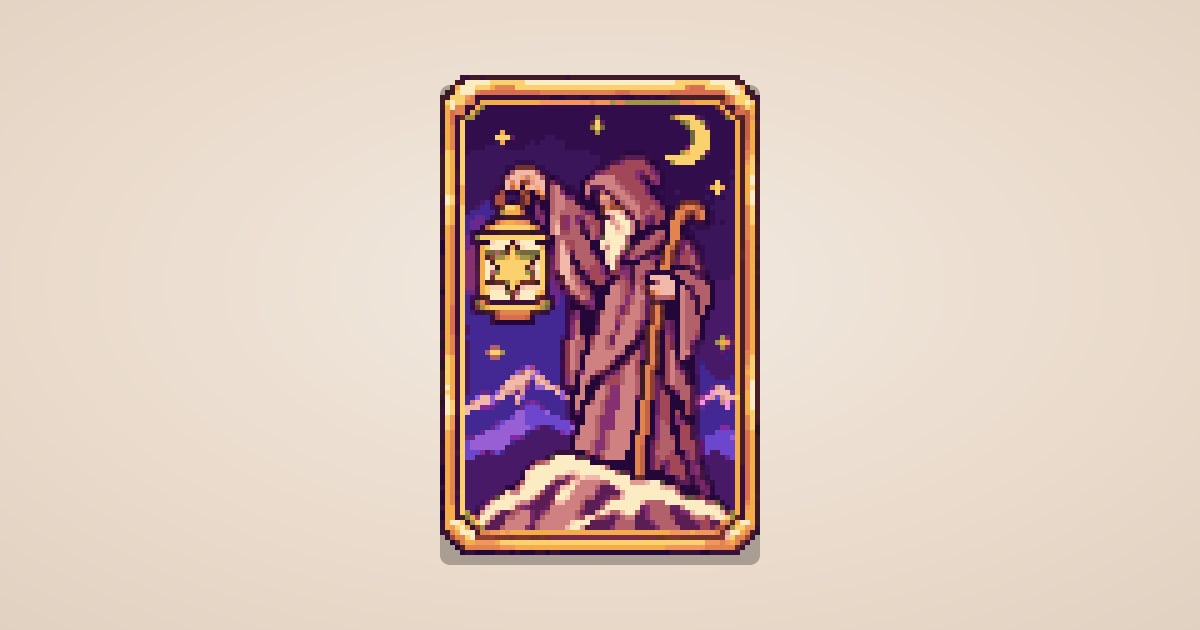 ReflectionsThe Hermit, Loneliness and SolitudeOn the card of being alone, the difference between the two kinds of alone, and the lantern that is held up for someone else.
-
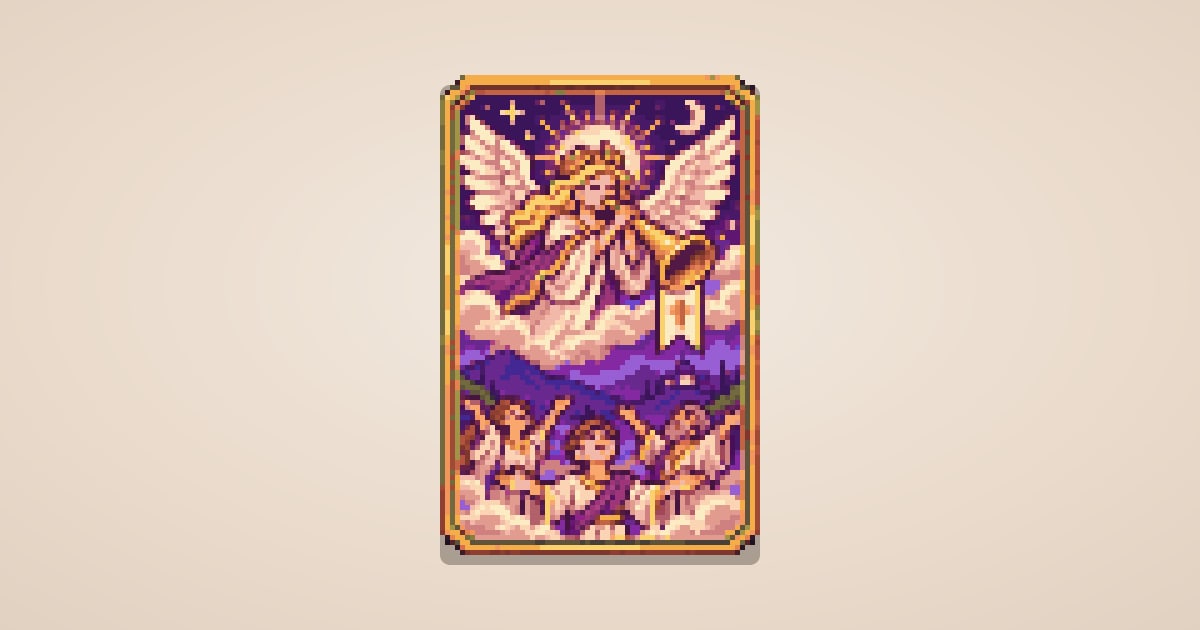 ReflectionsJudgement and Second Chances: Waking Up to Your Own LifeOn the card many people fear will condemn them, and why its picture looks less like a courtroom and more like a morning.