
Tarot and Intuition: How to Read the Cards by What You Notice
Intuition in tarot is less a gift than a habit of attention: the first thing a picture stirs in you, written down before the book has its say.
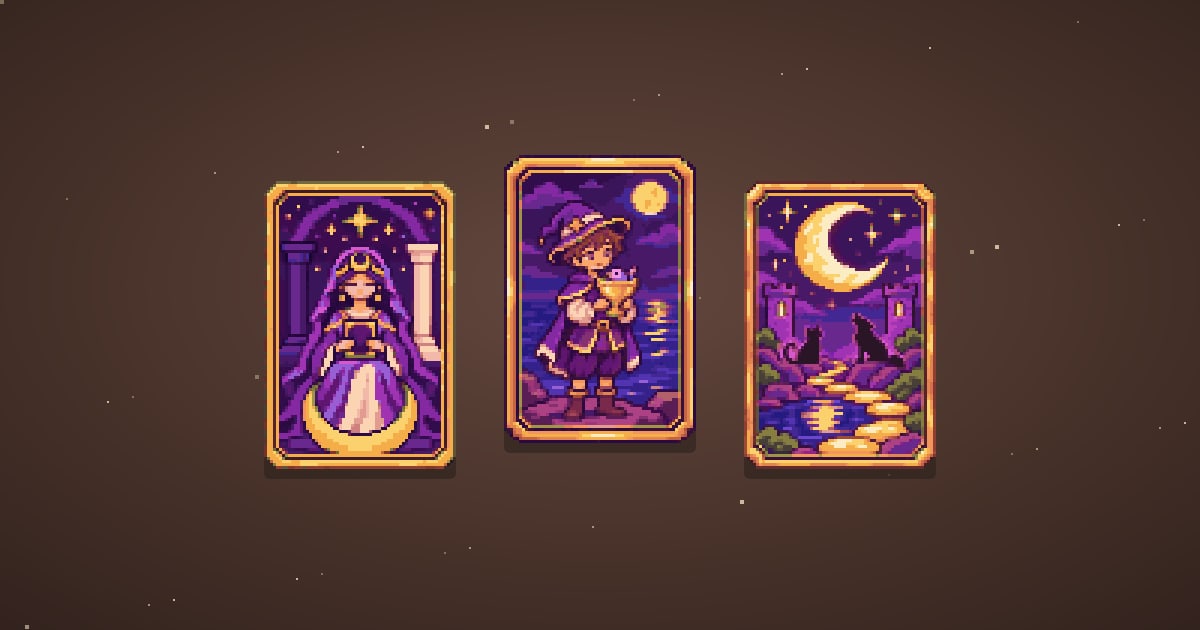
If you want to read tarot intuitively, start by looking at the card before you look up its meaning. Notice the first word that comes to mind, any shift in your body, and any memory the picture brings up. Write those down. Then read the traditional meaning and compare the two. Over time you learn which of your first impressions tend to be useful and which are mostly your mood talking.
You do not have to be psychic, sensitive, or born with a gift. In this article, intuition means something ordinary and well within reach: noticing. It is the quick sense you form before you have explained it to yourself, built from everything you have seen, lived and remembered. A tarot card is a good place to practice catching it, because it is a detailed picture you did not choose.
What we mean by intuition here
For some people, intuition in tarot is spiritual, a sense of being guided. We respect that, and our piece on how tarot works talks about holding those views alongside a practical approach. This article stays with the part anyone can try, whatever they believe.
Seen this way, an intuitive response to a card usually takes one of four forms:
- A first impression of the picture. "This feels lonely." "She looks like she is waiting." It arrives before you know what the card is supposed to mean.
- A body response. Your shoulders lift, your breath shortens, or something in you softens.
- A memory. The card reminds you of a person, a room, a season of your life.
- A pull toward one detail. Out of everything drawn on the card, your eye keeps going back to the dog, the open door, the hand.
In this approach, none of these is treated as a message from outside. Each one is information about you: what is on your mind, what you are carrying, what you care about. That makes it worth listening to, and also worth checking.
Why the book still matters
Intuitive reading is sometimes presented as the opposite of learning meanings, as if the guidebook were a crutch. In practice the two work together. The traditional meanings give you a shared vocabulary, built up by many readers over more than a century. Your first impressions give you the personal part, the reason this card matters to you today.
Reading only by feel can drift into seeing whatever you already expected. Reading only from the book can leave a card feeling flat and borrowed. The exercises below keep both in the room and let you notice where they agree and where they part ways. If you are still learning the deck, our guide to memorizing tarot cards pairs well with them.
Four exercises for intuitive reading
Each takes a few minutes, and none of them needs a question or a spread. A single card from your own deck or the tarot card of the day is enough.
1. Cover the meaning and describe the card
Draw a card and keep any guidebook closed. If you use an app or a website, cover the text with your hand. Describe the picture out loud or on paper as if to someone who cannot see it: who is there, what they hold, where they stand, what the sky is doing.
The point is not to guess correctly. Describing slows you down long enough to see what is really drawn, and your first impressions tend to show up in the words you choose. "A woman guarding a doorway" and "a woman resting between two pillars" are both fair descriptions of The High Priestess, and they say different things about the person describing her. The course lesson on reading the picture goes further into the details Pamela Colman Smith drew.
2. The one-word first impression
Turn a card over and, within a breath or two, write one word. "Tired." "Sharp." "Home." "Too much." Then, and only then, start thinking about the card.
A single word is useful because it is hard to dress up. It catches the impression before your reasoning arrives to tidy it. Later you may find that the word said more about your day than about the card, and that is useful too.
3. A body check
Before you interpret a card, take a few seconds to notice your body. Has your jaw tightened? Did you lean in or sit back? Is there a lift, a drop, or nothing at all?
Name what you find in plain terms, without deciding what it means yet: "chest tight," "warmer," "nothing much." A body response tells you how the card landed, not what will happen. A tight chest at The Moon might mean you are uneasy about something unclear in your life. It does not mean danger is coming.
4. First impressions, then the book
This is the exercise that turns the other three into a practice.
Is it intuition, anxiety, or wishful thinking?
This is the honest difficulty. Fear and hope both feel like knowing. A worried mind can look at almost any card and find a warning in it, and a hopeful one can find a yes. Neither is a failure of intuition. They are simply louder than it.
A few rough signs can help you sort them.
It may be anxiety when the impression is urgent and catastrophic, when it pushes you to draw another card or check again, or when it would have come no matter which card appeared. If every picture looks threatening today, the fear is probably in you rather than in the card. Our article on tarot for anxiety covers how to tell when a reading is feeding worry, and our piece on The Moon offers a way to sort facts from fears on paper.
It may be wishful thinking when you knew what you wanted the card to say before you turned it over, when you reach past the obvious picture to find a kinder meaning, or when one hopeful detail outweighs everything else on the card. Our guide to reading tarot for yourself has habits that help with this.
It may be worth trusting a little more when the impression is quiet rather than loud, when it surprises you, when it names something specific you can check against your actual life, and when it still makes sense the next morning.
Even then, a strong hunch about your own feelings is one thing. A hunch about what another person thinks, or about what will happen, is something else. No card can confirm either, and an intuitive impression is not evidence of them. If something important rests on it, talk to the person or look for real information.
Keep the practice light
Intuition grows with low-stakes practice, not with pressure. Read on calm days as well as hard ones, so your log is not only a record of worry. Let some cards stay blank: "I felt nothing" is an honest entry. And if reading begins to leave you more uneasy instead of clearer, put the deck away. Our safety page has gentle guidance and helplines, and a card for a hard day asks nothing of you.
If you like keeping your impressions in one place, the Emberlune app saves each reading in a private journal, so you can look back and compare what you felt with what you later understood.
Over weeks and months, the gap between your first impression and the book tends to tell you more than either side alone. That gap is where your own way of reading begins. The Major Arcana lesson is a good place to practice first impressions on the 22 big pictures.
Keep reading
-
 Self-DiscoveryCan You Read Tarot for Yourself? Yes, and Here Is How to Do It HonestlyMost people learn the cards by reading for themselves. The real difficulty is not luck or permission but the part of us that wants a particular answer.
-
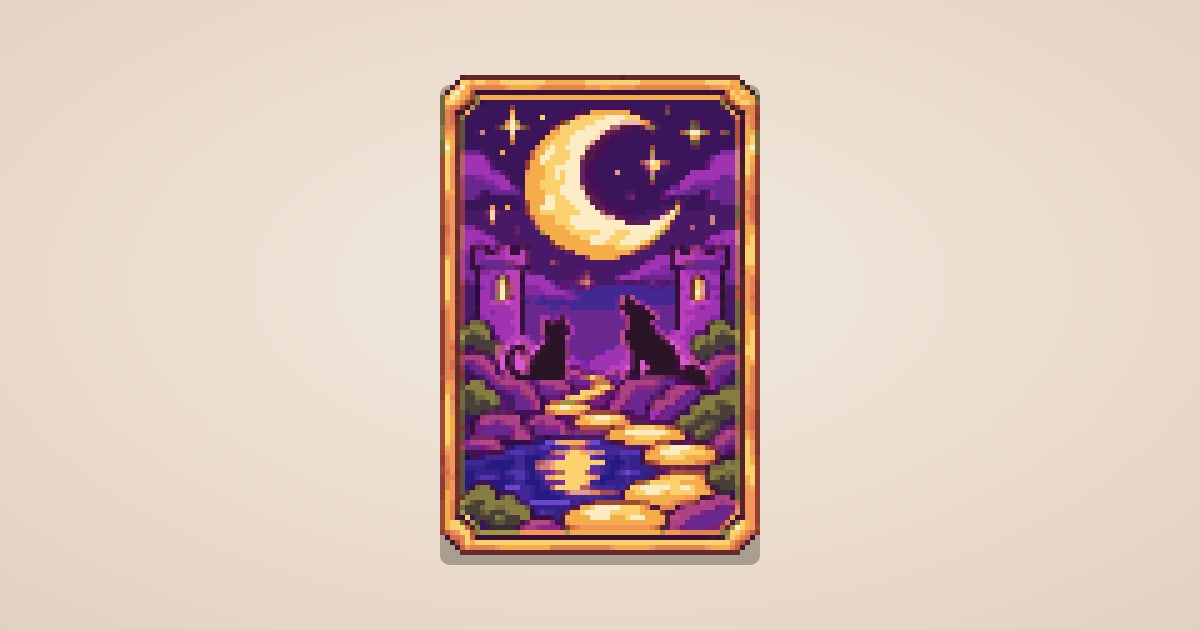 Card Deep DivesThe Moon Tarot Card: Intuition, Illusion and the Path in BetweenThe card of half-light: how to tell intuition from anxiety, what the animals on the card are doing, and how The Moon behaves in a reading.
-
 Self-DiscoveryA Morning Tarot Ritual: A Gentle Five-Minute Daily PracticeOne card with your tea or coffee, three plain questions and a line in a notebook, kept small enough that a missed morning never feels like failing.