
Major vs Minor Arcana: What the Difference Means in a Reading
Two halves of one deck, two scales of attention, and why a reading full of Majors is a reason to slow down rather than to worry.
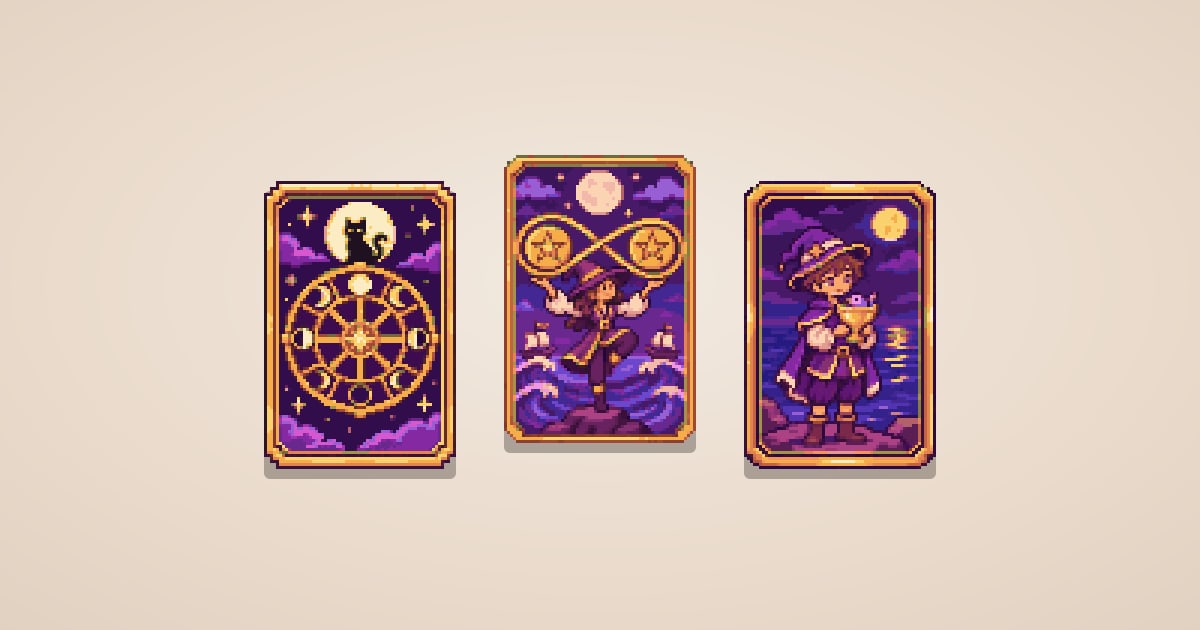
A tarot deck has 78 cards in two groups. The 22 Major Arcana are the named, numbered cards, from The Fool (0) to The World (XXI), and readers treat them as the large themes of a life, such as beginnings, endings, faith, loss and change. The 56 Minor Arcana are four suits of fourteen cards each, and they tend to describe the texture of ordinary days: a conversation, a budget, a tired evening, a small win at work.
Neither group matters more than the other. They work at different scales, the way a map of a country and a map of your street are both accurate and each is useful for a different trip. Below: how each group is built, how readers weigh them together, and what to make of a spread full of one kind.
What the word arcana means
Arcana is the plural of the Latin arcanum, a secret or a mystery. Tarot began as a card game in fifteenth-century Italy, and the labels came much later. In The Pictorial Key to the Tarot (1911), A. E. Waite calls the two groups the Greater Arcana and the Lesser Arcana. Most people today simply say "the Majors" and "the Minors".
The Major Arcana: 22 cards with names
Each Major has a number and a title, and many show a single figure or a single striking event: The Hermit on his mountain, The Tower struck by lightning, The Star pouring water under a night sky. Because the Majors stand outside the suits, they are not tied to one area of life. The Lovers can come up in a question about work as easily as one about a relationship, and Death, despite its name, is usually read as an ending or a transition, not as a forecast that anyone will die.
Readers often describe the Majors as the deeper currents: the values, turning points and long lessons that run beneath a particular week. If you want to meet them one at a time, the course lesson on the Major Arcana lays them out in three rows of seven.
The Minor Arcana: suits, numbers and court cards
The 56 Minors have a structure you can learn in an afternoon. There are four suits, Wands, Cups, Swords and Pentacles, and every suit holds the same fourteen cards:
- Ten numbered cards, Ace through Ten. The number suggests a stage (an Ace is a seed, a Ten is a cycle at its fullest) and the suit suggests the area of life.
- Four court cards, a Page, a Knight, a Queen and a King. They can stand for people, or for ways of behaving at different levels of experience.
In the Rider-Waite-Smith deck, Pamela Colman Smith drew a full scene on every numbered card, where many older decks showed only an arrangement of suit symbols. That is a large part of why the Minors feel so readable. The Five of Cups shows a cloaked figure with head bowed over spilled cups, and you hardly need a book to sense what kind of moment it is. The lessons on suits and elements and court cards go further into each piece.
The difference at a glance
| At a glance | Major Arcana | Minor Arcana |
|---|---|---|
| How many | 22 | 56 |
| Structure | Numbered 0 to XXI, each with its own title | Four suits of 14: Ace to Ten, then Page, Knight, Queen, King |
| Scale | Life themes, values, turning points | Everyday events, moods, tasks and relationships |
| Tied to an area of life | No, a Major can speak to any question | Yes, through its suit |
| Time frame many readers give | Longer arcs | The present and the near term |
| A useful question | What larger pattern is this part of? | What is happening here, and what can I do? |
How readers weigh them in a spread
Many readers look over a whole spread before reading card by card, and one of the first things they notice is the mix. Here is how each mix is commonly read, with a reality check.
Many Major Arcana
About 28 percent of the deck is Major (22 of 78). In a three-card spread you would expect fewer than one Major on average, and in a ten-card spread like the Celtic Cross you would expect two or three. When a reading holds more than that, readers often feel the question reaches past the situation itself: a value being tested, a chapter closing, a shift in how you see yourself.
That reading can be useful, as long as "larger" never turns into "fated". Chance alone produces Major-heavy spreads regularly. With a well-shuffled full deck, a ten-card spread holds five or more Majors roughly one time in ten, and a three-card draw comes up all Majors about one time in fifty. A cluster of Majors is a prompt to step back and ask what the larger theme might be. It cannot tell you that events are out of your hands, and it predicts nothing. If a spread full of dramatic titles has unsettled you, read our honest look at what tarot can and cannot do.
Many Minor Arcana
A spread made mostly or entirely of Minors is common. With three cards, there is about a 36 percent chance of drawing no Majors at all. Readers usually take a Minor-heavy reading to mean that the matter lives in daily life, in choices, habits and conversations within your reach. Practically, that is often good news: something you can work on this week.
It does not mean the question is small. Someone in grief can draw three Minors about something that matters enormously. The cards are simply describing it at the scale of tomorrow morning.
A spread of only court cards
Court cards make up 16 of the 78, so a reading of nothing but Pages, Knights, Queens and Kings is unusual: all three cards of a three-card spread will be courts less than one time in a hundred. When it happens, readers tend to look at people and roles. The courts might reflect others involved in the situation, or the parts you are playing yourself: the learner, the one pushing forward, the one holding everyone together, the one making the final call.
Go carefully with the first idea. A Queen of Swords cannot tell you what a particular colleague thinks of you. It is fairer, and usually more useful, to ask which roles you are taking on, which you are avoiding, and whether that balance feels right.
Suits and reversals
Some readers count suits as well, reading a spread heavy with Cups as emotional ground and one heavy with Swords as a matter of thoughts and words. Reversed cards add another layer, covered in the reversals lesson. Our guide to card combinations shows how to read these patterns together.
An exercise to feel the difference
Keeping your own count
To see the pattern over time, keep a simple record. Next to each reading in your journal, note how many Majors, Minors and court cards appeared. After a month you will know, better than a feeling can tell you, how often the big-theme cards turn up and whether they gather around particular questions. The tarot journal templates have room for this. Readings done with Luna in the Emberlune app are kept in its journal too, so that count is easy to make later.
Scale, not a verdict
Major cards can feel heavy, especially on a hard day. Their size is a matter of scale, not a judgment about you or your future. You can always put the deck down, come back later, or draw a single card with a softer question. If a reading leaves you more anxious than when you began, our safety page has support, or try a card for a hard day instead.
Keep reading
-
 Learn TarotHow to Read Tarot Cards for Beginners: A Practical GuideWhat the 78 cards are, how to ask a question the cards can work with, and how to read a card in context instead of memorizing a list.
-
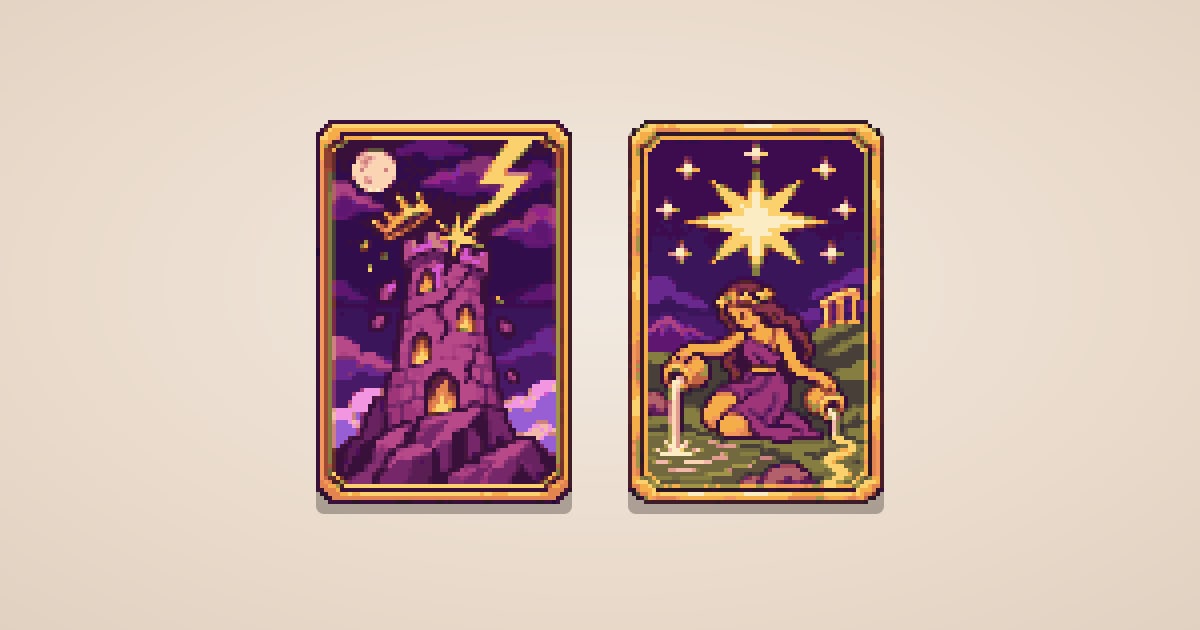 Learn TarotHow to Read Tarot Card Combinations: A Simple Method With 12 ExamplesGive each card a simple meaning, notice how they meet, and let your question turn two pictures into one useful thought.
-
 Learn TarotHow Does Tarot Work? An Honest AnswerTarot has no proven power to predict events, and it can still help you think. Here is how pictures, chance, structure and a pen do the work.