
A Tarot Spread for When You Feel Stuck
Being stuck is often a pause with a reason. Six cards to look at that reason kindly, and to find one thing light enough to move.
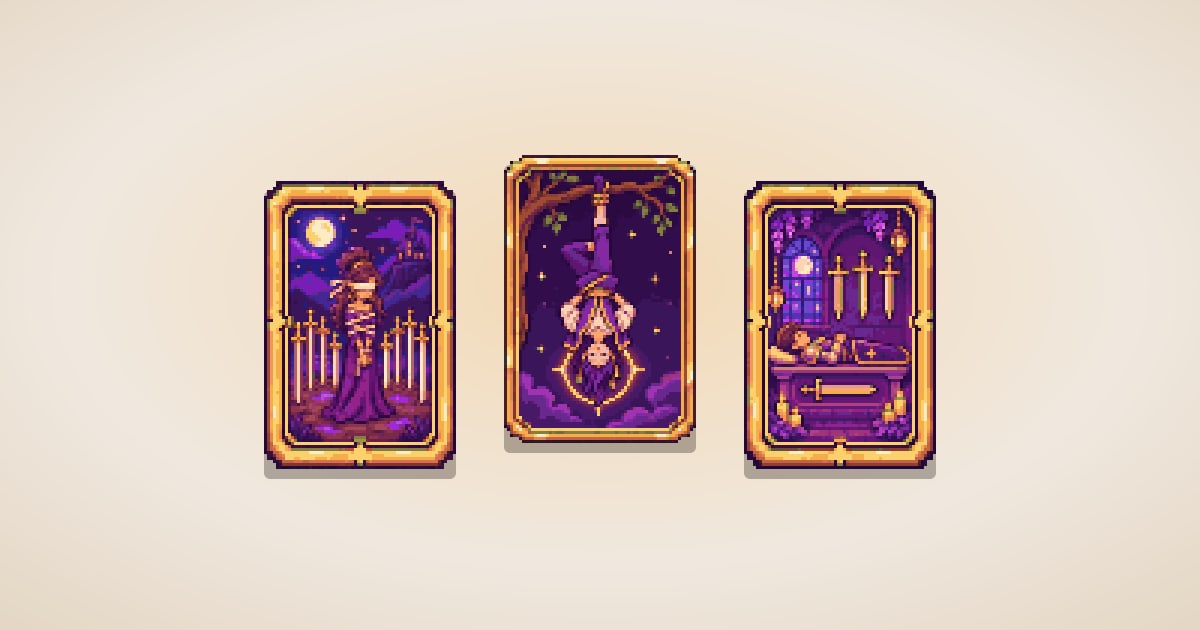
Yet it is rather a card of temporary durance than of irretrievable bondage.
Waite wrote that about the Eight of Swords, the card that turns up so often for people who feel stuck, and we think it is one of the most useful sentences in his whole book.
Look at the two halves. Durance is an old word for confinement, the kind you serve. Irretrievable means past getting back. Waite sets them side by side and chooses the first, and the word doing the work is temporary. He does not say the figure is free. A woman stands blindfolded and bound, with swords planted in the ground around her, and he lets all of that be true. He only refuses to call it permanent.
That is the spirit of the spread below. If you know roughly what you want to change, and you have thought about it so many times that thinking has become tiring in itself, this is for you. It has six cards: where you are standing, what keeps you in place, what that might be protecting, one thing you can move, the support you already have, and a single word to carry into the next few days. It makes no forecast. It asks you to look at the stuck place with curiosity and without blame, and to leave with one step you could take while tired.
Stillness in the deck
The feeling of being stuck usually comes with a story attached: I should be further along by now. Everyone else is moving. Something is wrong with me. That story is heavy, and we think it is usually unfair.
The deck has several pictures of stillness, and not all of them are punishments. The Hanged Man hangs upside down from a living beam with a calm face and a ring of light around his head, and our essay on the Hanged Man and waiting looks at what a long pause can let us see. The Four of Swords shows a knight lying quite still in a church, at rest and not defeated, and the Four of Swords and rest asks why stopping makes so many of us feel guilty.
Neither card says the pause will last forever. Both suggest that stillness can be doing something: recovering, waiting for conditions to change, keeping you from walking straight back into what hurt. Being stuck is sometimes a pause with a reason, and the reason deserves a hearing before you try to push past it.
The six positions
Write one sentence about where you feel stuck before you shuffle. Keep it plain: "my job," "the flat I can't decide whether to leave," "I don't know what I want anymore." That last one is a perfectly good question for this spread.
Lay the first three cards in a row, then the next three in a row beneath them.
 1Where I stand2Holding me3What it protects4One move5My support6A word to carry
| Position | Name | A question to bring to the card |
|---|---|---|
| 1 | Where I am standing | What does this stuck place actually feel like, right now? |
| 2 | What is holding me in place | What keeps my feet where they are: a fear, a habit, a lack of energy, a real limit? |
| 3 | What that is protecting | If the stuckness had a good intention, what would it be guarding? |
| 4 | One thing I can move | What is light enough to shift in the next few days, even on a low day? |
| 5 | What support I have | Who or what is already on my side, even without saying so? |
| 6 | A word to carry | What one word would I like to keep in my pocket? |
The top row looks at the stuck place. The bottom row looks at what you can do with it. On a day when the top row is all you have room for, read only that and come back to the rest later.
Position three is the heart of it
Most readers skip straight from "what keeps me here" to "how do I get free." The third card slows that down. A fear of change can be guarding something real: a fragile sense of safety, a relationship, savings, your health, a version of yourself you are not ready to lose. If you can name what is being protected, you may find a way to keep it safe and move a little, without fighting yourself.
Position four should stay tiny
Read the fourth card for the most modest version of whatever it suggests. If it shows travel, perhaps that means looking up one bus route, not moving abroad. If it shows work, perhaps that is one email. When you are tired, a step only counts if you can actually take it.
When the cards land hard
When you already feel low, some cards hit harder than they would on another day. A few things help.
- Describe the picture before you interpret it. What is the figure doing with their hands? Where are they looking? A plain description is harder to turn into a verdict.
- A heavy card in the first position is often just accurate. If you feel trapped and draw a picture of someone trapped, the card is agreeing with you. It is not condemning you.
- Read difficult cards as feelings, never as fate. Our guide to the tarot cards people find scary has more on this.
- Decide about reversals before you shuffle. If upside-down cards feel like extra weight today, read every card upright. The lesson on reversals explains both ways.
- No redraws. If a card makes no sense, write "not yet" beside it and leave it.
The Eight of Swords is the card to practice on, and the sentence at the top of this page is the reason. Temporary confinement and a life sentence are very different things, and the card leaves room for that difference. Look again at the picture with his sentence in mind and you may see what many readers point out: the swords stand around her, but there is a gap in front of her feet.
Six cards, one invented example
Journaling after the spread
A few lines will do, and a page from our tarot journal templates can hold the six positions if you like structure.
If the Chariot has been on your mind, our essay on the Chariot and moving forward looks at the part of us that wants to go and the part that wants to stay, and how to steer without dragging either. For building your own version of this layout, see how to create a tarot spread.
When stuck is something heavier
There is an ordinary stuck, the kind that lifts with rest, one step, or a change of season. And there is a heaviness that stays: weeks of not wanting to get up, losing interest in things you used to like, or feeling that nothing will ever change. If that sounds closer to where you are, please talk with someone, a friend, a doctor, or a counselor. Asking is support too, the fifth position made real. Our safety page lists helplines in many countries, and if things feel urgent, reach out to one today.
If six cards feel like too many right now, try a card for a hard day: a single calm picture, nothing more to read. If you like to look back on how a stuck season slowly shifted, the Emberlune app saves your readings with Luna to a private journal.
Nobody has to be unstuck by Friday. Waite gave the bound woman a word, temporary, and it applies to you as well.
Keep reading
-
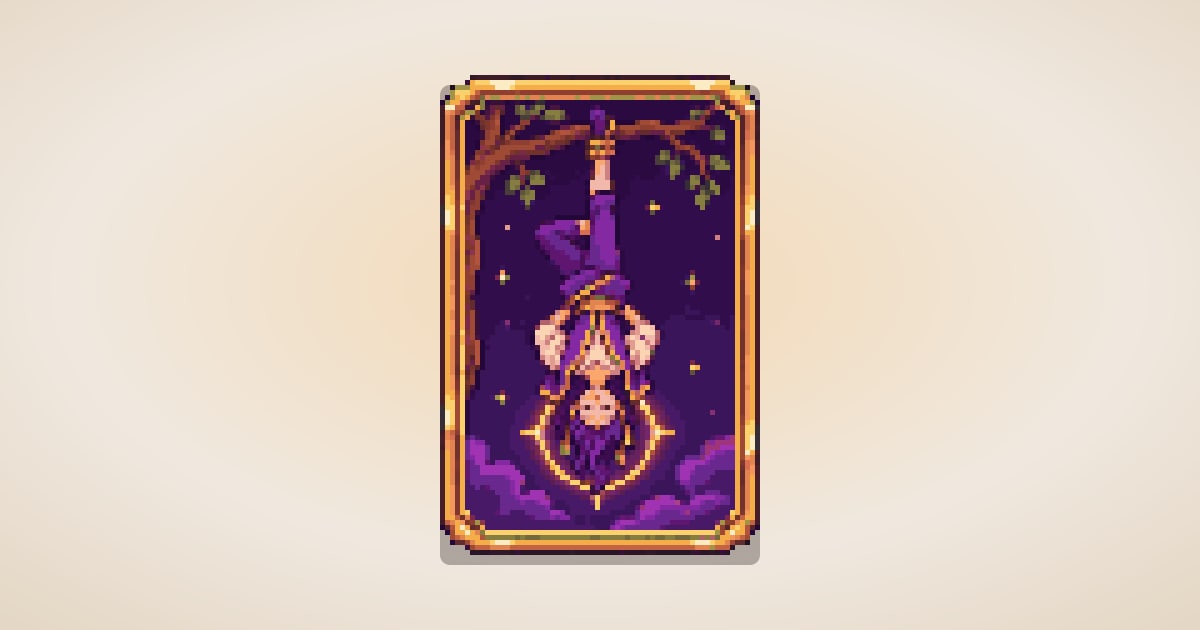 ReflectionsThe Hanged Man and the Long WaitOn the card of suspension, the face that stays calm upside down, and what a long pause can let us see.
-
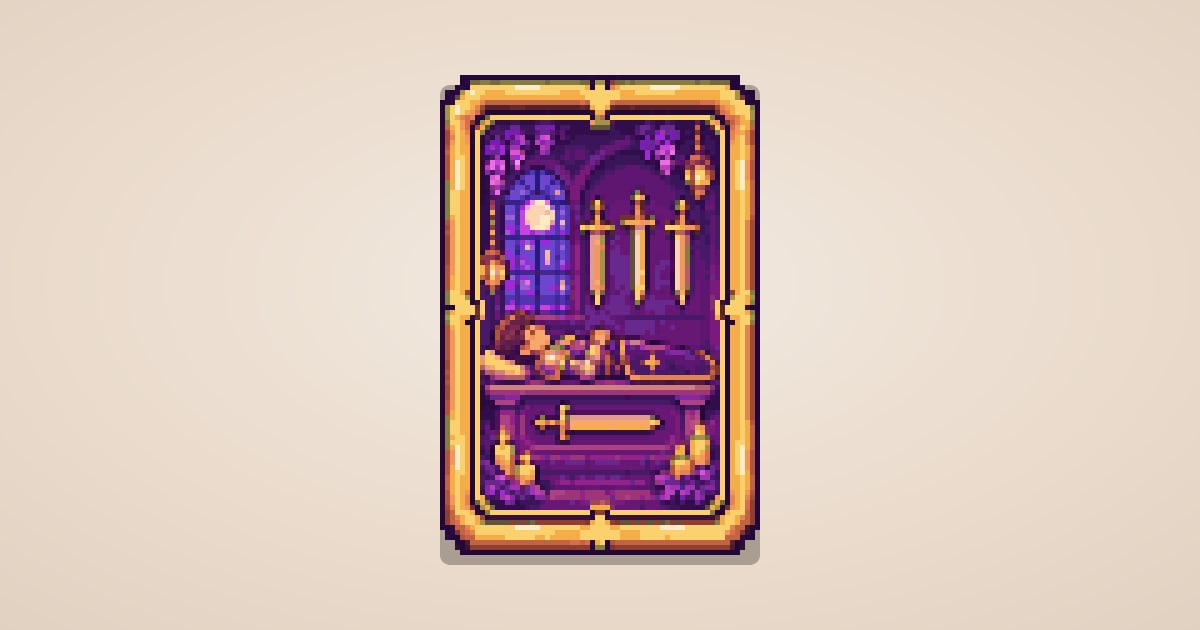 ReflectionsThe Four of Swords and Permission to RestOn the stillest card in the deck, one sentence of Waite read slowly, and why stillness is something we need, not something we win.
-
 Tarot SpreadsA Monthly Tarot Spread for the Start of a New MonthFive cards that turn the first days of a month into a quiet check-in, with a question waiting for you at the end.