
The Ace of Cups and an Open Heart
On the first card of the cups, a heart that has been shut for a while, and what it is like when feeling starts to come back.
 Ace of Cups · full meaning →
For a while, maybe a long while, you have been getting by on very little feeling. Not sadness, exactly. Something flatter. You answer messages, you go to work, you say "fine" and mostly mean it, and the part of you that used to be moved by things has gone quiet, the way a house goes quiet when the heating has been switched off.
Then one ordinary afternoon it comes back without asking. A song playing in a shop. A neighbor who remembers your name. A stranger who holds a door and smiles as if they mean it. Your throat tightens, your eyes sting, and you are surprised, almost embarrassed, to find there is still so much in there.
Many of us know that moment. The tarot gives it a picture: a single cup, held out from a cloud, running over.
The picture
A hand reaches out of a small cloud on this 1909 card from the Rider-Waite-Smith deck. It holds a golden cup, and water spills over the rim in streams that fall to a pond below, where water lilies float. Above, a white dove dives head first toward the cup, carrying a round wafer marked with a cross. Small drops hang in the air all around, like a fine rain that has not decided where to land.
Waite describes it in one long breath:
The waters are beneath, and thereon are water-lilies; the hand issues from the cloud, holding in its palm the cup, from which four streams are pouring; a dove, bearing in its bill a cross-marked Host, descends to place the Wafer in the Cup; the dew of water is falling on all sides.
He counts four streams, though most people find five in the drawing, and many readers link them to the five senses.
Held in the palm
Look at the hand. It does not grip the cup or raise it like a trophy. In Waite's words it holds the cup "in its palm", which is how you carry something you mean to give away. Nobody in the picture has earned it. It simply arrives, from somewhere a little beyond sight, and is offered.
That can be the hardest part of an open heart after a closed season. Not feeling, exactly, but receiving. When you have been managing alone, kindness can feel like a debt. A friend drops off food and you are already planning how to repay it. Someone says something warm about you and you hurry to turn it aside. The Ace of Cups shows an offering with no ledger attached.
More than the cup can hold
The water does not stay in the cup. This one runs over, and the overflow is what reaches the lilies.
Feelings that return after a long numbness often arrive like this: too much at once, and in the wrong places. You cry at an advertisement. You laugh too long at something small. It can seem as if something has gone wrong, when it may only be a cup that was dry for a while learning to hold water again. It is how the water gets anywhere.
Waite's meanings for the Ace open with "House of the true heart, joy, content, abode, nourishment". Abode and nourishment are homely words to set beside joy. They suggest that an open heart is less a burst of fireworks than a place to live, somewhere warm and fed.
The dove and the lilies
The dove comes down head first, as if it cannot wait. Doves have long stood for peace, and in Christian art for the Holy Spirit, and the wafer it carries is the bread of the Mass. You do not need to share that faith to feel what the picture is saying: that some good things come down unasked, small enough to fit in a beak.
Below, the lilies rest open on the water. Their roots are down in the mud of the pond, out of sight, and their flowers lie on the surface, open to the drops. It is a quiet image of a heart after a hard time: still rooted in everything that happened, and open anyway.
About new love
Many people meet this card while hoping for love, and it is often read as new love: a first spark, a fresh tenderness, a beginning. But notice where the card puts the love. There is no second person in the picture. There is one cup, and it is filling.
What the Ace of Cups can speak to is your own side: the capacity to feel, to want, to be moved, coming back. It cannot say who will arrive or what anyone else feels. The next card in the suit, the Two of Cups, shows two people offering their cups to each other; the Two of Cups and being met is the essay that stays with that meeting. The Ace comes first. Before a cup can be shared, it has to hold something, and the suit of Cups means every kind of love: for a friend, a child, a piece of work, a place.
Another card that pours
The Star pours water too. Kneeling at the edge of a pool, she tips out two great jugs over the water and the ground beside it, and her pouring feels like recovery after something terrible. The Star pours with her own hands. In the Ace, the hand comes out of a cloud, and the pouring is given. Healing often asks for both: the work you do yourself, and the grace you let in.
A few things for this week
Let one kindness land. The next time someone offers you something small, a coffee, a compliment, help with a heavy bag, say thank you and stop there. Don't explain why you didn't need it, and don't plan the return. Notice what it is like to be the pond for a moment.
Let a feeling finish. If a song or a scene catches in your throat, stay with it instead of switching it off. You don't have to understand it. It may simply be water finding its way back.
Look for the drops. The card is full of small falling drops. Once a day, catch one small moment that moved you: a smell, a voice, the light at a certain hour.
If the numbness stays for weeks, that is worth talking over with a doctor or someone you trust. Our safety page lists free lines for the harder days.
The open cup
The Ace of Cups doesn't ask you to be healed, or in love, or grateful. It shows a cup with no lid, held out, running over. A heart that has been shut can open slowly, one drop at a time, and still be the same heart.
You don't have to fill the cup yourself. You only have to leave it open.
Read the full meaning of the Ace of Cups, or, for the gentler side of feeling deeply, the Queen of Cups and tenderness.
Keep reading
-
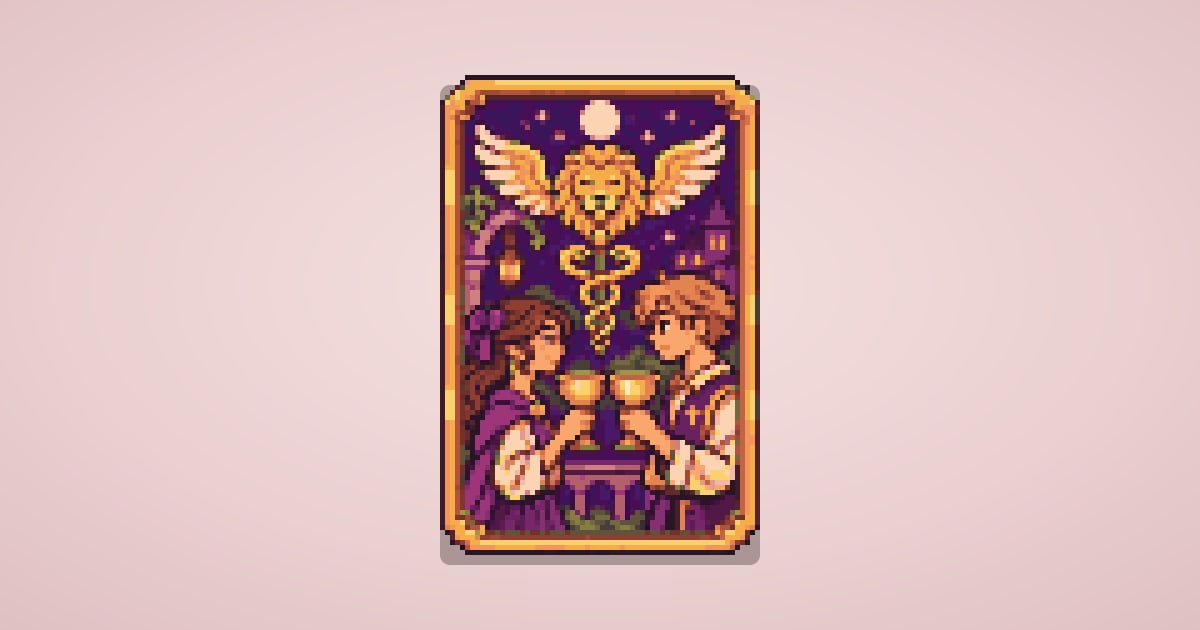 ReflectionsThe Two of Cups and Being MetOn the card of two people meeting at the same height, the strange winged sign between them, and the quiet wish to be heard all the way through.
-
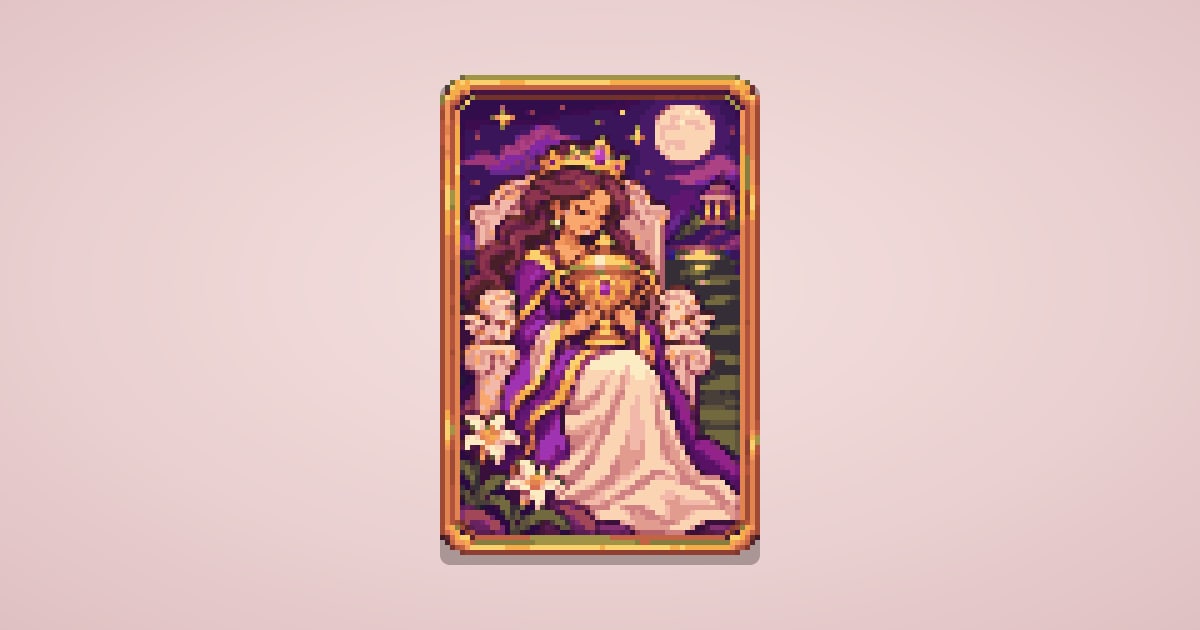 ReflectionsThe Queen of Cups and TendernessOn the tarot's gentlest queen, the lidded cup she guards so carefully, and the difference between feeling with someone and drowning beside them.
-
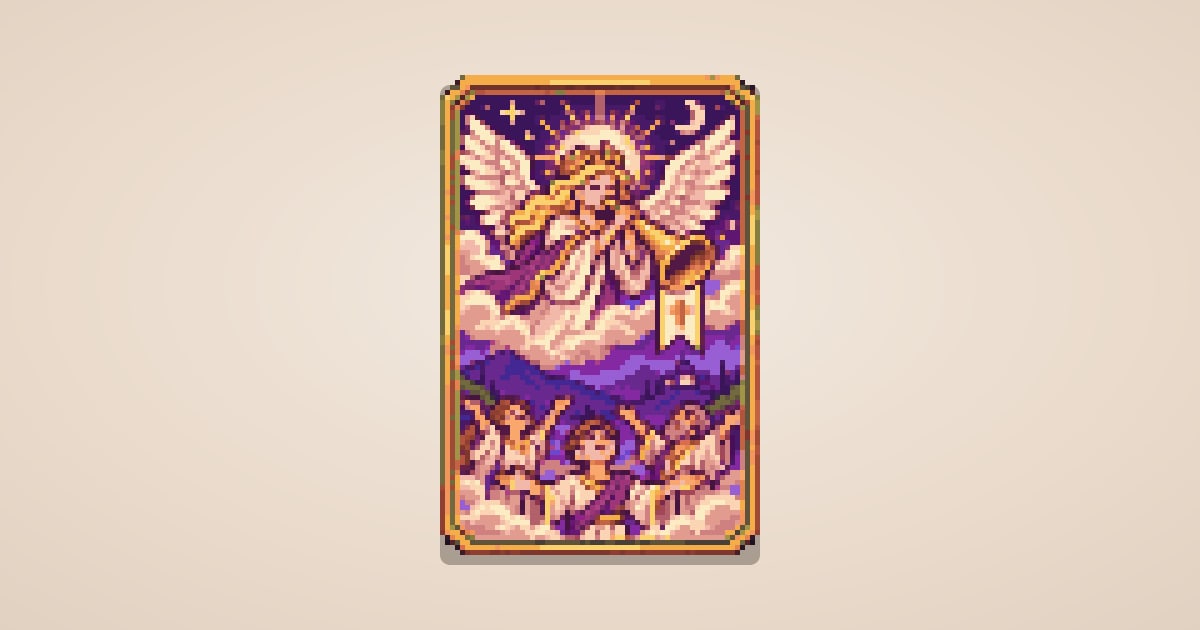 ReflectionsJudgement and Second Chances: Waking Up to Your Own LifeOn the card many people fear will condemn them, and why its picture looks less like a courtroom and more like a morning.