
The Devil Tarot Card and What Holds Us
On the most feared card in the deck, the chains that hang loose around two necks, and the small first steps that can ease a hold.
 The Devil · full meaning →
The Devil is the card of temptation and bondage. That is the usual reading, and you will find it in most guides: addiction, obsession, greed, the chains you cannot get out of. Over the last few years a second reading has become popular, one that sounds kinder. Look, it says, the chains are loose. You could lift them off and walk away whenever you liked.
We think both readings stop too early. The first makes the card a verdict on your character. The second, for all its warmth, quietly makes it a verdict too, because if the chain is that easy to lift, why are you still standing there?
Our reading starts from the same loose chain, and goes somewhere else.
(If something that grips you is putting your health or safety at risk right now, please go straight to help you can reach today.)
Two figures under a black sky
The card is number XV of the Major Arcana, and its background is black. A large horned figure crouches on a dark block, wings spread behind him like a bat's, clawed feet gripping the stone. His right hand is raised, palm out. His left has a burning torch, pointed down. Between his horns hangs a five-pointed star, upside down.
Waite's description is brief:
The Horned Goat of Mendes, with wings like those of a bat, is standing on an altar. At the pit of the stomach there is the sign of Mercury.
Below the block stand two naked people, a man and a woman. They have grown little horns of their own, and tails. His ends in a flicker of flame, hers in what looks like a cluster of fruit. Around each neck is a chain, and both chains run up to a ring fixed in the front of the block.
The chains really are loose, loose enough that either figure could lift the loop over their head with both hands and step away. Nobody is straining. They stand where the chain lets them stand.
Too harsh, and too easy
Here is where we part company with the usual readings.
The old reading treats the pair as people who fell for something wicked. Waite himself did not go that far. Among his meanings for the card he lists "that which is predestined but is not for this reason evil," and we take him at his word on the second half. Nothing in the picture says these two are bad.
The newer reading treats the loose chain as good news: you are free, you just haven't noticed. Anyone who has tried to stop something knows that is not how it feels. A loose chain does not mean an easy exit. It means the grip is made of something other than iron: comfort, fear, habit worn smooth by repetition, a story about what we deserve or what we can manage. Those are strong. They are also things a person can work with, slowly, in a way a locked shackle never allows.
Compare the Eight of Swords, where a bound figure stands among blades in the wet ground with a cloth tied over her eyes. Her trouble is not seeing the way out. The Devil's pair have their eyes open. What keeps them there is closer and more familiar: the shape of days they already know.
Something that once helped
So why do they stay? Our answer comes from the star above the horned figure's head.
Many readers take the upside-down pentagram as a picture of things standing on their heads. What was meant to serve us has started to rule us. A drink that once eased an evening now decides how the evening goes. A relationship that once felt like shelter now feels like the only place there is. Work that gave you a sense of your own value now asks for all of your time.
Most of the things that come to grip us began as good things, or as help. You did not walk up to the block because you were foolish or weak. Very often you walked up to it because, back then, it helped. That is the part both usual readings leave out, and to us it is the part of the card that helps most.
People also turn to this card about love: a bond that feels hard to leave, intensity that is easy to mistake for closeness, staying because leaving seems unthinkable. The card can't tell you what anyone else feels or what they will do. It can only ask about your own side of the chain, whether you are standing there by choice or because stepping back has come to seem impossible.
The torch, pointed down
In all that darkness it is easy to miss the flame. The torch in the Devil's hand is lit. Some readers see a false light in it, a glow that keeps people close. We read it more plainly. Even here, the card is not completely dark. There is enough light to see the chain, and enough to see that it is loose.
Seeing is not yet leaving. It is usually where leaving starts.
If you want somewhere to begin, start with the minute before. Most patterns have a doorway: a time of day, a feeling, a particular kind of tiredness, a certain name on a screen. Try catching that minute and asking what was there. Boredom, loneliness, dread about tomorrow? The chain is usually fastened to something that once needed looking after. After that, change one link and leave the rest: put the charger in another room, take a different way home, wait ten minutes before answering. And consider telling one trusted person, plainly, "this has more of a grip on me than I'd like." Patterns grow stronger in private, and shame keeps them there.
When the chain is heavier
Some patterns are more than habits: an addiction, an eating pattern that frightens you, a relationship where you feel afraid or controlled. These are not things to sort out alone with a deck of cards, and needing help with them is not a failure of will. Please bring them to a doctor, a counselor or a person you trust. If you feel unsafe, at home or anywhere, free and confidential help is listed, country by country, on our safety page.
Reading it our way
What changes if you read the Devil as a picture of help that turned into a habit?
For one thing, the question you ask changes. "Why am I so weak?" gets you nowhere, and neither does "why don't I just leave?" A better question is "what was this doing for me, and how else could I get that?" A person can actually answer that one.
The next card changes too. In the order of the Major Arcana, after the Devil comes The Tower: lightning, a crown knocked loose, people falling from a burning height. Some readers see a sequence there, a grip never eased being shaken loose in a way nobody would choose. Read our way, the Devil is the card where you still get to choose. Nobody in its picture needs lightning. A chain like that comes off by hand, a little at a time, on an ordinary evening, once you know what it was for.
If you'd like company on the leaving side of the story, our essay on the Eight of Cups and walking away is a good next read, and tarot and shadow work sits with this same card from another angle. The card page has more on The Devil, upright and reversed.
Keep reading
-
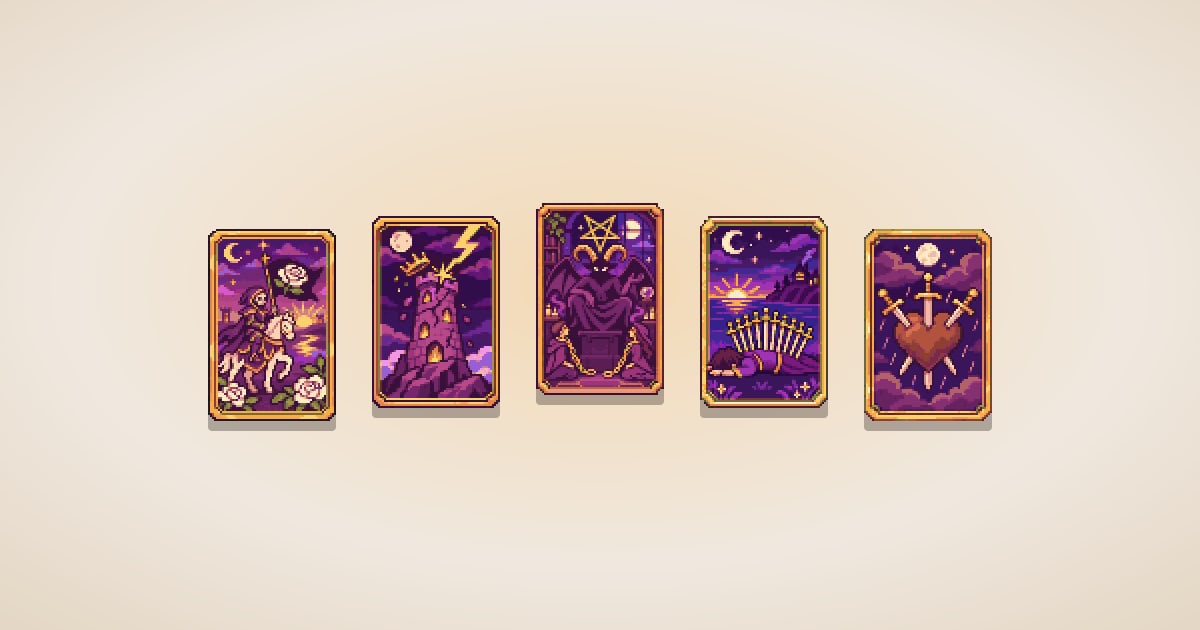 Learn TarotWhat to Do When You Draw a Scary Tarot CardCalm first aid for a frightening draw: what the hard pictures actually show, three slow steps, and why no card can foretell a disaster.
-
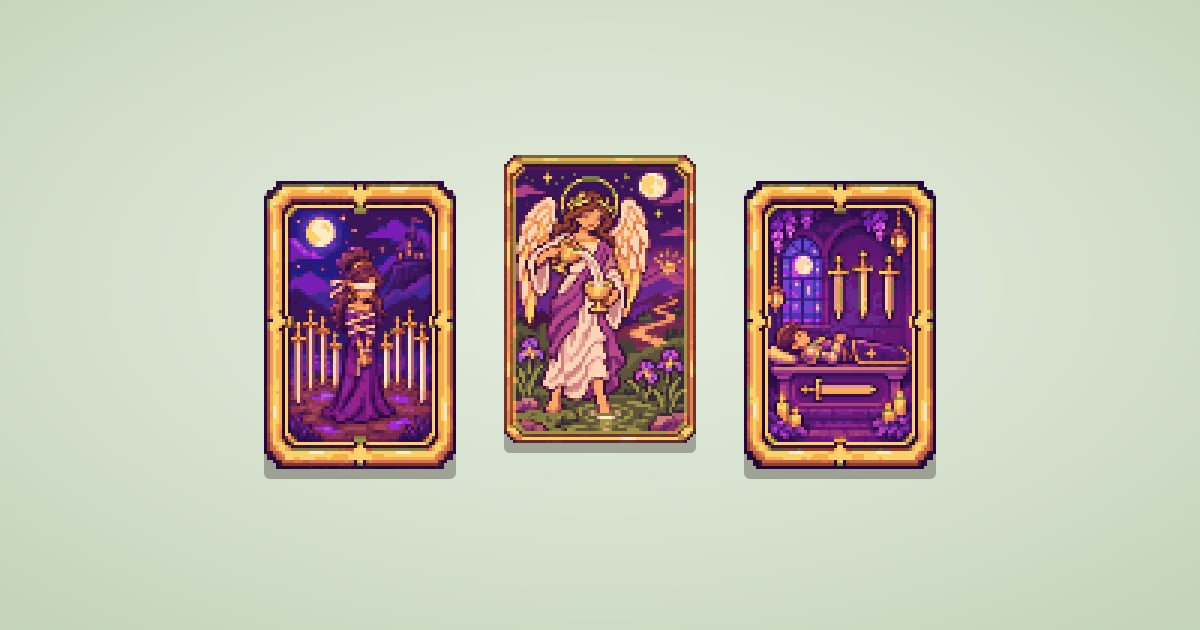 Self-DiscoveryTarot for Anxiety: When It Helps, and When It Feeds the WorryThe cards can slow a racing mind or speed it up. How to tell which is happening, and a small spread for the days when worry is loud.
-
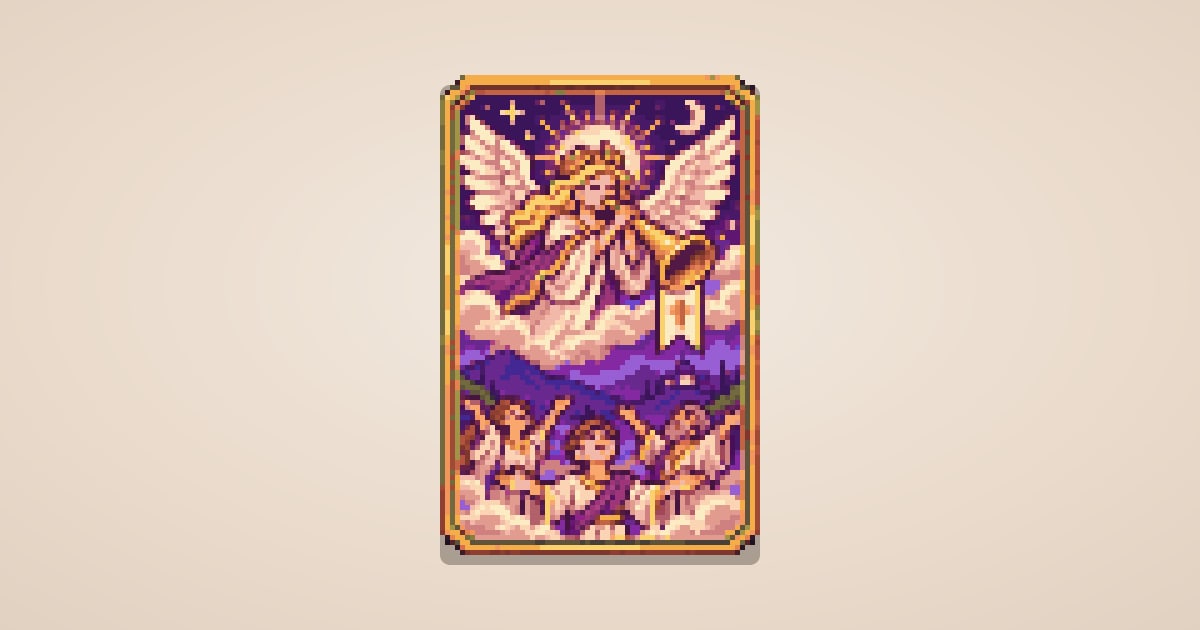 ReflectionsJudgement and Second Chances: Waking Up to Your Own LifeOn the card many people fear will condemn them, and why its picture looks less like a courtroom and more like a morning.