
The Four of Wands and Celebrating Home
On the card of the flowered garland, read in the order the eye travels, from the open frame at the front to the old house at the back.
 Four of Wands · full meaning →
Waite describes the Four of Wands in one sentence, and the sentence moves the way your eye does, from the front of the card to the back:
From the four great staves planted in the foreground there is a great garland suspended; two female figures uplift nosegays; at their side is a bridge over a moat, leading to an old manorial house.
It is a good route through the picture. We will take it in the same order, one thing at a time, and stop where he stops.
The four staves
The first thing you meet is wood. Four tall staves stand planted in the ground at the very front of the card, close enough to touch. They are the same living rods that run through the whole suit of Wands, and here, for once, nobody is fighting with them, hauling them or defending a hill with them. They are stuck in the earth like fence posts, and left alone.
Across the suits, the fours tend to be cards of things coming to rest. The knight lies on his tomb in the Four of Swords. The crowned man in the Four of Pentacles clutches his coin. The Four of Wands is the cheerful member of that family, because of what its four posts make, which is nothing that closes. No walls, no roof. You could walk into the frame from any side.
A doorway without a door. We think that is the most important thing on the card. It is a card about home, and the home it draws keeps nobody out.
Turn it upside down and, for Waite at least, nothing falls over. He says so in as many words:
The meaning remains unaltered; it is prosperity, increase, felicity, beauty, embellishment.
Plenty of modern readers do read the reversed Four as an unsettled home, and that reading has its uses. We still like that Waite let this one card keep its light whichever way it landed.
The garland
Strung across the tops of the staves hangs a heavy garland of flowers and fruit. Many readers see a wedding canopy in it, and the frame fits that well. It fits a garden party just as well, or a gate the neighbors dressed up for someone coming home.
The fruit points to Waite's meanings. He says that for this card they are "for once almost on the surface", and among them he lists "haven of refuge" and "a species of domestic harvest-home". Harvest home was the old English name for the feast held when the last of the crop came in. The work was done, the barn was full, and everyone who had helped sat down to eat. Celebration in that sense is no prize handed down from above. It is the moment you set down what you have carried all season, and feed the people who carried it with you.
Then look at what the garland is made of. Gold would last. Leaves and flowers do not. This is a decoration you can only put up for a few days before it browns, which means it has to go up now, while things are fresh, before anything is certain.
That suits the milestones people tend to skip. The first month in a new job. The first week sober. The evening the last box in a new apartment is finally flattened for recycling. None of them feels big enough, or safe enough, to mark. All of them are exactly the size of a garland.
The two women and their raised flowers
Behind the frame, two figures lift bouquets high over their heads. Waite calls them "two female figures" and the bouquets "nosegays", an old word for a bunch of flowers you could lift to your nose. Their arms are up the way arms go up at an airport arrivals gate, when the doors slide open and the person you came for finally walks through.
They stand facing out of the card, toward us. If anyone is arriving in this picture, it is the person looking at it.
The card never says who the two are to each other. Family, friends who turned into family over years of ordinary dinners, a couple: the picture leaves it open, and so will we. What it does show is gladness said out loud. Nobody here is being polite about it.
Further back, a few more people stand together near the walls, too small to make out. A household, maybe, or half a village. They matter less as individuals than as a sign that this joy is shared. Our essay on the Ten of Cups stays with the quieter side of belonging. The Four of Wands is its louder relative, home with the music on and the door propped open.
The bridge over the moat
To the side, Waite points out "a bridge over a moat". It is easy to miss. A moat exists to keep people out, and a bridge exists to let them across. The card puts both in a single stroke of the drawing, and for many of us that is what home is actually like: a place with defenses, and a way past them.
If home is somewhere you had to leave, or the holidays are days you brace for, the moat may be the part of this card you recognize first. That is no failure on your part. You can build a much smaller frame. Four staves can be one friend, one walk, one good meal and an early night. A holiday can be kept in a way only you would recognize, or not kept at all this year. And if being at home does not feel safe right now, please reach out: our safety page lists free, confidential help.
The old manorial house
Last of all, past the bridge, stands what Waite calls "an old manorial house", drawn as walls and towers under a warm yellow sky. Everything in front of it is temporary, built for one afternoon: posts in the ground, flowers that will wilt, arms that will come down. The house was there before the party started. It will still be there when the garland has been taken down and the bouquets put in water, standing at the back of the card behind everyone who came out to wave.
For the card's upright and reversed meanings in full, see the Four of Wands. For joy that arrives before anything is fixed, keep reading with The Sun and the small joys.
Keep reading
-
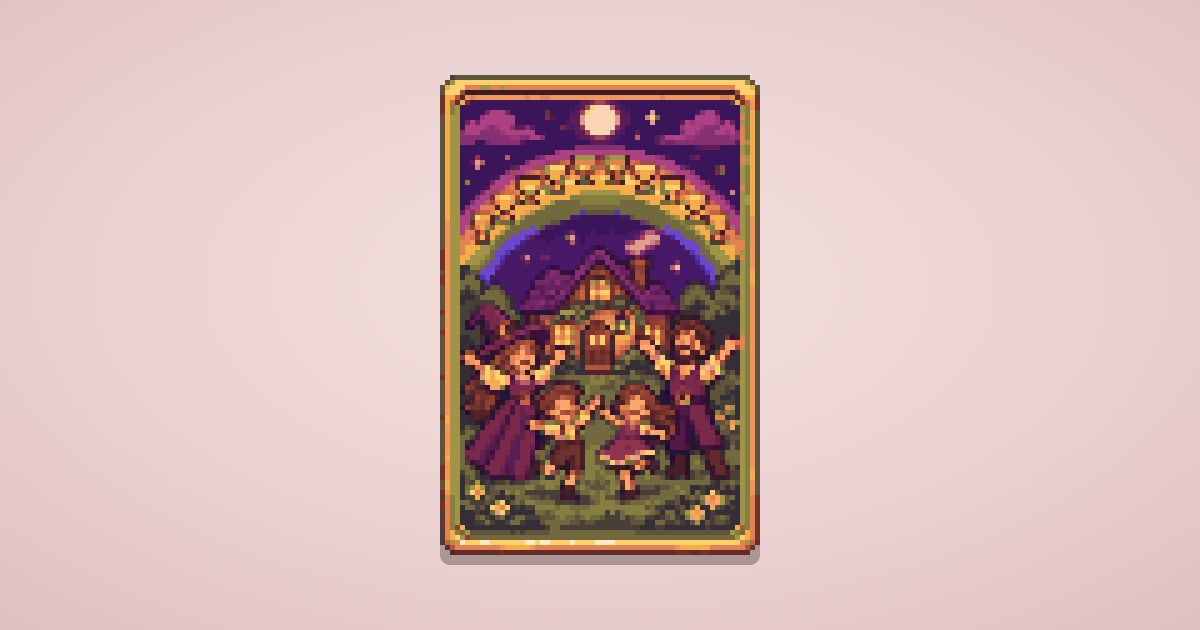 ReflectionsThe Ten of Cups and What Home Really MeansOn the card of the rainbow and the dancing children, the family picture it seems to promise, and the questions readers bring to it.
-
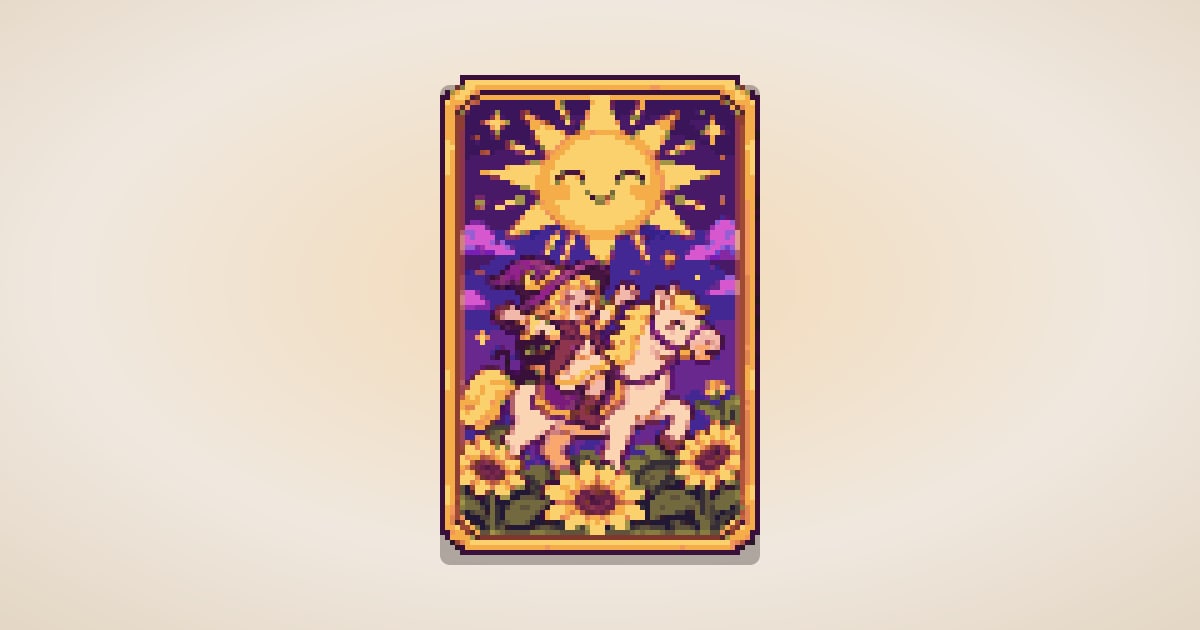 ReflectionsThe Sun and the Small JoysOn the happiest card in the deck, joy after a hard stretch, and why it is allowed to arrive before everything is fixed.
-
 ReflectionsJudgement and Second Chances: Waking Up to Your Own LifeOn the card many people fear will condemn them, and why its picture looks less like a courtroom and more like a morning.