
A Weekly Tarot Spread: Four Gentle Cards for Sunday Evening
Four cards and ten quiet minutes before the week begins, with a short look back on Friday to see what actually happened.
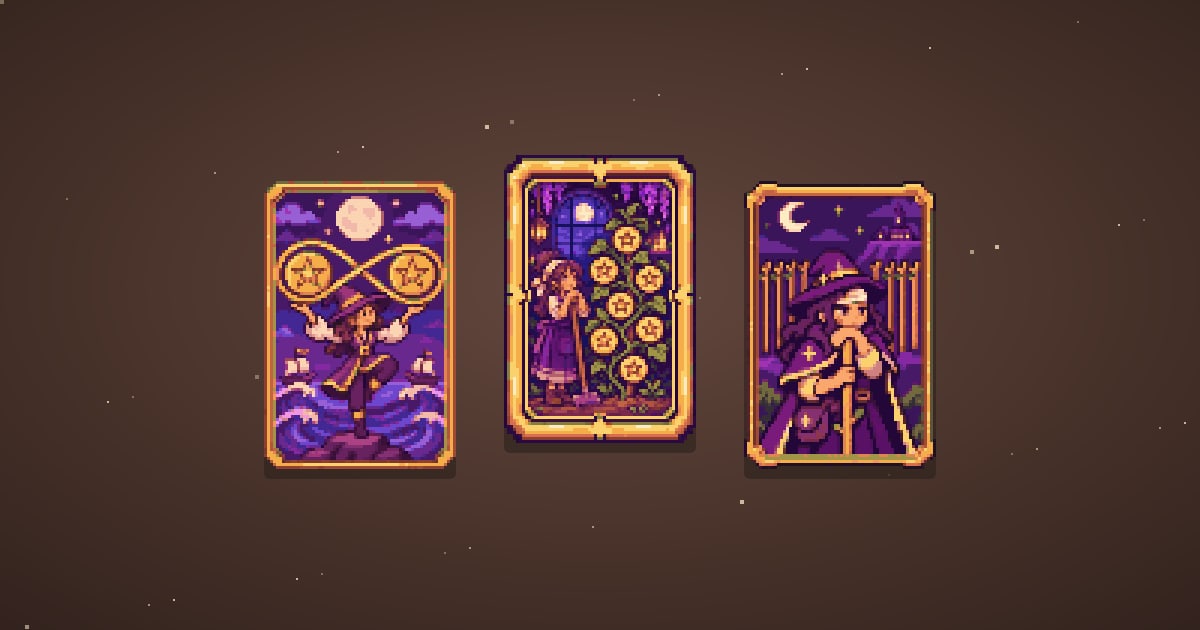
A weekly tarot spread is a few cards laid out before a new week starts, usually on Sunday evening, to help you choose how to meet the days ahead. The one on this page uses four cards: what the week asks of me, where to spend my energy, what to protect, and a small joy to plan. It takes about ten minutes, and on Friday you spend five more looking back.
It does not tell you what will happen on Wednesday. No card in this spread is a forecast. Each position is a question you put to yourself, and the picture on the card gives you something concrete to think with.
Why Sunday evening
For many people, Sunday evening is when the coming week starts to press in, and a vague unease settles before anything has actually gone wrong. A small reading gives that restless hour a gentle job: instead of worrying about the whole week at once, you ask it four specific questions and write down four specific answers.
Sunday is only a habit, though. If your week begins on a Saturday, or you work shifts and your "Monday" is a Thursday, read on the evening before your first working day. The spread cares about the start of your week, not the name of the day.
The four-card weekly layout
Shuffle however you usually do. If you read reversals, settle your rule before the first card turns over; the course lesson on reversals and our longer article on reading reversed cards both help. Keeping every card upright is a perfectly sound choice for a weekly reading.
Lay the cards in a small diamond. The week's request sits at the top, energy and protection sit on either side like two hands, and the joy sits at the bottom, where the week comes to rest.
 1The week asks2My energy3Protect4A small joy
| Position | Name | The question it invites |
|---|---|---|
| 1 | What the week asks of me | What quality would help me most in the days ahead? |
| 2 | Where to spend my energy | Which one or two things deserve the best of my attention? |
| 3 | What to protect | What needs a boundary this week: my time, my rest, a person, a plan? |
| 4 | A small joy to plan | What one pleasant thing can I put on the calendar right now? |
Reading each position
What the week asks of me. Think of this card as a word you might write on a sticky note: patience, steadiness, a lighter touch, honesty. It describes a way of being, not an event. If the card shows a figure doing something, ask what attitude they bring to it, and whether that attitude would help you on an ordinary weekday.
Where to spend my energy. Most weeks hold more tasks than any one person can do well. This card helps you pick. Let the picture remind you of one area of your life, then name a single thing there that would make the week feel well spent.
What to protect. This is the position people often skip when they plan a week, which is why it is here. What tends to get eaten first when things get busy? Sleep, a walk, a phone call with a friend, a quiet morning, the half hour you meant to spend on something of your own. The card points to it; you decide how to guard it, perhaps by blocking the time now or by saying one small no in advance.
A small joy to plan. Joy is easier to have when it is already scheduled. This card asks for something modest and concrete: a film on Thursday, a new recipe, a bench in the sun at lunch, coffee with someone you like. Write the day next to it. If the picture suggests something out of reach this week, find its small cousin. Our essay on the Sun and small joys has more on why the small version counts.
An illustrative Sunday reading
Write your four answers on one dated page, a sentence each. You will reread them on Friday, possibly tired, and short lines help.
The Friday look-back
The weekly spread is really two readings: one that opens the week and one that closes it. On Friday afternoon or evening, before the weekend takes over, come back to your page.
The look-back is where the spread teaches you something. After a few weeks you may notice that your joy card keeps getting cancelled, or that your protected evening only holds when you name it to someone else. That is not the cards predicting anything. It is your own pattern, made visible because you wrote it down twice a week.
How this differs from the monthly spread
Our monthly tarot spread uses five cards and looks across four or five weeks. It starts with what to carry over and what to set down, and it leaves a question waiting at the end of the month.
The weekly spread is closer to the ground. A week is short enough that every answer should turn into something you can actually see happen: a task finished, an evening kept free, a walk taken. It also has no position for looking back at the previous week, because Friday's look-back already does that job.
The two fit together well. If you do a monthly reading, let its focus card stand quietly behind your weekly ones, and on Sunday ask whether this week's energy card serves it. If you also enjoy a daily card, the morning tarot ritual slots in under both, and the printable pages in our tarot journal templates can hold all three.
Making it your own
Every position here is open to rewriting. If one feels wrong for your life, replace it, and use the guide to creating your own tarot spread to try the new version. You might swap "what to protect" for "what to let go of this week".
On a week that already feels heavy, use only two cards: what to protect and a small joy. That is enough. If Sunday evenings bring real dread, or the week ahead holds something painful, the one-card page called a card for a hard day asks less of you than a full layout, and our article on tarot for anxiety offers calmer ways to sit with the deck. If things feel like too much, our safety page lists helplines.
If your notes tend to go missing between Sunday and Friday, Luna in the Emberlune app keeps readings in a private journal, so the look-back starts with your own words. So does a notebook that stays on the kitchen table all week.
Sources
- A. E. Waite, The Pictorial Key to the Tarot (1911), for the descriptions of the card pictures. The weekly positions and the reflective uses of each card are our own.
Keep reading
-
 Tarot SpreadsA Monthly Tarot Spread for the Start of a New MonthFive cards that turn the first days of a month into a quiet check-in, with a question waiting for you at the end.
-
 Self-DiscoveryA Morning Tarot Ritual: A Gentle Five-Minute Daily PracticeOne card with your tea or coffee, three plain questions and a line in a notebook, kept small enough that a missed morning never feels like failing.
-
 Tarot SpreadsA Birthday Tarot Spread for Your Personal New YearSix cards for celebrating what you can, honoring what hurt, and making room for a year that feels more like your own.