
How to Memorize the Tarot Cards (Without Memorizing 78 Lists)
Seventy-eight cards become a handful of patterns and a lot of pictures, and the guidebook can stay on the table for as long as you like.
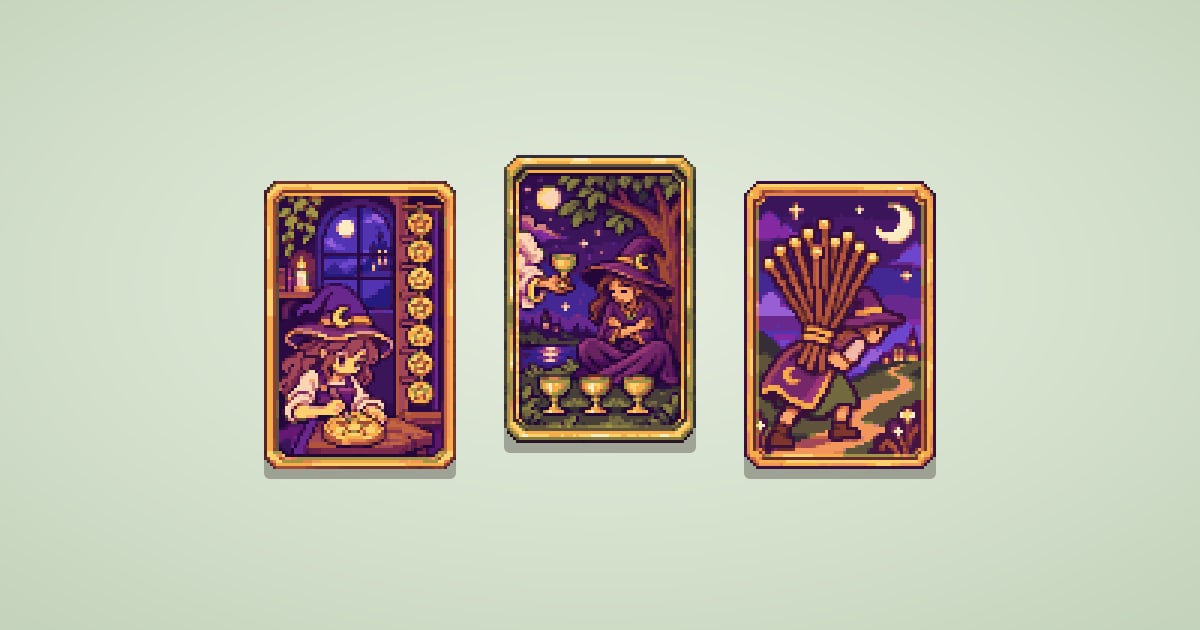
The quickest honest answer to how to memorize tarot cards is this: you mostly don't memorize them one by one. You learn a few patterns that the deck is built on, the four suits, the numbers from Ace to Ten, the four court ranks, and the order of the Major Arcana. Then you let each picture do the rest. With those in place, a card you have never studied still tells you a good deal, and the cards you meet often become familiar on their own.
Why keyword lists slip away
Most first decks come with a booklet that gives each card a few words, upright and reversed. Read in a row, those entries connect to nothing, so very little stays.
Even the source texts do not offer one tidy definition per card. A. E. Waite, who designed the Rider-Waite-Smith deck with the artist Pamela Colman Smith, admitted as much about the Ten of Wands:
A card of many significances, and some of the readings cannot be harmonized.
If the author of the guidebook could not reduce a card to a single line, you do not need to either. What you need is a sense of where each card sits in the deck and what its picture shows.
Learn four suits instead of fifty-six cards
The 56 Minor Arcana cards split into four suits, and the suit already narrows each card down. In the system most Rider-Waite-Smith readers use, Wands go with fire, Cups with water, Swords with air and Pentacles with earth. Some traditions swap or change these, so treat them as a memory aid, not a law.
A simple way to hold them: Wands are what moves you, Cups are what you feel, Swords are what you think and say, Pentacles are what you hold, build and look after. Before you know anything else about the Seven of Cups, you know it concerns feelings or wishes. Lesson four of our course walks through the elements in more detail.
Numbers as stages, not separate facts
Within a suit, the numbered cards follow a rough arc from Ace to Ten. An Ace is a seed or a first spark. The middle numbers bring growth, choices and friction. A Ten shows the cycle at full stretch, sometimes complete, sometimes overloaded. The Ten of Wands, a figure carrying a bundle so large it blocks his view, is a fine picture of fire taken to its limit.
You do not have to learn all ten stages at once. Start by laying out one number in all four suits, for example the four Fives, and asking what they share. Our article on what the tarot numbers mean goes card by card, and lesson five shows the same idea as a course lesson.
Court cards as four ranks
The sixteen court cards are often the last to stick. Think of the ranks as four ways of handling the suit's energy. Pages are curious and learning. Knights are in motion, sometimes too fast. Queens hold the suit with care and experience. Kings take responsibility for it and direct it outward.
Put rank and suit together and you have a first reading of all sixteen: a Page of Swords is someone learning to think and speak clearly, a Queen of Pentacles is someone who tends resources and bodies with patience. Lesson six covers how readers vary on this.
The Major Arcana as one story
The 22 Major Arcana have names instead of suits, which makes them easier to remember than you might expect. Many teachers present them as a journey: The Fool sets out at zero, and the cards that follow, from The Magician to The World, can be read as meetings along the way. Learning them in order, as a story, gives each one neighbors to lean on.
One common study layout puts The Fool to one side and the other 21 cards in three rows of seven. Look along each row and then down each column, and notice what you see. The point is to give your memory more than one route to each card. Lesson three introduces the Majors, and Major vs Minor Arcana explains how the two halves of the deck differ in a reading.
Let the picture be your first clue
Pamela Colman Smith drew a scene on every card, including the numbered Minors. When a card comes up, describe what you see before you reach for the book. Who is there, what are they doing, where are they looking?
When you check the book after your own description, you are testing yourself, and that small effort of guessing first helps memory more than reading the answer straight away. Lesson seven has more on reading the scene.
One card a day, tied to something real
Drawing a single card each morning is one of the gentlest ways to learn. Pull it, look at the picture, and in the evening write one line about where something like it showed up in your day. The Eight of Pentacles, a craftsperson working at a bench, might sit next to an evening you spent fixing a shelf or practicing a song.
That personal link is what makes a card stick. A memory you lived is far easier to recall than a word you read. The tarot card of the day can draw for you, and our journal templates give the line somewhere to live.
Review just before you forget
Reviewing a card once, then again a day later, then a few days after that, and then a week on, works better than going through the whole deck again and again in one sitting. This pattern is called spaced repetition, and it is the idea behind most flashcard methods: the cards you know well come up rarely, and the ones you keep missing come up often.
Our free tarot flashcards work this way and keep your progress in your own browser. When you want a quick check, the card meanings quiz asks about ten cards at a time. A miss simply tells you which picture to revisit.
A four-week plan
Ten minutes a day is plenty. Skip days, repeat weeks, or stretch it over two months.
| Week | Focus | A small daily practice |
|---|---|---|
| 1 | The four suits and their Aces | Draw one card a day, name its suit and element first, then describe the picture |
| 2 | Numbers from Two to Ten | Lay one number out in all four suits and write what the four cards share |
| 3 | The sixteen court cards | Pick one court card, say its rank and suit as one sentence, then compare it with someone you know or a character you like |
| 4 | The Major Arcana in order | Tell the story of three or four Majors in a row, then look at all 22 in three rows of seven |
Keep the daily card going through all four weeks, and run your flashcards a few times a week. If you want a shorter, day-by-day start, your first week with tarot pairs well with week one. Leave reversed meanings for later. When you are ready, lesson eight and our guide to reading reversed cards pick up from here.
Keep the book open as long as you like
Using a guidebook or a one-page summary is not cheating, and there is no point at which you are supposed to stop. Meanings keep shifting anyway, as your own life gives them new examples. Our tarot cheat sheet fits on a page and is meant to be printed and kept by the deck.
Some cards will take longer than others, and a few may stay slippery for a long time. That is ordinary. If two cards keep blurring together, our guide to tarot cards that are easy to mix up compares the common pairs side by side.
If you would like your daily cards gathered in one place, Luna in the Emberlune app keeps each reading in a journal. For a structured path, the free Learn Tarot course has ten short lessons. Start with one card today, look at it for a minute, and let that be enough.
Keep reading
-
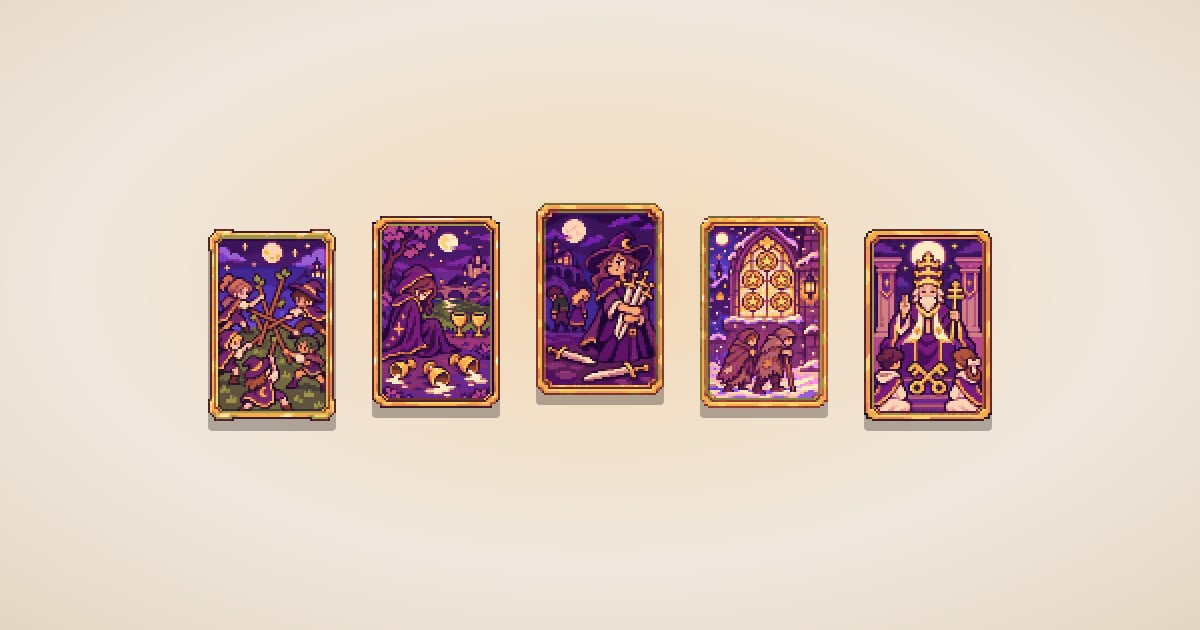 Learn TarotTarot Numerology: What the Numbers Mean, Ace to TenForty numbered cards become ten patterns once you see them side by side, as long as the pattern stays a starting point and never a verdict.
-
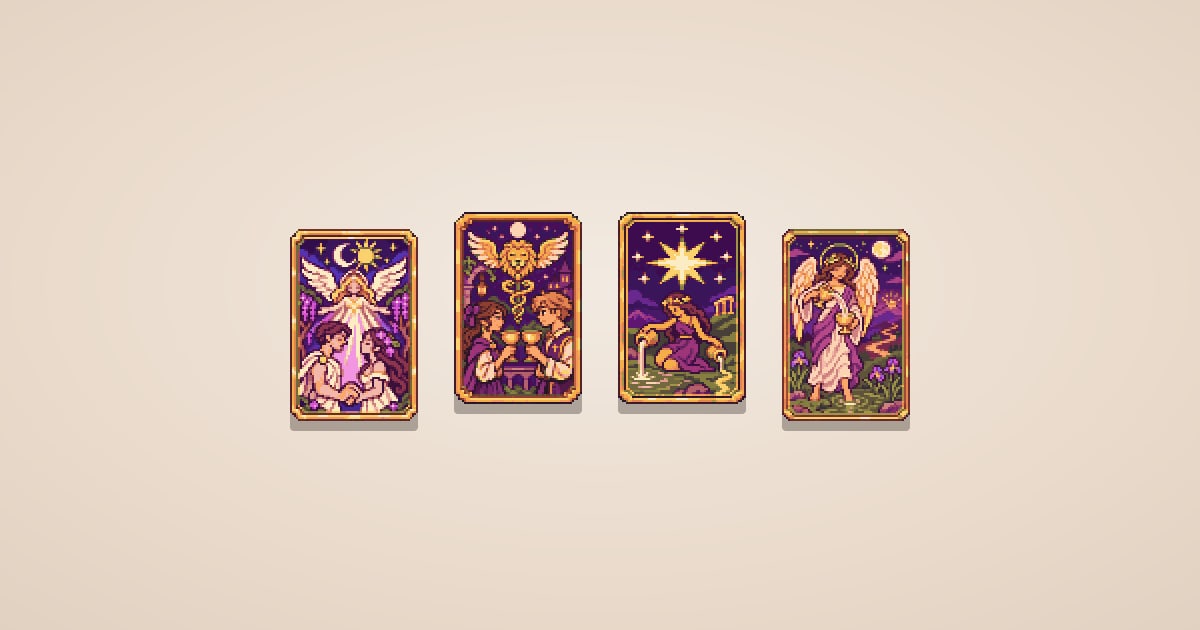 Learn TarotTarot Cards That Are Easy to Mix Up, and How to Tell Them ApartA picture-led study guide to seven tarot pairs whose shared themes can make their differences hard to remember.
-
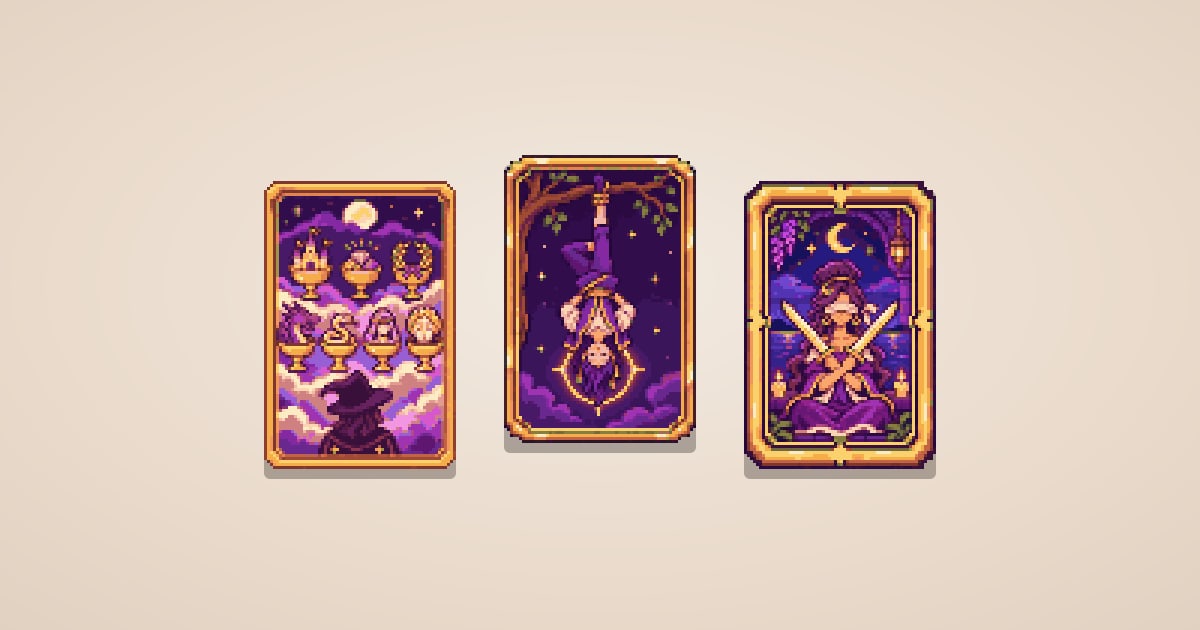 Learn TarotHow Does Tarot Work? An Honest AnswerTarot has no proven power to predict events, and it can still help you think. Here is how pictures, chance, structure and a pen do the work.