
Tarot Numerology: What the Numbers Mean, Ace to Ten
Forty numbered cards become ten patterns once you see them side by side, as long as the pattern stays a starting point and never a verdict.
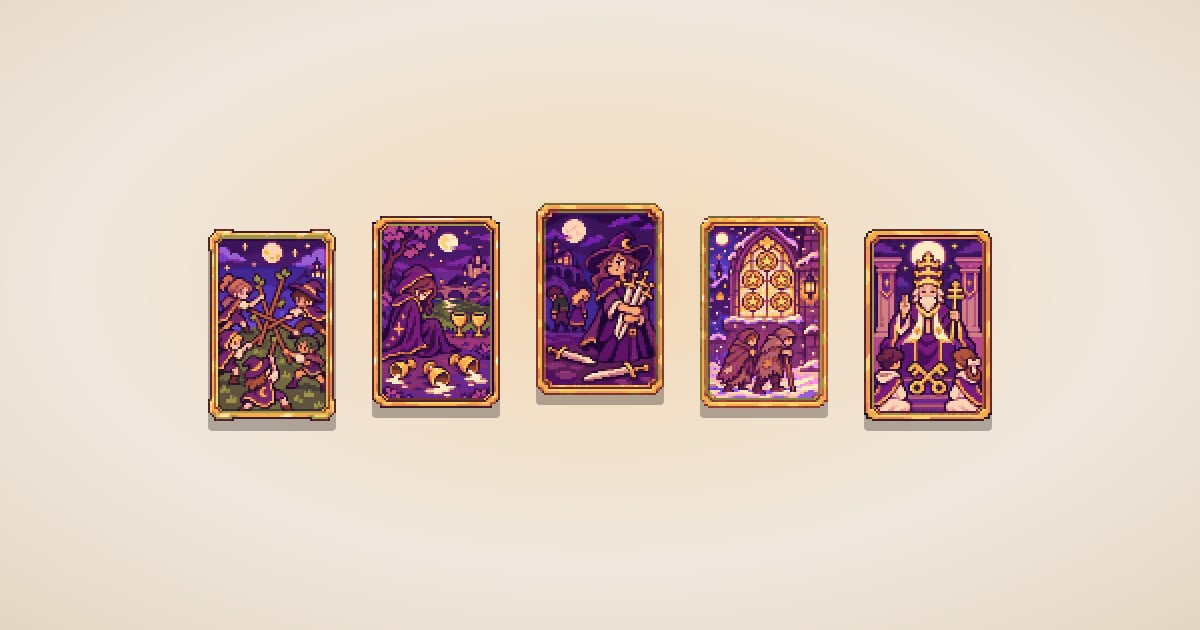
In the Minor Arcana, each number from Ace to Ten suggests a stage of something unfolding: the Ace is a seed, the middle numbers are growth and trouble and repair, and the Ten is the whole situation at its fullest. The suit tells you where that stage is happening. Wands carry drive and creative fire, Cups feelings and relationships, Swords thoughts and conflict, Pentacles work, money and the body. So a Five in any suit hints at friction, and the suit shows you what kind.
That is a learning shortcut, not a law, and no number decides what will happen to you. Treat the number as your first question for the card, then let the picture answer.
The ten numbers at a glance
Each row gives a common theme and a few words about the four Rider-Waite-Smith cards that carry it. Keep it nearby while you learn, then let it go.
| Number | Common theme | Wands | Cups | Swords | Pentacles |
|---|---|---|---|---|---|
| Ace | A seed, raw potential | A hand from a cloud holds a sprouting staff | A cup overflowing in streams | A sword crowned at its tip | A pentacle offered above a garden |
| Two | A meeting, a choice, balance | A figure on a battlement holds a globe | Two people pledge their cups | A blindfolded figure crosses two swords | A dancer keeps two pentacles in a loop |
| Three | First shape, growing with others | A figure watches ships from a cliff | Three women raise their cups | A heart pierced by three swords | A stonemason works while two others consult |
| Four | Structure, holding still | A garland hung between four staves | A seated figure ignores an offered cup | A knight's effigy at rest | A crowned figure grips a pentacle |
| Five | Friction, loss, disruption | Youths clash with staves | A cloaked figure mourns spilled cups | A man gathers swords as others walk away | Two figures in snow pass a lit window |
| Six | Response, recovery, give and take | A rider crowned with laurel | Children with cups full of flowers | A ferry carries passengers across | A merchant weighs coins for those in need |
| Seven | Testing, assessment | A figure defends high ground | Cups full of visions | A man slips away with five swords | A farmer studies a growing bush |
| Eight | Effort, movement, direction | Eight staves fly through open air | A figure walks away from stacked cups | A bound, blindfolded figure among swords | A craftsperson carves pentacles |
| Nine | Accumulation, nearly there | A wary guard with a bandaged head | A contented man before nine cups | A figure sits up in bed, face in hands | A woman with a bird in a vineyard |
| Ten | The full weight, a cycle complete | A man bent under ten staves | A family beneath a rainbow of cups | A figure lying face down under ten swords | Generations gathered at an estate gate |
Where the pattern comes from, and where it bends
A. E. Waite designed the deck and Pamela Colman Smith drew it, and both belonged to the Hermetic Order of the Golden Dawn, a magical society whose teaching linked the ten numbered cards of each suit to the ten spheres of the Kabbalistic Tree of Life. Much of the modern number system grows out of that tradition and later teaching.
Waite's own book is less tidy. The Pictorial Key to the Tarot (1911) gives the older fortune-telling meanings for the numbered cards, and they often refuse to fit a single theme per number. For the Five of Pentacles he lists material trouble, then notes that some card readers took it as a card of love and lovers, and concludes that "these alternatives cannot be harmonized." It is a useful reminder that the number pattern is a lens readers chose, not something printed on the cards.
So use the pattern where it helps and drop it where the picture disagrees. The Nine of Cups and the Nine of Swords are both full, in a sense: one with pleasure, the other with worry that has piled up overnight. We wrote about that second one in the Nine of Swords at 3 a.m..
One number, four cards: the Fives
After the steadiness of the Fours, something gets knocked loose. Each Five asks the same question: what has been disturbed, and what still stands?
Five of Wands: struggle as fire. Five young figures swing their staves at one another, and it is hard to tell whether they are fighting or playing. Waite himself allowed both readings. This is friction with energy in it: rivalry, crossed plans, a team where everyone wants to lead. Is the contest making anything better?
Five of Cups: struggle as water. A figure in a dark cloak bows over three spilled cups. Two cups still stand behind them, and a bridge leads across the river toward a small keep. Here the friction is grief or disappointment. The picture does not hurry the mourner, and it also keeps the two standing cups in view.
Five of Swords: struggle as air. One man gathers up swords while two others walk away, heads down. Someone has won an argument, and the win looks lonely. In a reading this often turns attention to how a conflict was fought, and whether being right has cost more than it gave.
Five of Pentacles: struggle as earth. Two figures, one on crutches, trudge through snow past a lit stained-glass window. This is hardship in the body and the bank account: cold, money worries, feeling shut out. Many readers point to the window: help may be closer than it feels, though the card cannot promise it.
Read together, the Fives describe four kinds of strain, not one fate. And Six follows Five: the Sixes show crossing over, sharing and recovering. If several Fives land on a week that is already heavy, you can close the deck, or start somewhere gentler with a card for a hard day.
Reading a spread by its numbers first
In a spread, numbers let you see the shape of the whole before you read any single card. Low numbers can suggest something still forming, high numbers something mature or close to finishing. A mix may simply be a mix.
If a card comes up upside down, the number still sets the stage; the lesson on reversals covers ways to read it.
Major Arcana numbers and the numbered cards
The Majors have their own sequence, laid out in the course lesson on the Major Arcana, but some readers connect the first ten Majors with the matching Minor numbers. The Magician, card 1, pairs with the Aces, and his table even holds the four suit symbols: a wand, a cup, a sword and a pentacle. The High Priestess, card 2, pairs with the Twos and their quiet weighing of two sides. The Hierophant, card 5, sits beside the Fives: a figure of tradition next to the cards where things get shaken. The Wheel of Fortune, card 10, pairs with the Tens, a cycle turning at its fullest point.
Others go further and add the digits of higher Majors, so Justice (11) becomes 2 and joins the High Priestess, and The Sun (19) becomes 10 and then 1. The tarot birth card calculator uses the same adding, following Mary K. Greer's method, to turn a date of birth into a pair of Major cards. The Rider-Waite-Smith deck puts Strength at 8 and Justice at 11, while some older decks swap them, so books can disagree on the pairings. Either way, these are associations to explore, not a path you are bound to.
Build your own number table
The course lesson on numbers from Ace to Ten compares the four Fours side by side. If you use the Emberlune app, Luna keeps your readings in a journal, so you can look back at which numbers keep turning up.
Once the pattern is familiar, a new card already tells you roughly where you are in the story. That is all the numbers need to do. The picture, and your own life, fill in the rest.
Keep reading
-
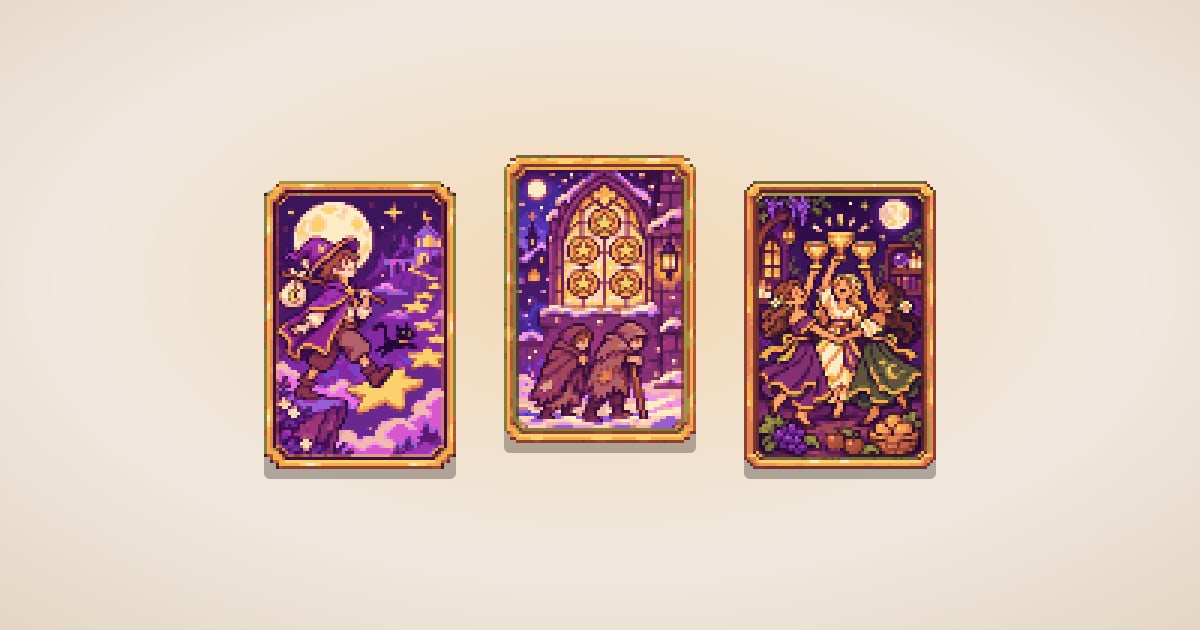 Learn TarotHow to Read Tarot Cards for Beginners: A Practical GuideWhat the 78 cards are, how to ask a question the cards can work with, and how to read a card in context instead of memorizing a list.
-
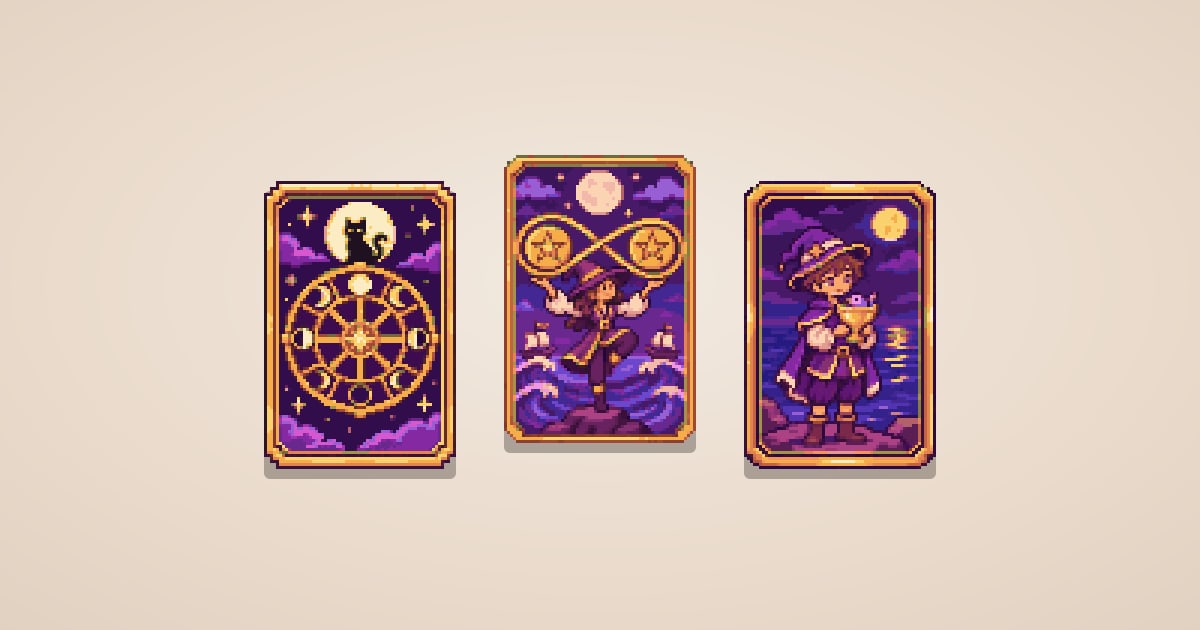 Learn TarotMajor vs Minor Arcana: What the Difference Means in a ReadingTwo halves of one deck, two scales of attention, and why a reading full of Majors is a reason to slow down rather than to worry.
-
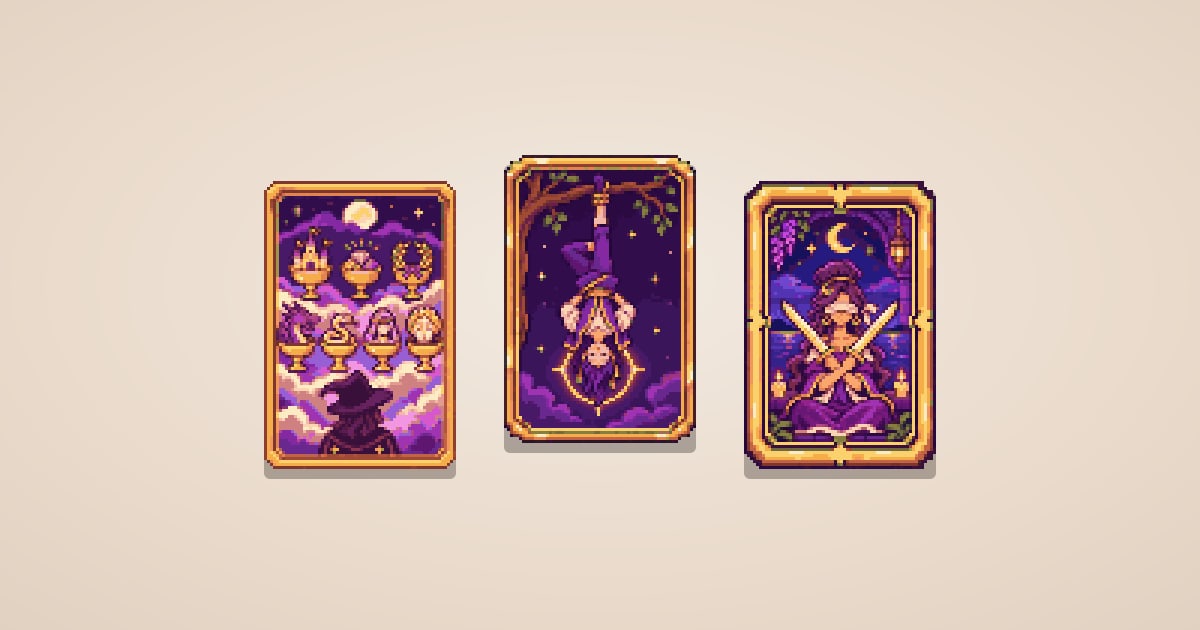 Learn TarotHow Does Tarot Work? An Honest AnswerTarot has no proven power to predict events, and it can still help you think. Here is how pictures, chance, structure and a pen do the work.