
The Eight of Swords and Feeling Trapped
On the card of the blindfolded woman, a cage that is not quite closed, and the slow work of finding out which swords are really fixed.
 Eight of Swords · full meaning →
Waite needed only two sentences for the picture on the Eight of Swords. The first is grim: "A woman, bound and hoodwinked, with the swords of the card about her." The second turns on a single word: "Yet it is rather a card of temporary durance than of irretrievable bondage."
Durance is an old word for imprisonment. The word that matters is temporary. Waite's list of meanings for this card is harsh, with "crisis" and "power in trammels" in it, and we still think that one yet is the most useful thing he wrote about it. The trap is real. It is also not forever, and the drawing shows why.
If what keeps you in place is a person, and you are afraid of them, please go first to our safety page. This essay will still be here.
Bound at the arms, free at the feet
Pamela Colman Smith drew a woman standing alone on low, wet ground. Strips of cloth are wound around her body, pinning her arms to her sides, and another band covers her eyes. Eight swords are planted point down in the mud around her. Shallow pools lie at her feet. Far behind, on a high rocky cliff, a castle stands against a pale sky.
Look at the swords and you will see they are not a ring. They stand behind her and off to either side, with gaps between them wide enough for a person to walk through, and the ground in front of her is open. Look at the cloth and it is wound more than knotted. In places it hangs loose enough that a slow turn of the shoulders might start to undo it. Her feet are not tied at all.
She can see none of this. From inside a blindfold, eight swords and eight hundred feel exactly the same.
Readers differ over how much weight to put on those gaps. We put a lot on them. The card makes no claim that the trap is imaginary. What it says is that the trap is less complete than it feels to the one standing in it, and those are very different claims.
Why someone stands still in an open cage
The card does not scold her, and there is no reason to scold yourself. People stop moving for real reasons.
Fear is the first. If trying has hurt before, every step can feel as if it might land on a blade. Tiredness is the second, because testing a knot takes energy that some seasons leave none of. Then come the old stories, often learned early: people like us don't get to leave, wanting more is selfish, if I change one thing, everything falls apart. A story like that works very much like the band over her eyes. It builds no cage. It only keeps you from checking the bars.
None of this means that everyone who feels trapped is imagining it. Some people are held in place by money, illness, a visa, caring for someone, or another person's control, and those walls are solid. The Eight of Swords pictures one particular kind of stuck, the kind where some of the way out exists and fear or fatigue or an inherited rule has covered it over. Most lives have both at once. A few swords are truly fixed in the ground, and a few only look fixed from behind the cloth.
So the useful work is sorting, and doing it slowly. Pick one thing that seems to pin you, and ask without blame whether it is a fact, a fear or a rule somebody handed you. "I can't afford to leave this month" may well be a fact, and facts can be planned around. "I would never find anything else" sounds more like a fear. "I'm not someone who asks for things" is a rule, and every rule was written by someone.
Next, find out one thing you have been assuming. A blindfold is often missing information dressed up as certainty. What is the real notice period? What does the course actually cost? Has the person you are sure would say no ever been asked?
Then move a foot, since hers are free even when nothing else is. A different street home. Ten minutes on the thing there is never time for. One true sentence in a conversation that always runs the same way. The step itself matters less than what it teaches your body, which is that something here can move.
When the swords are a person
Sometimes what binds someone is another person: someone who watches, threatens, controls the money, or makes leaving feel dangerous. If a face came to mind as you read this, and fear came with it, please take that seriously. This is not a knot to test on your own, and it is safer to plan with people who are trained for exactly this. Free, confidential help in many countries is listed on our safety page.
The Hanged Man, the Star and the castle on the cliff
The Hanged Man is held in place too, upside down by one foot, but his face is calm and his stillness looks chosen. Our essay on The Hanged Man and the long wait stays with that kind of pause. Together, the pair asks a plain question of any stuck stretch: did I choose this stillness, or was it wound around me?
The Star is the opposite picture. Her eyes are uncovered, her hands are free, and she pours water from two jugs under an open sky. On a bad day it can help to look at a card where nothing at all is tied. If you want to work with the Eight directly, our tarot spread for feeling stuck begins with it, and The Devil and what holds us looks at a different kind of hold, one where the eyes are open.
That leaves the castle. Some readers take it as the place she came from, a world of rules and expectations that left her out here on the wet ground. Others see a shelter she could reach if only she could see it. Our own reading leans toward shelter, though the card does not settle it. Either way, the castle means her world is bigger than the patch of mud under her feet, even while the problem feels like the whole of it.
The castle is still standing on the cliff, whether she can see it or not.
For the card upright and reversed, see Eight of Swords meanings.
Keep reading
-
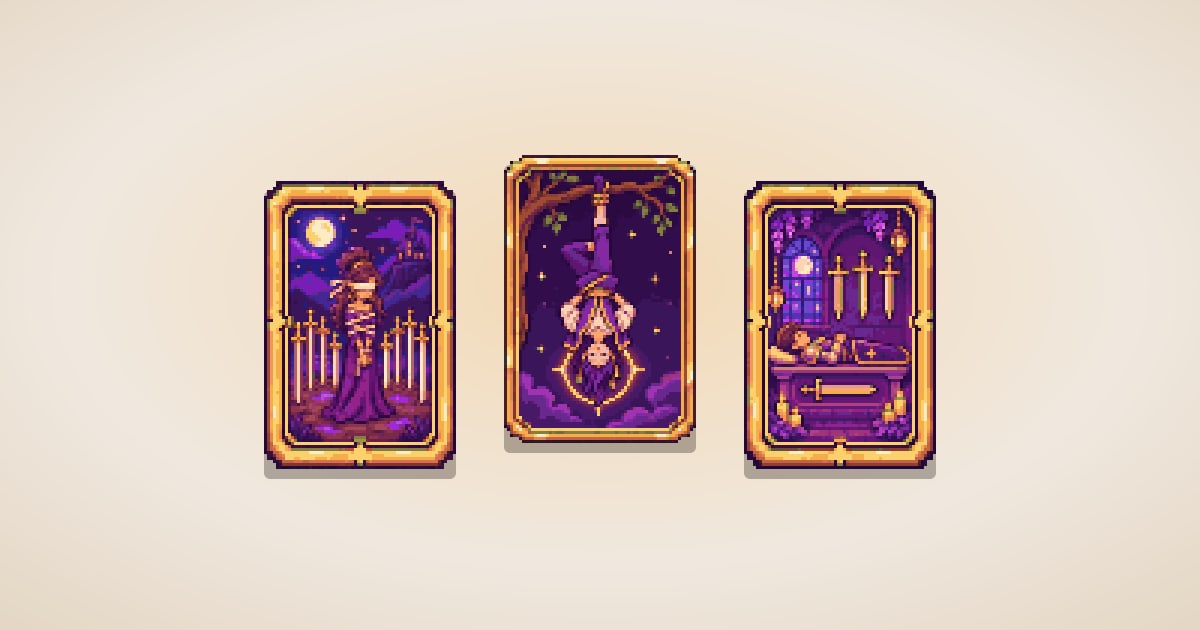 Tarot SpreadsA Tarot Spread for When You Feel StuckBeing stuck is often a pause with a reason. Six cards to look at that reason kindly, and to find one thing light enough to move.
-
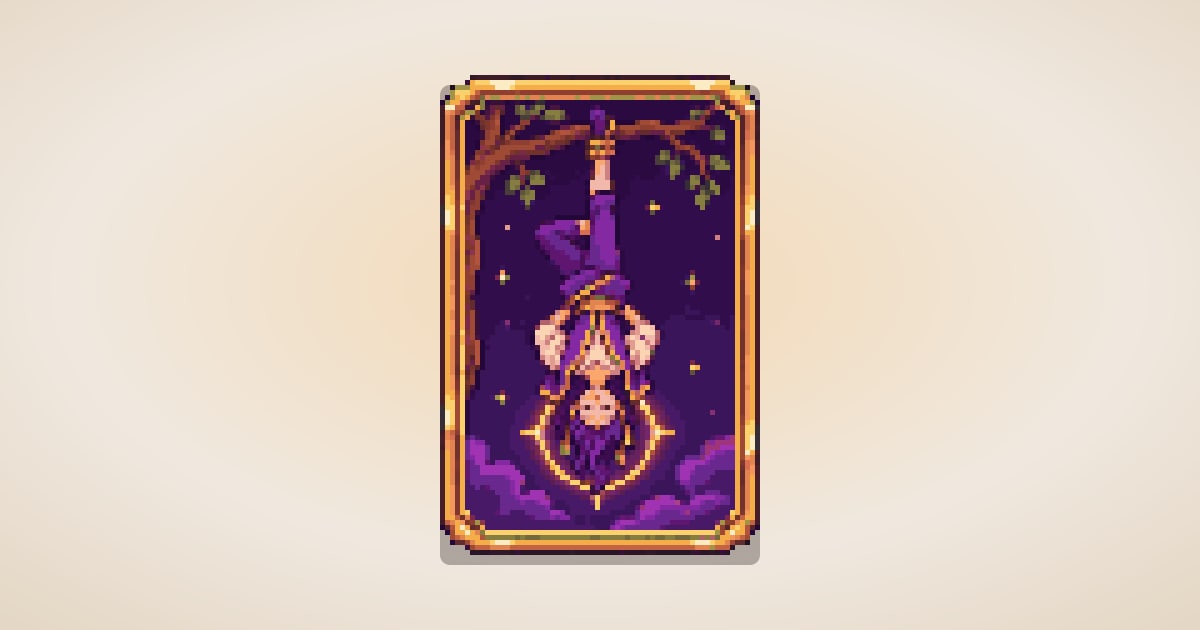 ReflectionsThe Hanged Man and the Long WaitOn the card of suspension, the face that stays calm upside down, and what a long pause can let us see.
-
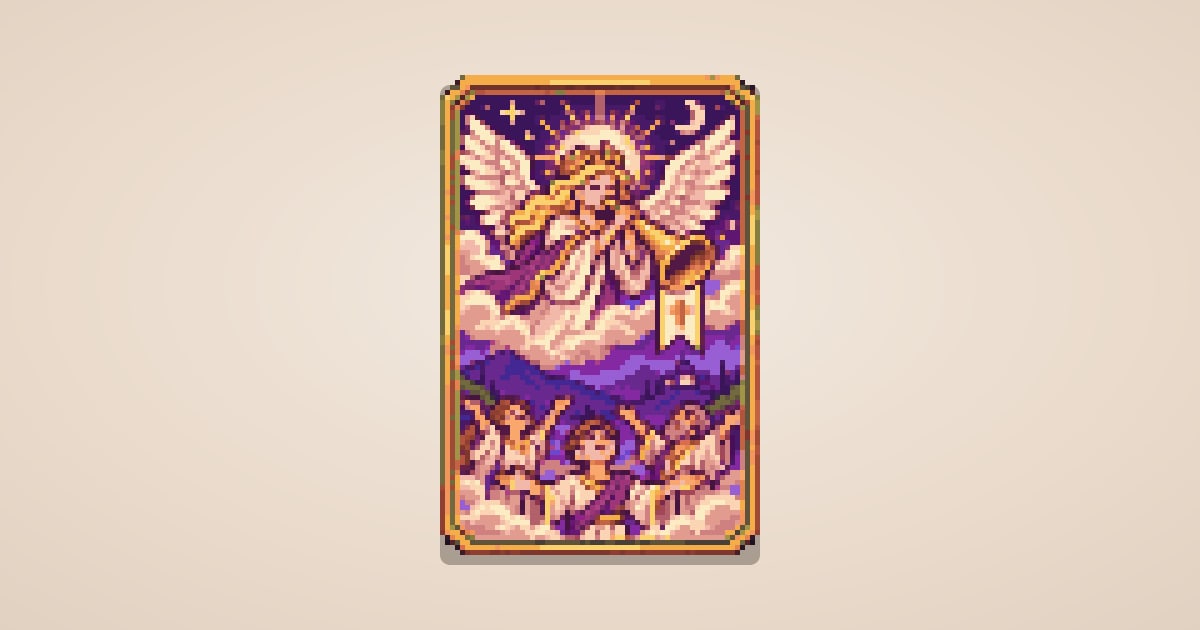 ReflectionsJudgement and Second Chances: Waking Up to Your Own LifeOn the card many people fear will condemn them, and why its picture looks less like a courtroom and more like a morning.