
The Nine of Cups and Letting Yourself Be Glad
On the card of folded arms and a full shelf, the difference between satisfaction and smugness, and the old wishes that came true without much fuss.
 Nine of Cups · full meaning →
The Nine of Cups is the card people call the wish card, and the odd thing about it is that the man in the picture has stopped wishing. He is sitting down. His arms are folded. Whatever he wanted is already on the shelf behind him.
That makes it a useful card for a habit a lot of people share. Something goes right, the test results come back clear or the dreaded week is finally over, and before the good feeling has even finished arriving, another voice cuts in. Don't get carried away. Something will go wrong to even this out. The gladness gets folded up and put away unopened, like a letter saved for a day that never comes. This card sits down right in front of that fear and smiles at it.
Nine cups on a curved shelf
Pamela Colman Smith's picture is among the plainest in its suit. A man sits on a wooden bench, facing us, his feet set apart on the ground. He is broad and comfortable, plainly someone who has eaten well. His face carries a wide, unhurried smile. Behind him runs a long curved shelf, covered with a cloth that hangs down in front, and on it stand nine golden cups in a tidy arc, set out like a collection waiting for guests. He doesn't turn around to admire them. He knows they are there.
Waite describes him this way:
A goodly personage has feasted to his heart's content, and abundant refreshment of wine is on the arched counter behind him, seeming to indicate that the future is also assured. The picture offers the material side only, but there are other aspects.
Look at the word seeming. Even Waite only says the full counter appears to promise more to come, and we won't promise it either. His last sentence is the one we like best. The picture offers the material side only, but there are other aspects. A good life can look like a feast. It can also look like an ordinary Tuesday on which, for once, nothing hurts.
The wish card, read as a mirror
The nickname comes from an old reading habit. When this card turned up, many readers said, the thing you hoped for was close. That is why so many people ask whether it means yes.
Emberlune reads the cards as a mirror, not a forecast, so we won't tell you this card grants anything. (If you do want a quick one-card answer, the yes or no tarot page explains how each card leans.) A mirror can still show you something true, though. The picture is not of a man waiting for his wish. It is of a man sitting among wishes already met, with the cups filled and lined up and the meal already eaten. Waite's first words for the card are "Concord, contentment", and both describe a present state. In our reading the card is about having more than wanting, and about the rarer skill of registering that you have.
Folded arms, and what they might mean
Some readers find this man a little too pleased with himself. Folded arms can mean ease. They can also mean a door pulled shut, and the card does not say which, so the choice falls to whoever is looking. Reversed, the card is often read as smugness, or as contentment that only goes skin deep.
The difference is slight to look at and large to live with. Satisfaction says this is good. Smugness says I am better. Satisfaction tastes the wine, while smugness counts the cups and checks how many the neighbors have. One opens outward, toward thanks and generosity. The other needs someone else to be sitting lower.
Here is where we part from the cautious readings. Most people are in far less danger of smugness than they fear. The common trouble runs the other way: being so worried about seeming pleased with yourself that you never let yourself be pleased at all. If you are anxious about turning into the man with folded arms, you are probably not him. Borrow a little of his smile.
Old wishes that turned into furniture
Look back far enough and some of the things you wanted hardest have probably already happened. They just became so ordinary that they stopped looking like wishes.
The apartment you used to walk past and long for, where you now grumble about the radiator. The friend you hoped to find when you were new in town, who now messages you about nothing at all. A body that was unwell and is, for now, mostly well. These are cups on the shelf. You walk past them every day, because a wish come true has a way of turning into furniture.
If you want to try something with this card, keep it modest. Think back five or ten years to one thing you badly wanted then, and if you have it now in any shape, stay with that fact for a full minute before your mind hurries to say it isn't quite what you pictured. Or the next time something goes well, tell one person about it without the usual cushion of "I just got lucky." This went well, and I'm glad. It may feel strange, a bit like setting down a cup you have been carrying with both hands.
The neighbouring cards draw the edges of this one. The Sun is the joy that arrives before anything is fixed, and the Nine of Cups is the calmer gladness of seeing that some things are. The Nine of Pentacles stands in a garden of her own tending, while this man leans back after the feast and lets it have been good. For wishes still floating unchosen, there is the Seven of Cups and its daydreams.
And if nothing seems to have gone well lately, this card can wait. It is not a test of gratitude, and it doesn't ask you to feel content when you don't. The traditional readings are on the Nine of Cups card page.
The man on the bench is not looking toward the next thing, and for one afternoon he is sitting inside the last one.
Keep reading
-
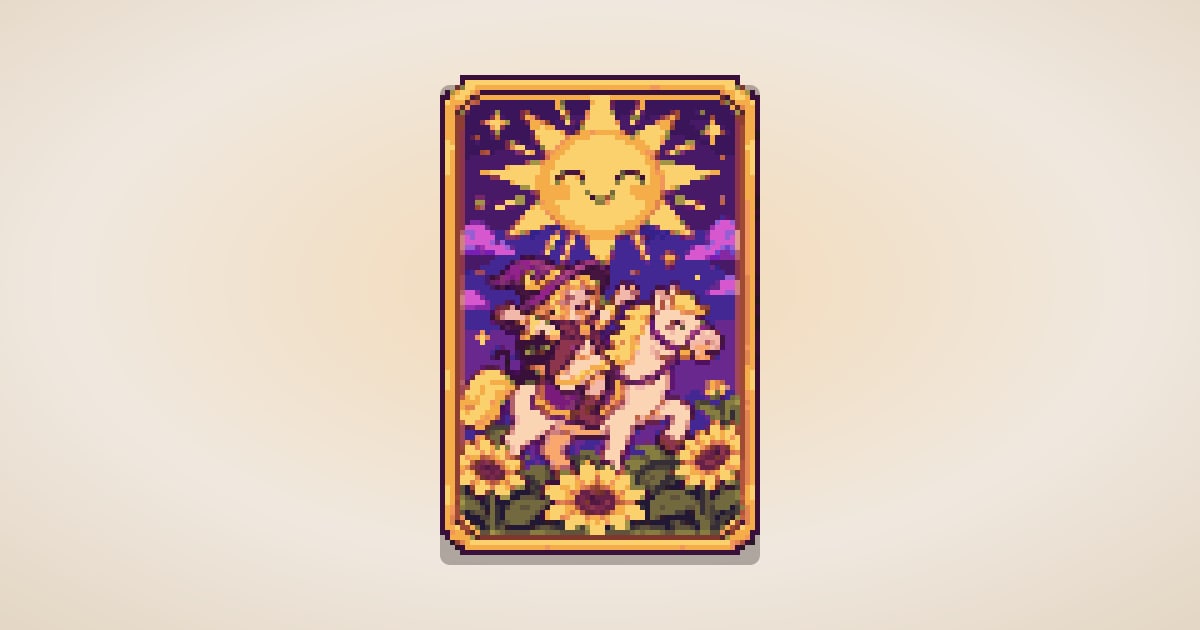 ReflectionsThe Sun and the Small JoysOn the happiest card in the deck, joy after a hard stretch, and why it is allowed to arrive before everything is fixed.
-
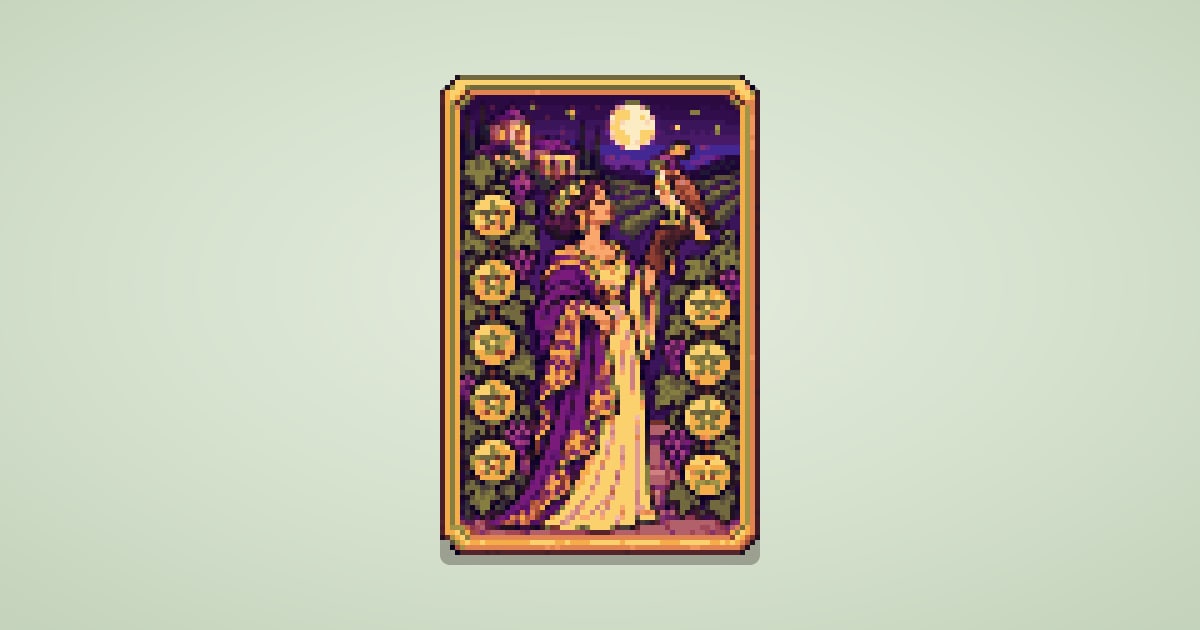 ReflectionsThe Nine of Pentacles and the Feeling of EnoughOn the card of the vineyard and the hooded bird, and a contentment that does not need anyone watching.
-
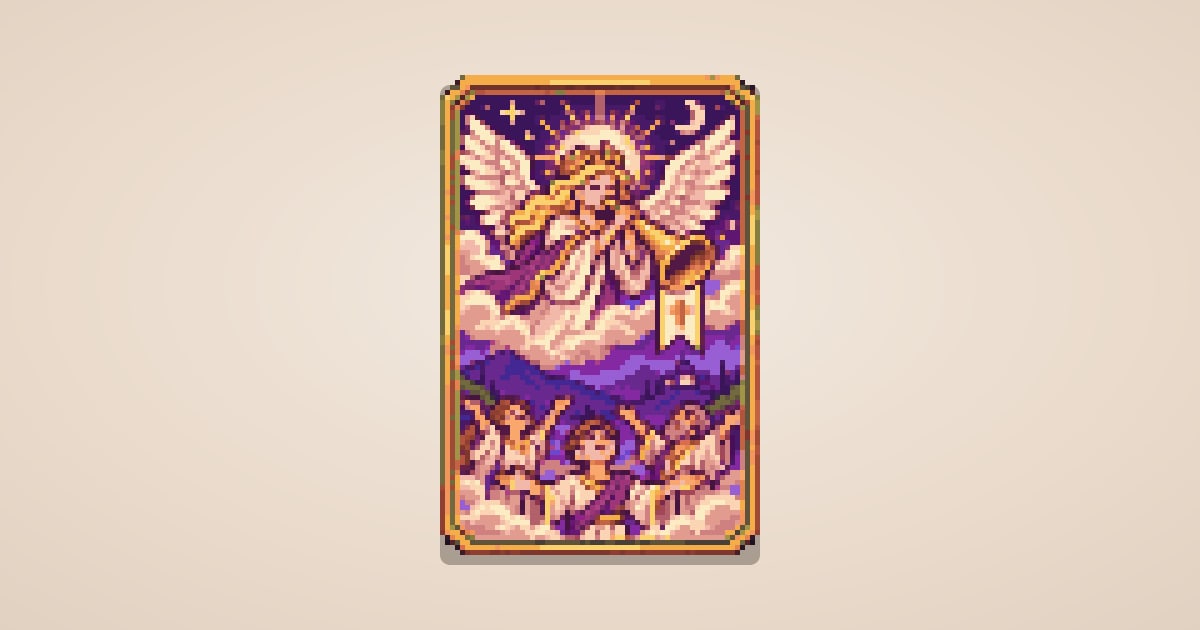 ReflectionsJudgement and Second Chances: Waking Up to Your Own LifeOn the card many people fear will condemn them, and why its picture looks less like a courtroom and more like a morning.