
The Seven of Cups: Daydreams, Choices and the Fog of Wishing
On the card of seven floating visions, why every seven in the deck is restless, and what happens when the restlessness is made of water and imagination.
 Seven of Cups · full meaning →
Every suit in the tarot has a seven, and none of them is a resting place.
Seven sits past the middle of the count from Ace to Ten. The beginning is behind you, the full weight of the Ten is still ahead, and whatever was settled in the cards before has started to wobble. Look across the four suits and the sevens all show someone in the middle of a test.
What the sevens have in common
In the Seven of Wands, Waite's "young man on a craggy eminence" swings a staff while six others are raised against him from below. He has the high ground and has to keep it. In the Seven of Swords, a man is "carrying away five swords rapidly" from a camp, and Waite's meanings include "a plan that may fail". In the Seven of Pentacles, a young man leans on his staff and looks hard at the coins growing on a bush, and Waite guesses that the coins are his treasures and "his heart was there."
Defending a position. Attempting a risky plan. Stopping to judge what has grown. In our reading, that is the family resemblance: the sevens are where you have something, or want something, and have to decide what to do about it. Even Waite seems to hear the theme. His reversed Seven of Wands is "a caution against indecision".
So when the seven comes up in Cups, the suit of feeling, love and imagination, the test moves inside. Nobody is attacking from below and nothing is being stolen. The struggle is fought out entirely in what you picture, want and feel. The Seven of Cups is the seven of the daydream.
Seven cups in a cloud
Pamela Colman Smith drew it as a dark figure in the lower corner with their back to us, a shape cut out of shadow. Above, resting on a bank of pale cloud, float seven golden cups, and each holds a different vision. A castle on a rock. Jewels heaped over a rim. A wreath of victory. A dragon. A snake rising out of its cup. A human head. And near the middle, a veiled figure that seems to give off its own light.
We never see the figure's face, only what they are looking at, which is everything at once. None of the cups has been touched. The scene is held in the moment before any choice, when every possibility is still floating and still perfect.
Waite's own description is short and a little dreamy: "Strange chalices of vision, but the images are more especially those of the fantastic spirit." His meanings begin with "Fairy favours, images of reflection, sentiment, imagination, things seen in the glass of contemplation", and end with a caution: "some attainment in these degrees, but nothing permanent or substantial is suggested."
We think the usual reading of this card, stop daydreaming, is harsher than Waite was. He does not call the visions worthless. He says something is attained. It just hasn't turned solid yet.
Too many cups, and the wrong ones
Look at the figure again. They are not suffering, exactly. They are suspended. With seven bright options in front of them, choosing any one means letting six others stay in the air, so for now they choose none. When every path looks possible, every path also looks like a loss, and a dream you never test can never let you down.
Compare the Two of Swords, where Waite describes "a hoodwinked female figure" balancing two blades, blindfolded, with her back to the sea. She cannot decide because she will not look. The figure in the Seven of Cups cannot decide because they are looking at too much. One shuts her eyes and the other can't stop staring, and both are waiting for the choice to make itself.
And some of the cups are not what they seem. The snake and the dragon sit right beside the jewels, glowing just as brightly. Daydreams include frightening ones, the conversation that goes wrong, the illness you rehearse at night. Waite linked The Moon with the life of the imagination, and this card feels like a private corner of the same moonlight. Our longer reading of The Moon walks further down that path.
A wish or an escape
The castle may say something about wanting safety, or a place that is finally yours. The wreath may be about wanting to be recognized. The veiled, shining figure is the one many readers linger on, because it has no clear shape at all. It is the wish you can't quite name.
None of that is foolish, and in hard seasons imagining can be a real shelter. The trouble starts only when the cloud becomes the place you live. So how do you tell a wish from a lovely way out? No test settles it, and the same picture can be both at different times. Two questions help us.
First, does it survive the boring parts? Picture the house by the sea on a wet Tuesday in February, with dishes in the sink and a leaking gutter. If you still want it, that matters. An escape tends to fall apart once ordinary life is let inside it, because ordinary life was what it was protecting you from.
Second, does it ask anything of you? A real wish usually comes with a first step, however modest: an email, a call to ask a price, a library book, an hour on a Saturday. An escape mostly asks you to keep imagining. If a daydream only ever comes back when you're exhausted or hurt, and fades when you're rested, it may be more of a place to land than a direction. That is allowed. A place to land is not nothing.
Choosing one cup does not destroy the rest. They can stay in the cloud. You are only deciding which one gets your hands for now. If you want a slower way to weigh two real paths, our spread for making a decision lays them side by side, and the essay on The Lovers and choosing looks at what it means to say yes with your whole heart.
Waite's reversed meaning for this card is the one we keep coming back to. Upside down, the Seven of Cups is "Desire, will, determination, project." Turn the cloud over and the same longing becomes a plan.
Read the full meaning of the Seven of Cups.
Keep reading
-
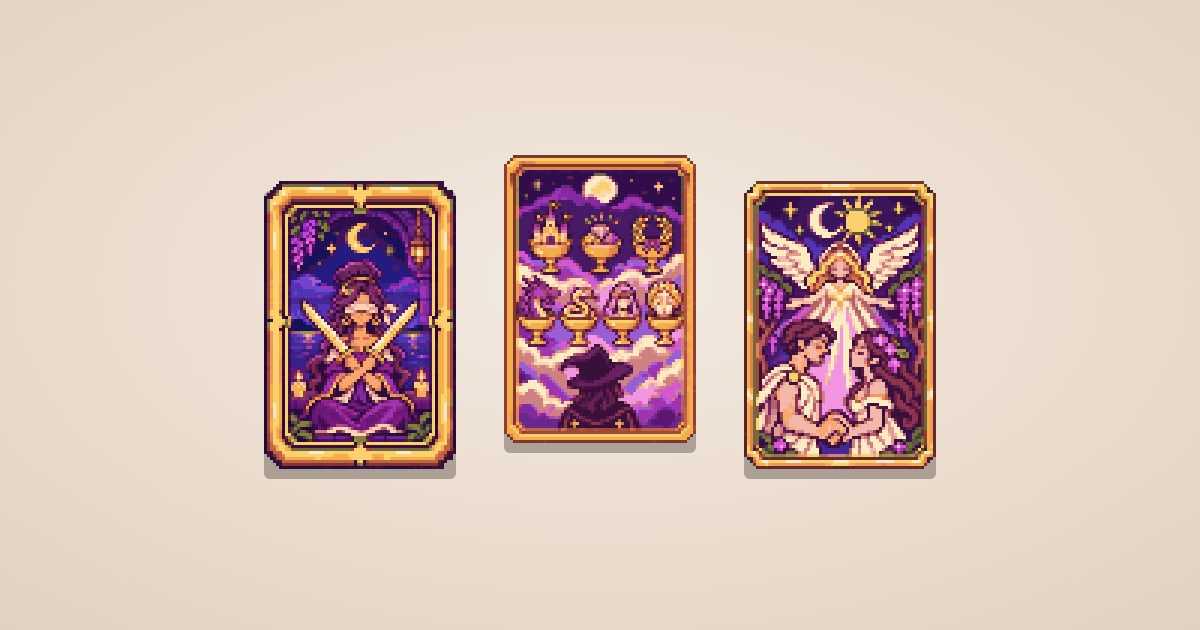 Tarot SpreadsA Tarot Spread for Making a Decision: Seven Cards for Two PathsThe cards will not pick a path for you, but laid out with care they can help you hear your own reasons more clearly.
-
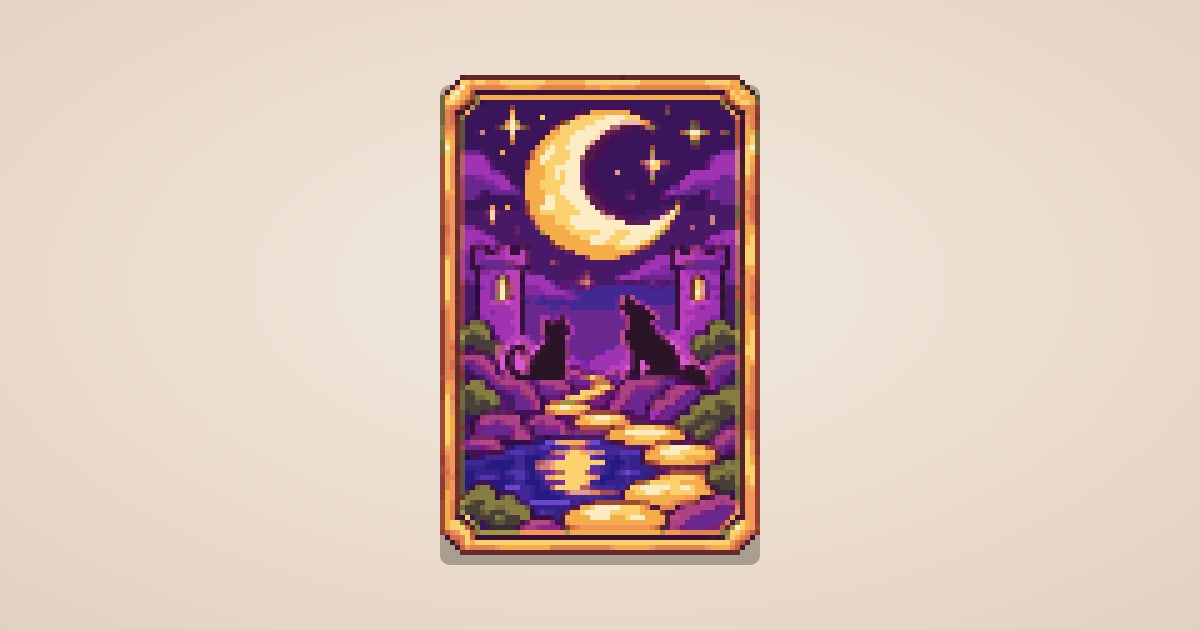 Card Deep DivesThe Moon Tarot Card: Intuition, Illusion and the Path in BetweenThe card of half-light: how to tell intuition from anxiety, what the animals on the card are doing, and how The Moon behaves in a reading.
-
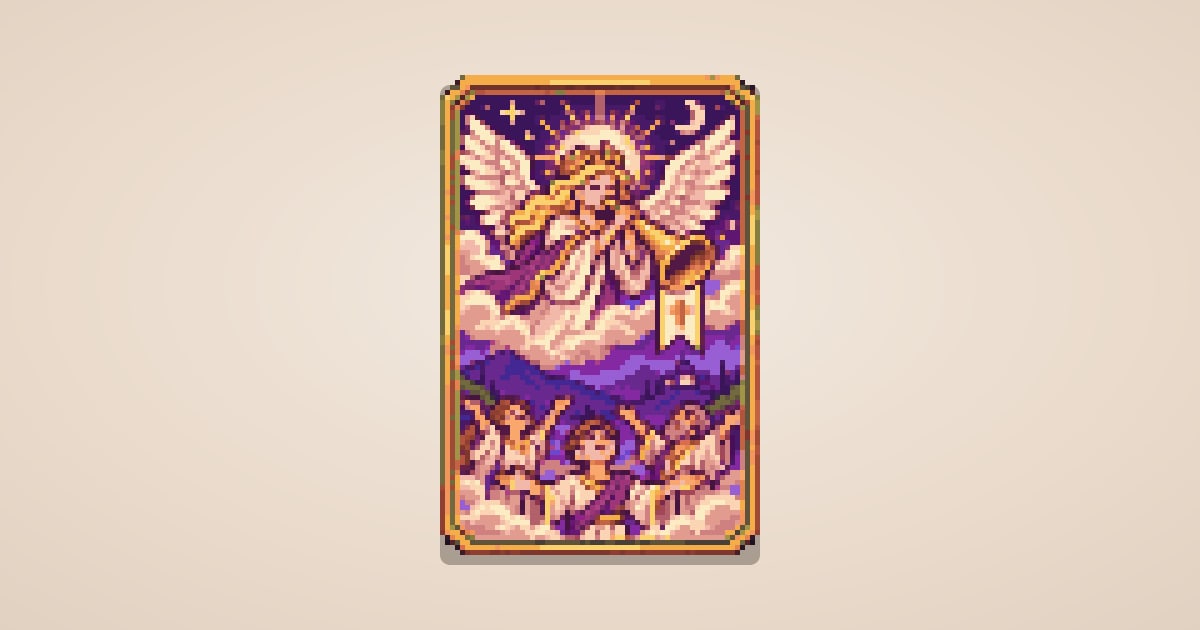 ReflectionsJudgement and Second Chances: Waking Up to Your Own LifeOn the card many people fear will condemn them, and why its picture looks less like a courtroom and more like a morning.