
The Six of Cups and Nostalgia: Visiting the Past Without Living There
On the card of children and flowers, missing who we used to be, the childhoods that were not gardens, and coming home to the age you are now.
 Six of Cups · full meaning →
The Six of Cups is the tarot's card of nostalgia, and Pamela Colman Smith drew it the way a memory tends to come back: as a place first, then people, then one thing being handed over. You probably know the experience from the other end. You step into an old stairwell, or pass a bakery at a certain hour, and for a moment you are a child again. The ceilings are higher. The afternoon is very long. Then you are back on an ordinary sidewalk, a bit stunned at how close it came.
So we will take it in that order, starting at the back of the picture and ending at its front edge.
The old walls and steep roofs
Behind everything stand old walls and steep, pointed roofs. Waite's whole description of the scene is one line:
Children in an old garden, their cups filled with flowers.
The word that matters there is old. When he lists the card's meanings, Waite is just as frank: "happiness, enjoyment, but coming rather from the past; things that have vanished." He doesn't soften the last part, and we don't think anyone should. Houses we remember get sold or torn down. People move away, or die. The courtyard on the card is old for a reason, and some of the ache of nostalgia is knowing there is no gate back in.
The figure with the spear, walking away
Off to one side, a figure with a spear walks away from the children toward the buildings. Readers differ on who this is. Some see a guard keeping watch. Others see the grown-up world going about its business while the children have their afternoon. Our own sympathy is with the second view, though the picture leaves it unresolved.
Either way, it is someone who doesn't stay. And that is a fair picture of what nostalgia so often misses. The thing we long for is frequently a person, and the person is the one we used to be. The one who could spend a whole afternoon on a single game. The one who didn't yet know certain things about money, or loss, or how people leave. When you miss a childhood street, part of what you miss is the self who walked down it, and that self has already walked off toward the buildings.
The older child in the red hood
In the middle of the picture, an older child in a red hood bends toward a younger one and offers a cup filled with white flowers. Look at the angle. The older child is leaning down, not reaching across. It is not a trade. Nothing is asked back.
That gesture matters most for anyone whose childhood was not a garden. For some people the early years were frightening, lonely or unsafe, and a card full of flowers and kind children can sting. It can even stir a stranger homesickness, a longing for a childhood you never had. That longing is real, and it deserves the same care as any happy memory.
If that is your story, we think the card speaks through the gesture more than the setting. Maybe there was one person, a teacher, a neighbor, an older cousin, who once handed you something without asking for anything. Or maybe there wasn't, and the child in the red hood is someone you can start to be for yourself now: an unhurried afternoon, a book from the children's shelf at the library, a favorite food you were rarely allowed.
If old memories are bringing up more than you can carry alone, a counselor or therapist can help. And if you are not safe now, the free, confidential lines on our safety page are there for you.
The younger child receiving
The younger child takes the cup, and here the card turns out to be less fixed in the past than it looks. Waite mentions another reading in which it means "new relations, new knowledge, new environment, and then the children are disporting in an unfamiliar precinct." Same children, same flowers, in a place they have never been.
The neighbours make the same point. Just before this card comes the Five of Cups, where a figure in a black cloak bends over spilled cups; our essay on the Five of Cups and regret keeps that figure company. Both cards look backward. One sees what was lost, the other what was given. The Sun has a child in it too, riding out past a stone wall into open light, while the children of the Six are still inside the old walls. We read the Six as the child you remember and The Sun as the child still in you, out in today's weather.
If the longing underneath is really for home, the Ten of Cups and what home really means picks up that thread.
The cups in the foreground
At the very front of the card stand more cups, every one full of the same pale blossoms. Elsewhere in the suit, cups pour out water, tip over, or hang in the sky. These hold flowers, which can't be drunk or kept for later. You can look at them and enjoy them, and then they fade.
That is the whole difference between visiting the past and living there. A visit has a door you come back through. When a memory surfaces, let it stay with you about as long as it takes a cup of tea to cool, then do one thing that belongs only to today, like opening a window or answering a message. Childhood leaves gifts in people, a way of whistling, a word only your family used, the habit of saying goodnight to the house, and it does no harm to use one on purpose, knowing whose hands it passed through. And the motion on the card runs from bigger to younger, so pass something down: show a child how to skip a stone, or tell a new colleague where the good stairwell is.
The full meaning of the Six of Cups is there when you want it.
Then look once more at the front of the card, where the flowers in the nearest cup are still white.
Keep reading
-
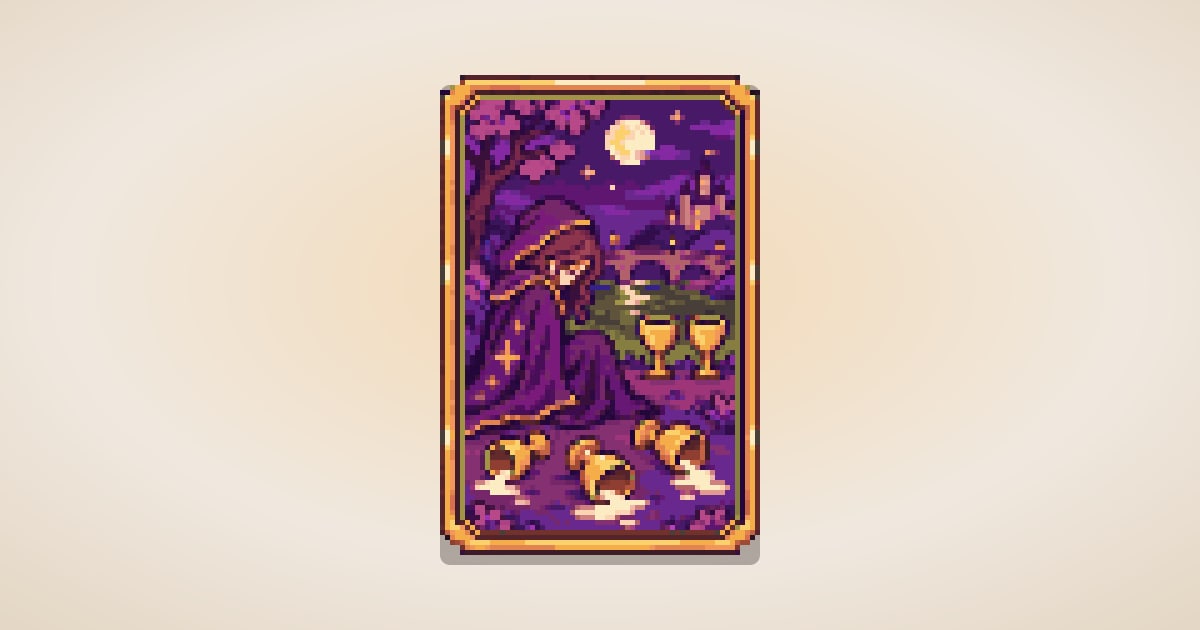 ReflectionsThe Five of Cups and Regret: Looking at What Still StandsOn the card of spilled cups, how regret narrows what we can see, and why nobody has to be hurried into turning around.
-
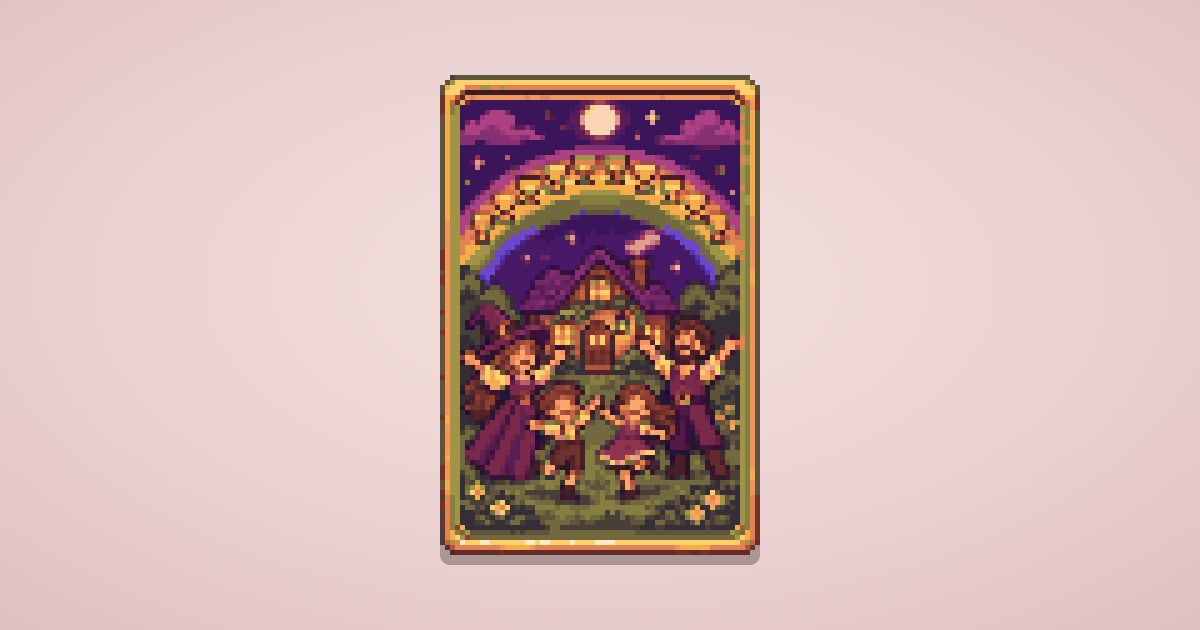 ReflectionsThe Ten of Cups and What Home Really MeansOn the card of the rainbow and the dancing children, the family picture it seems to promise, and the questions readers bring to it.
-
 ReflectionsJudgement and Second Chances: Waking Up to Your Own LifeOn the card many people fear will condemn them, and why its picture looks less like a courtroom and more like a morning.