
The Four of Cups and Feeling Flat
On the card of crossed arms, the cups we stop noticing, and how to tell a needed pause from a numbness that deserves care.
 Four of Cups · full meaning →
Four is the number of things that stand still. Four corners to a room, four legs to a table, four walls to a house. In tarot the Fours are usually read as the point where something becomes stable, where the energy of the first three cards settles into a shape that lasts.
Stable is not always comfortable, though, and the four suits show it in four different ways.
Four Fours
On the Four of Wands, a garland hangs between four tall staves and two figures raise bouquets in front of an old manor house. Waite's list for it reads like a holiday: "country life, haven of refuge," "repose, concord, harmony, prosperity, peace." Stability as celebration.
On the Four of Swords, the stillness is a knight's effigy lying on a tomb, hands together in prayer. Waite gives it "vigilance, retreat, solitude, hermit's repose." Stability as rest.
On the Four of Pentacles, a crowned figure clutches a coin to his chest, with one on his crown and two under his feet. Waite's line is short: "He holds to that which he has." Stability as grip.
And then there is Cups, the suit of feeling. What happens when feeling becomes stable? We think the honest answer is that it can stop moving, and feeling that stops moving starts to look a lot like no feeling at all. Of the four Fours, this is the one where stillness has gone flat.
A figure under a tree
The Four of Cups shows a young man sitting on the grass beneath a tree. Arms folded, legs crossed, his whole body seems closed, like a house with the shutters drawn. Three cups wait in a row at his feet, and his gaze rests on them. From a cloud at one side, a hand reaches out with a fourth cup for him, and he does not seem to see it.
Nobody is in danger. Nothing is broken. The tree gives shade, and there is more to drink here than one person could need. Still he sits with his arms locked, looking at what he has like a puzzle he gave up on long ago.
Waite described the scene this way:
A young man is seated under a tree and contemplates three cups set on the grass before him; an arm issuing from a cloud offers him another cup. His expression notwithstanding is one of discontent with his environment.
Among the meanings he gave the card are "weariness" and "aversion", along with a striking phrase: it is "as if the wine of this world had caused satiety only." Satiety is having had enough, past the point of pleasure. Not hunger, not grief. A fullness gone dull.
He also called it "a card of blended pleasure," which is easy to miss and, to us, the most accurate thing he says about it. Pleasure hasn't left. It is mixed with something heavier and harder to taste. The man under the tree is not in despair. He is somewhere in between, and the in-between can be the most confusing place of all.
When nothing appeals
You open the fridge, look at everything inside, and close the door again. Nothing is wrong with the food; you just don't want any of it. The same goes for the shows you used to love, the message you keep meaning to answer, the book whose bookmark hasn't moved in weeks. Nothing hurts, exactly. The color has drained out of things and you can't remember where it went.
That is the odd part of feeling flat. It usually comes with plenty, not lack. The cups are right there, life is in many ways fine, and that makes the flatness harder to talk about, because it seems ungrateful.
We don't think it is a moral failing. Flatness often follows a long stretch of effort, or a loss that took more out of you than you let yourself admit, or too many days that looked the same. Feeling can go numb the way a hand does after gripping something for too long, which is the Four of Pentacles inside the Four of Cups. The crossed arms may be protection as much as boredom. If nothing gets in, nothing can disappoint.
The cup from the cloud
Most readings of this card turn on the fourth cup. The hand comes out of the air, offering freely, and the figure misses it because his attention stays fixed on what is already in front of him. Waite wrote that the new wine arrives "as if a fairy gift", and that the one it is offered to "sees no consolation therein."
Plenty of guides turn that into a scolding: look up, stop sulking, you're missing your chance. We read the picture differently. The hand doesn't snatch the cup away. It stays where it is, cup extended, in no hurry at all. And in a flat stretch, the offers often look like more of the same, another thing you are supposed to want and can't feel wanting. You may see what is offered perfectly well and find it doesn't move you yet. Being honest about that is more useful than blaming yourself for it.
A pause, or something heavier
Not every grey season is a problem. Sometimes folded arms are a needed pause, a way of sitting out until you know what you want again. The Four of Swords is the deck's picture of chosen rest, and The Hermit leaves the crowd on purpose, lantern in hand (we walked with him in the Hermit, loneliness and solitude). The Four of Cups can share something with both, a withdrawal that is doing real work.
The difference lies in how the pause feels from the inside. Rest usually leaves you a little fuller, and a pause usually ends. If the greyness has gone on for weeks, if even the things you once loved stir nothing at all, if sleep or appetite or getting out of bed have changed, that is more than boredom, and it deserves real care. A doctor is a good place to start. And if the numbness has slid toward thoughts of not wanting to be alive, tell someone today; our safety page lists free lines in many countries.
Short of that, the card itself suggests where to begin. Uncross one arm. Take one of the three cups you already have, a cup of tea, a song, warm water on your hands, and give it your full attention for two minutes, only to check whether any taste is left. Often some is. Say yes, once, to an ordinary thing you would usually decline, a short walk or a reply to that message, and go without needing to enjoy it, since feeling sometimes follows the body before it leads.
The young man on the card is only sitting. The three cups are still full, and the hand is still there, holding out a fourth.
Keep reading
-
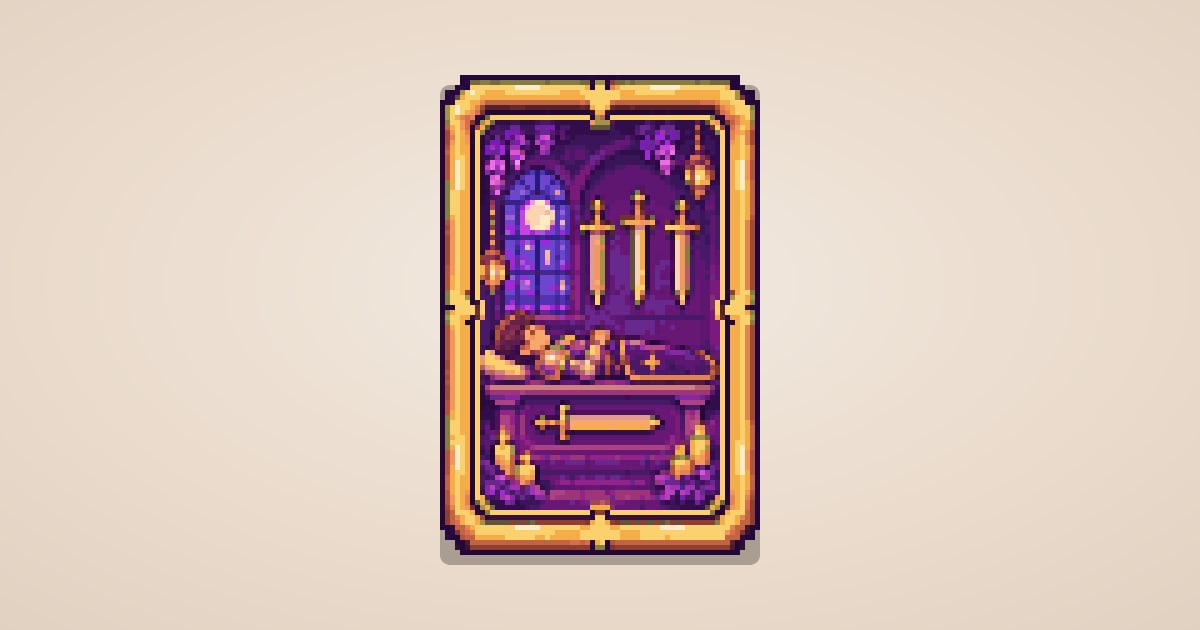 ReflectionsThe Four of Swords and Permission to RestOn the stillest card in the deck, one sentence of Waite read slowly, and why stillness is something we need, not something we win.
-
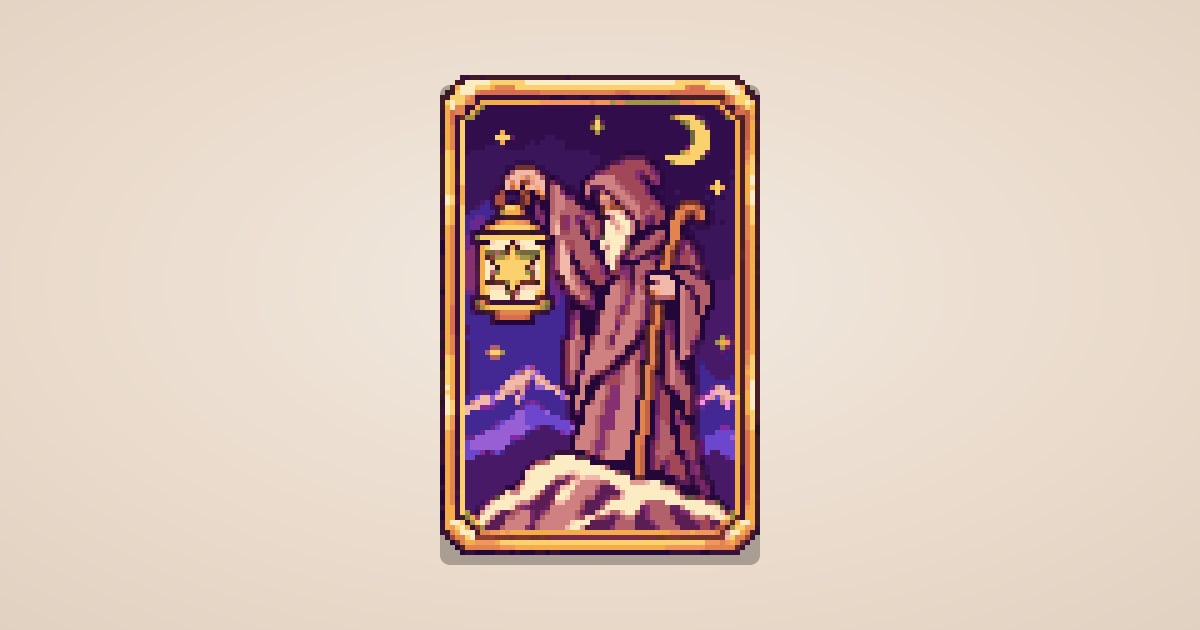 ReflectionsThe Hermit, Loneliness and SolitudeOn the card of being alone, the difference between the two kinds of alone, and the lantern that is raised for someone else.
-
 ReflectionsJudgement and Second Chances: Waking Up to Your Own LifeOn the card many people fear will condemn them, and why its picture looks less like a courtroom and more like a morning.